
Water Damage Restoration
Roof Leak Water Damage Restoration in Roseville, CA
A roof leak often stays hidden until a winter storm forces enough water through to stain a ceiling. By then the water has usually been getting into the attic — soaking insulation, wetting framing, and running along rafters — for longer than the stain suggests. Roseville's short, intense November-to-March wet season is when these weak spots reveal themselves.
- 60-minute emergency dispatch across Roseville
- Licensed, insured & IICRC-certified
- Local to Roseville & Placer County
We handle the interior side of a roof leak: emergency tarping to stop the water, drying the attic and ceilings, and restoring the damage. We coordinate with roofing for the permanent fix so the whole job gets done.
Signs of a roof leak
- A ceiling stain that grows during or after rain
- Water dripping from a ceiling or light fixture in a storm
- Damp or matted attic insulation
- Water stains or trails along attic rafters and sheathing
- Peeling paint or a musty smell near an exterior wall or ceiling
Stop the water, then dry what it reached
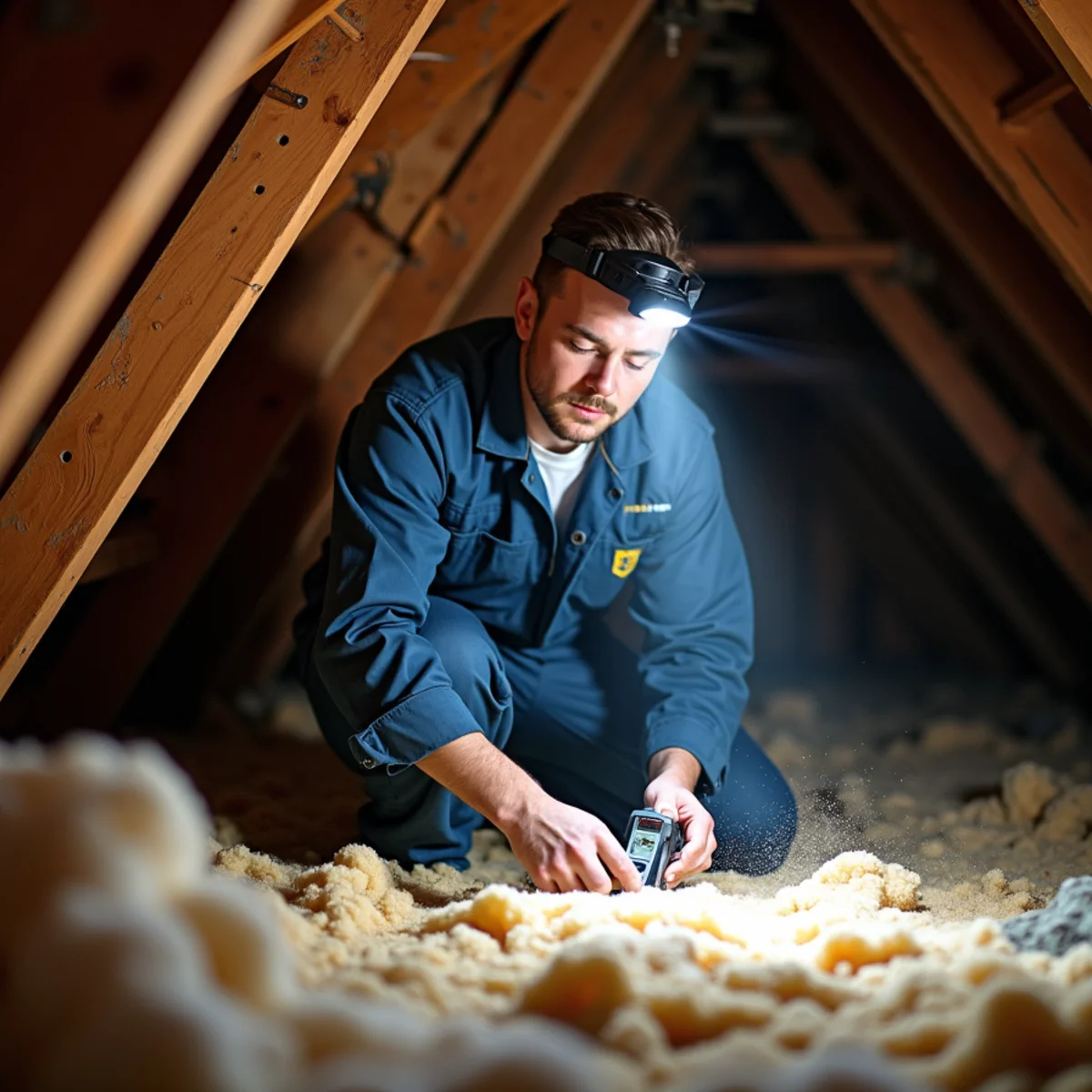
The first move on an active roof leak is emergency tarping to keep the next band of rain out. Then we deal with the water already inside. Attic insulation that soaked up water has to come out — wet insulation does not dry well in place and loses its R-value — and the framing and ceiling below need to be dried to target before we close anything up. Skip the drying and you trap moisture where mold thrives.
Roseville's storm season and roof failures
Roofs that shed water fine all summer meet their match during atmospheric-river events, when days of wind-driven rain probe every worn shingle, cracked flashing, and clogged valley. Placer County's wet season delivers most of the year's rain in a few months, and the weak spots that have been developing quietly all year finally leak. We see the same failure points — around vents, valleys, and flashing — winter after winter.
Full interior restoration
- Emergency tarping to stop ongoing intrusion
- Removal of saturated attic insulation
- Drying of framing, sheathing, and ceilings to documented targets
- Ceiling and drywall repair, texture, and paint
- Mold treatment where water sat, and coordination with roofing
What's included in our roof leak water damage restoration
The order of operations matters on a roof leak. We tarp first to stop more water from entering, then map how far the existing intrusion has spread — across the attic, along rafters, and down into ceiling drywall — because water that entered at the roofline often shows up as a stain several feet away.
From there, wet insulation comes out since it will not dry in place and loses its insulating value once saturated. We dry the framing, sheathing, and ceiling to documented targets with axial fans and dehumidifiers built for attic spaces, then move into ceiling and drywall repair — matching texture and paint so the room looks the way it did before the storm.
Most interior roof leak drying takes 3 to 5 days, with insulation replacement and drywall repair scheduled once the framing reads dry — closing up a ceiling too early traps moisture that leads to mold and a second repair later. We stay in touch with your roofer so the interior work and the permanent roof fix land close together rather than leaving a gap where the next storm gets back in.
- Emergency tarping to stop ongoing water intrusion
- Moisture mapping across attic framing, sheathing, and ceiling drywall
- Removal of saturated insulation that cannot be dried in place
- Structural drying of the attic and ceiling cavity to documented targets
- Ceiling and drywall repair with texture and paint matching
- Mold treatment where water sat, and coordination with your roofer for the permanent fix
Why Roseville homeowners trust us with roof leak water damage restoration
A roof leak that only shows up during a storm is easy to underestimate. Here is what you get when you call us instead of waiting for the next one.
- Drying performed to the IICRC S500 water damage restoration standard
- Licensed and insured for tarping, drying, and interior reconstruction
- 60-minute dispatch to Roseville addresses during storm season, 24/7
- Direct insurance billing for covered storm and roof-leak damage
- One crew from tarping through ceiling repair and paint
- Local knowledge of the roof failure points that show up winter after winter in Roseville
Serving Roseville and the surrounding communities
We respond to roof leaks across Roseville — Highland Reserve, West Roseville, East Roseville, and the older neighborhoods near downtown where roofs are entering their second or third wet season since replacement. Placer County's November-to-March storms find the same weak spots year after year.
We also cover Rocklin, Citrus Heights, Loomis, and Granite Bay with the same 60-minute target from our Vernon Street base. The communities we serve most often are linked below.
How much does roof leak water damage restoration cost in Roseville, and how long does it take?
Roof leak restoration typically runs $1,400 to $6,400 locally, the same range as most water-damage losses here, with the specifics for this type of job driven by how much insulation has to be replaced, how large the ceiling and drywall repair ends up being, and whether the water reached framing in more than one area. A leak caught after one storm and confined to a small ceiling stain costs far less than one that has been feeding into the attic over multiple wet-season storms.
Tarping happens the same day to stop further intrusion. Drying the attic framing, sheathing, and ceiling cavity typically takes 3 to 5 days once the wet insulation is out and equipment is running. Ceiling and drywall repair, texture, and paint follow once the framing reads dry — closing up early traps moisture that leads to a second repair. We bill your insurer directly for covered storm damage; the permanent roof repair itself is scheduled and billed separately by your roofer.
- A leak caught after one storm costs less than one that has soaked the attic over a whole wet season
- More insulation removed means more replacement cost, even when drying time stays similar
- A ceiling repair that spans multiple rooms takes longer to texture and paint to match
- Coordinating drying with your roofer's timeline keeps the interior work from stalling
Our roof leak restoration process
- 1
Tarp & stop
We tarp the roof to stop water from continuing to enter.
- 2
Assess the attic
We check insulation, framing, and ceilings for the extent of the intrusion.
- 3
Dry & remove
We remove wet insulation and dry the structure to target.
- 4
Restore & coordinate
We repair ceilings and drywall and coordinate the permanent roof fix.
What affects roof leak restoration cost
- How long the roof leaked and how much water entered the attic
- How much insulation must be removed and replaced
- The size of the ceiling and drywall repair
- Any mold treatment and coordination with roofing repairs
Water damage spreads by the hour. Let's stop it.
60-minute emergency dispatch across Roseville, 24/7. We extract, dry, and rebuild — and bill your insurer directly.
- 60-min Roseville dispatch
- Licensed & insured
- Direct insurance billing
FAQ
Roof Leak Water Damage Restoration — your questions
We handle the interior water damage — tarping, drying, and ceiling repair — and coordinate the permanent roof repair with roofing professionals so the whole job is covered without you managing multiple crews.
Interior damage from a storm-caused roof leak (like a wind-lifted shingle) is often covered, while wear-and-tear and long-neglected maintenance may not be. We document the cause and the damage to support your claim.
Yes. An intermittent roof leak is still wetting your attic every storm, degrading insulation and framing and risking mold. It is far cheaper to address early than after a ceiling collapse.
Locally, roof leak restoration typically runs $1,400 to $6,400, depending on how much insulation and drywall must be replaced and whether the intrusion reached framing or multiple rooms. Coordinating the roof repair itself is separate and billed by your roofer.
We flag any electrical exposure right away and coordinate with an electrician before drying near it if there is any question of safety. Drying proceeds around the fixture once it has been checked or de-energized.
Both, in order. We tarp to stop active intrusion and dry the attic and ceilings so the water damage does not spread while you wait on roofing, then the permanent roof repair happens. Calling us first keeps a storm-season leak from becoming a collapsed ceiling before the roofer can get out.
Rarely. Insulation that has soaked up water loses most of its R-value and dries slowly, trapping moisture against the framing. We typically remove the saturated section, dry the sheathing and joists to target, and replace the insulation once the cavity reads dry.
Tarping happens the day we arrive. Drying the attic and ceiling cavity typically takes 3 to 5 days, and we hold off on ceiling and drywall repair until the framing reads dry so the fix doesn't trap moisture behind it. Once drying is done, ceiling repair, texture, and paint usually take another few days. Most roof leak jobs are fully closed up within one to two weeks, timed around your roofer's schedule for the permanent fix.