
Water Damage Restoration
Structural Drying & Dehumidification in Roseville, CA
Extraction gets the water out. Drying is what actually saves your home. Once the standing water is gone, the moisture left in drywall, framing, and subfloor has to be pulled out to measured targets — or it stays behind and grows mold within 24 to 48 hours.
- 60-minute emergency dispatch across Roseville
- Licensed, insured & IICRC-certified
- Local to Roseville & Placer County
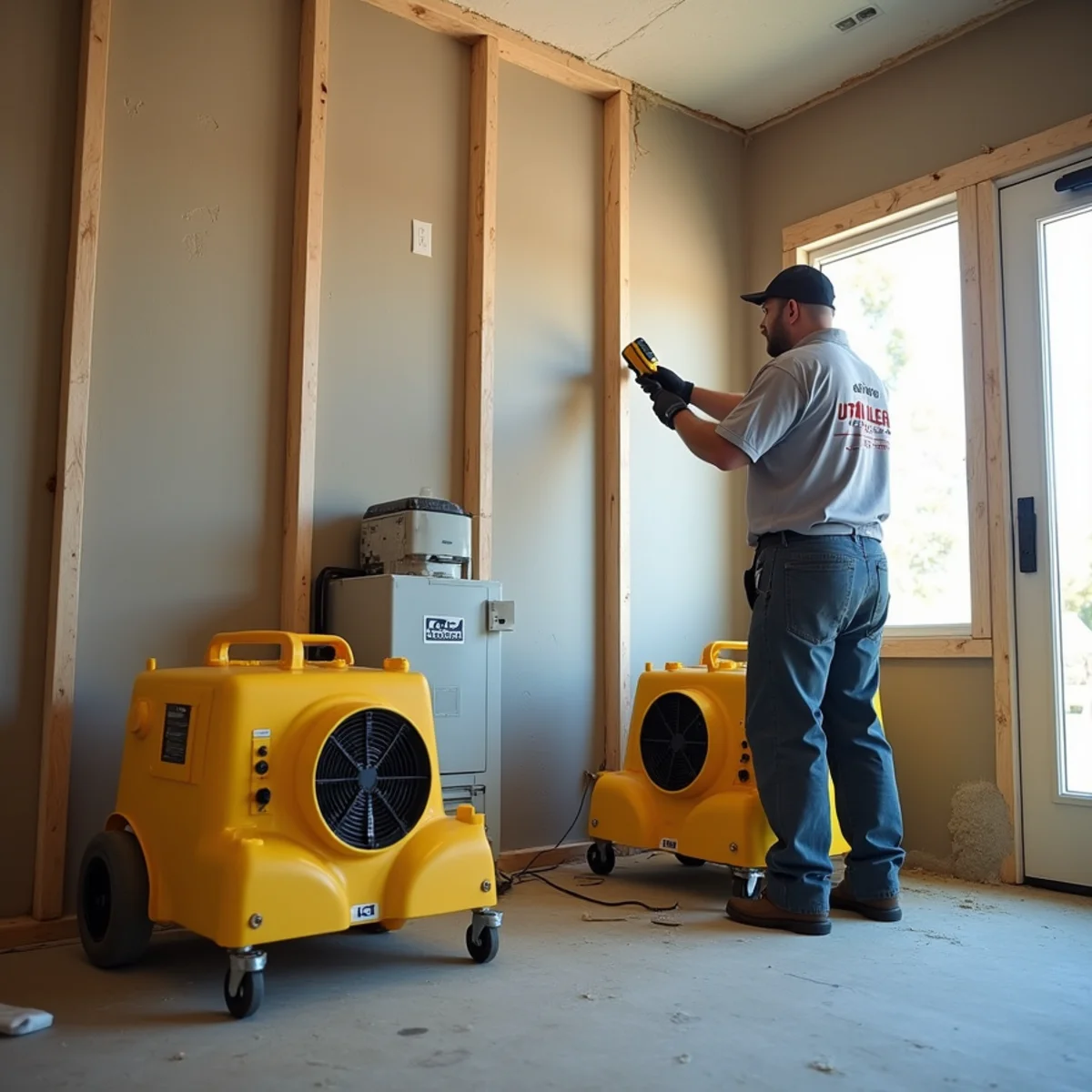
We set commercial-grade air movers and dehumidifiers in a calculated layout, then monitor the structure daily until documented moisture readings confirm it is dry. Not dry-looking. Dry.
Why household fans make it worse
Box fans move air, but they do nothing to remove humidity — they just push wet air around, which can spread moisture and mold spores into rooms that were fine. Professional drying pairs high-velocity air movers, to pull moisture out of materials, with dehumidifiers that remove that moisture from the air entirely. The two work as a system, sized to the size of the loss.
Drying to a number, not a feeling
We follow the IICRC S500 standard: we establish a dry target based on unaffected materials in your home, then dry until the affected materials match it. Every day we return, take moisture readings, log them, and reposition equipment as the structure gives up its water. You get a record of the progress, and your adjuster gets the documentation the claim needs.
- Moisture meters and thermal imaging track hidden moisture in walls and floors
- Air movers and low-grain-refrigerant dehumidifiers work as a matched system
- Daily readings confirm progress and catch pockets that are drying slowly
- Containment and specialty drying for hardwood, plaster, and wall cavities when needed
How long drying takes
Most structural drying runs 3 to 5 days, though it depends on how much water there was, which materials are wet, and Roseville's humidity that week. Dense materials like hardwood and plaster take longer than drywall and carpet. We would rather run equipment an extra day than pull it early and leave moisture behind — that is how callbacks and mold problems start.
How we design a drying system for your home
Every drying job starts with a floor plan, not a guess. We calculate how many air movers a room needs based on its square footage and the class of the water loss, then place them to create continuous airflow across wet surfaces — walls, flooring, and baseboards — rather than just blowing air into the middle of the room. Dehumidifiers are sized to match the moisture load the air movers are putting into the air, so the two systems work together instead of one undoing the other. We also account for the room's connection to adjoining spaces — an open floor plan needs a different airflow pattern than a closed bedroom, because air movers can only push moisture toward a dehumidifier that is actually positioned to capture it.
Some materials need more than air movers and dehumidifiers. Wet hardwood gets specialty drying mats that pull moisture up through the boards. Wall cavities with wet insulation may need small access holes and injection drying rather than tearing the wall open. Plaster and older lath-and-plaster walls, found in some Roseville homes, dry slower and get extra monitoring so we do not pull equipment too early. We flag any material we are not confident will dry clean — cupped hardwood or swollen baseboard, for instance — so there are no surprises about what may need replacing once the numbers hit target.
- Air mover counts and placement calculated per room, not a flat number regardless of size
- Low-grain-refrigerant dehumidifiers matched to the moisture load in the air
- Specialty mat systems for hardwood floors and injection drying for wall cavities when needed
- Daily moisture readings logged and shared, so you can see the progress, not just hear about it
- Equipment repositioned as materials dry, instead of left running in the same spot for days
- Humidity and temperature checks on unaffected rooms to confirm drying equipment is not just pushing the problem into the rest of the house
Why Roseville homeowners trust us with structural drying
Drying is the step that gets rushed by companies trying to close out a job fast. We do not rush it, and here is why homeowners in Roseville stick with us for this part of the process:
- We dry to documented moisture targets set from your home's own unaffected materials, not a fixed number of days
- IICRC S500 standard drying practices on every job, residential or commercial
- Daily monitoring visits with logged readings, not a set-it-and-forget-it approach
- Licensed and insured technicians, with drying logs your insurance adjuster can use directly
- The same crew that extracted the water also dries and rebuilds — no gaps in the record
Serving Roseville and the surrounding communities
We run drying equipment in homes throughout Roseville — from the older neighborhoods near Downtown and Royer Park to newer construction in West Roseville and the Sun City community — where slab-on-grade construction and hot, dry summers followed by a wet November-to-March season make monitored drying especially important.
Our crews also serve Rocklin, Citrus Heights, Granite Bay, Lincoln, Folsom, and Loomis, staging from our Vernon Street base to keep response times short. Wherever the call comes from, the drying plan and the daily monitoring schedule work the same way. See the specific communities we cover most below.
How much does structural drying cost in Roseville, and how long does it take?
Drying is usually the largest line item in a typical $1,400 to $6,400 Roseville water-damage loss, because it runs on equipment-days rather than a single visit. The number for your home depends on how many rooms and how much square footage need air movers and dehumidifiers, which materials are wet (hardwood and plaster hold moisture longer than drywall and carpet), and whether wall cavities or subfloor need specialty drying like injection or mats.
Most jobs run 3 to 5 days of equipment time, with daily monitoring visits to log readings and reposition air movers as materials dry. A single bedroom with drywall and carpet dries faster than a whole first floor with hardwood and plaster. We do not pull equipment on a schedule — we pull it when the numbers hit target — and we bill your insurer directly for covered work, so the days on-site do not turn into a surprise bill.
- More rooms and larger square footage mean more equipment and more days
- Hardwood, plaster, and lath-and-plaster walls add days compared to drywall and carpet
- Wall cavities needing injection drying or hardwood needing drying mats add specialty equipment cost
- Starting drying within the first day keeps materials from crossing into a tear-out, which is always more expensive than drying and saving
Our drying process
- 1
Set the dry target
We measure unaffected materials to establish the moisture level we are drying toward.
- 2
Design the drying system
We calculate and place air movers and dehumidifiers for the size and layout of the loss.
- 3
Monitor daily
We return each day, take and log readings, and reposition equipment as materials dry.
- 4
Confirm and document
When readings hit target, we remove equipment and hand you and your adjuster the drying log.
What affects drying cost
- How many rooms and what square footage need drying
- The materials involved — hardwood and plaster take longer than drywall
- How much equipment the loss requires and how many days it runs
- Whether wall cavities or subfloors need specialty drying or containment
Water damage spreads by the hour. Let's stop it.
60-minute emergency dispatch across Roseville, 24/7. We extract, dry, and rebuild — and bill your insurer directly.
- 60-min Roseville dispatch
- Licensed & insured
- Direct insurance billing
FAQ
Structural Drying & Dehumidification — your questions
Drying is usually the biggest piece of a typical $1,400 to $6,400 water-damage loss because it is billed by equipment-days, not a flat visit fee. The total depends on how many rooms need air movers and dehumidifiers, which materials are wet, and how many days it takes to hit documented dry targets — typically 3 to 5 days. We bill your insurer directly for covered work.
Usually 3 to 5 days. The air movers and dehumidifiers run continuously, and we monitor readings daily. We pull the equipment only when documented moisture levels confirm the structure is dry.
Yes. The equipment is loud and does use power, but it is the difference between saving your walls and floors and tearing them out later because moisture was left behind to grow mold.
Often, if we start early enough. We use specialty drying systems and mats designed for hardwood and monitor closely. Some boards may still cup or need refinishing, but we save the floor when it is savable.
Both. We size drying systems to fit the space, whether that is a single bedroom, a whole house, or a commercial floor plan. The calculation is the same — air movers and dehumidifiers matched to square footage and material type — just scaled up.
Moisture left behind in framing, subfloor, or wall cavities keeps feeding mold growth even after the surface looks dry. That is why we dry to a documented target confirmed by moisture readings, not to a set number of days or a surface that feels dry to the touch.
No, most homeowners stay in the house during drying. The equipment is loud in the affected rooms, so many people close doors and use another part of the home, but there is no need to vacate unless the loss involves contamination that requires containment.