Dealing with this right now? See our ceiling water damage repair service, and we respond fast across Cirby Creek. Or call +1 (201) 277-9344 any time — we answer 24/7.
You are watching the rain hammer the roof when you notice a dark, spreading stain overhead, or worse - water is already dripping steadily onto the floor. Roseville gets almost all of its roughly 20 inches of annual rain between November and March, often in intense atmospheric river storms, and a leaking ceiling during one of those events can go from a stain to a sagging, collapsing patch of drywall in a surprisingly short window.
Here is what to do in the next 30 minutes - first for your safety, then to limit the damage - and what happens once you call us.
Get people and pets out from under it
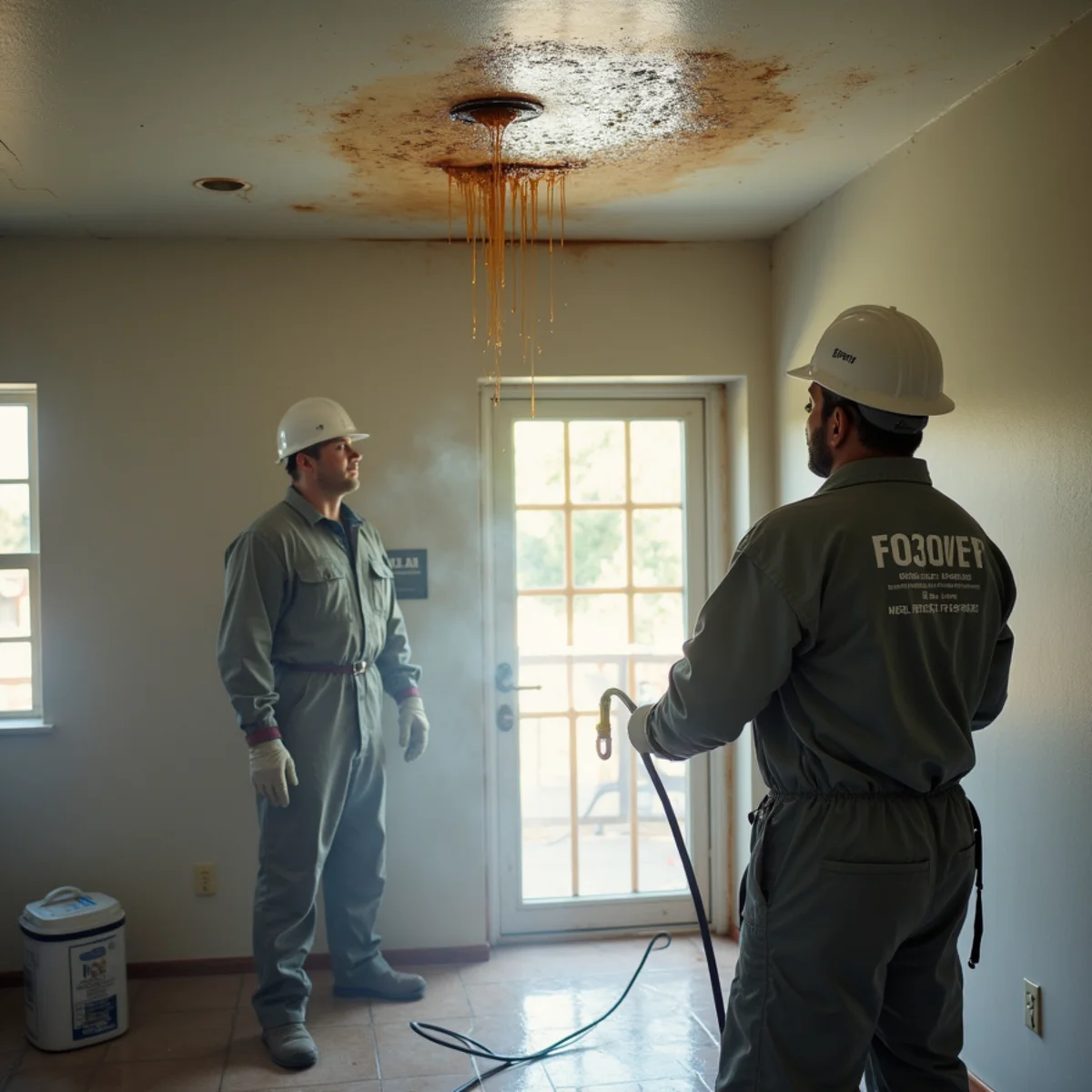
A ceiling holding pooled water can fail without much warning. If you see a bulge, sagging, or the paint bubbling and cracking, treat that spot as unsafe and clear the area underneath it. Do not stand under a bulging ceiling to inspect it closely - water-soaked drywall is far heavier than it looks and can come down all at once.
Relieve the pressure if the ceiling is bulging
This sounds counterintuitive, but if a section of ceiling is visibly ballooning with trapped water and you can safely reach it, a small controlled puncture with a screwdriver, done from a stable ladder with the area below already cleared, lets the water drain in a controlled way through a bucket instead of collapsing the whole section later. Only do this if you can reach it safely without standing directly under the bulge - if there is any doubt, skip this step and wait for us.
Contain the drip and protect the floor
Place a bucket or large container under the leak, and put a towel or tarp underneath that in case it overflows. Move furniture, electronics, and rugs out from under the drip zone. If the leak is near a light fixture or outlet, treat that area as an electrical risk and keep it dry and untouched - do not run a fan or anything electrical near an active ceiling leak.
- Bucket under the drip, towel underneath the bucket
- Move furniture and electronics out of the drip zone
- Stay away from any light fixture or outlet near the leak
- Do not go into the attic during an active storm to inspect it
Call us - this is a two-part problem
A leaking ceiling almost always means two things need attention: the water that is already inside your home, and the source, usually a roof leak, that is still letting more in. Call us at +1 (201) 277-9344. We handle the water damage side immediately - extraction, drying, and assessing how far it traveled - and can help you find a roofer for the source if a storm has caused active roof damage.
During an atmospheric river event we get calls from across Roseville at once, so the sooner you call, the sooner you are in the queue for our 60-minute dispatch window.
Why ceiling leaks travel further than they look
Water entering at the roof rarely drips straight down from the point where it comes through the shingles or flashing. It runs along rafters, pools on top of the drywall or in insulation, and finds the path of least resistance - often several feet from where the roof damage actually is. That is why a stain in one corner of a bedroom ceiling can mean saturated insulation across a much wider area above it.
We check moisture readings across the full ceiling plane and into adjoining walls, not just the visible stain, so we catch trapped moisture before it becomes a mold problem in the attic space. On a two-story home, we also check the floor above the leak, since water traveling along a rafter can pool against a subfloor before it ever reaches the ceiling drywall below.
What happens after the storm passes
Once the immediate leak is contained, we extract any standing water, remove wet insulation and drywall that cannot dry in place, and set air movers and dehumidifiers to bring the structure back to a normal moisture reading. Ceiling repairs typically follow the drying phase once everything reads dry, so paint and texture work is not applied over hidden moisture.
We are IICRC certified, follow IICRC S500 protocols, and are CSLB-licensed and insured. If your homeowners policy covers sudden storm damage, we document everything and bill your insurer directly.
Given Roseville's roughly 20 inches of rain concentrated almost entirely between November and March, a ceiling that leaked once during a storm is worth having checked again before the next atmospheric river system moves through, even if the visible stain seems to have dried between storms.
Do not wait out the storm
Every hour water sits in insulation and drywall raises the odds of a full ceiling replacement instead of a repair. Call +1 (201) 277-9344 as soon as you see the leak, even mid-storm.
What our crews watch for on storm ceiling calls
A mistake we see often once the rain stops: someone repaints or retextures over the stain within a day or two because it looks dry, without confirming the insulation and framing above it actually are. Paint seals in whatever moisture is left, and it hides the visible sign homeowners rely on to know if a problem is still there. If the attic above was never checked with a moisture meter, a repainted ceiling can be masking a slow mold problem that will not show up again until it is much further along.
There is a real tradeoff between opening a ceiling right away and monitoring it. If we catch a leak early, before the drywall has sagged or the paper facing has broken down, we can sometimes dry a small section in place with targeted air movement and injection drying, which saves you a repair. Once the drywall has visibly sagged or the paint has bubbled and cracked, that material has usually absorbed more water than it can give back, and cutting it out is faster and more reliable than trying to save it.
We also see homeowners hesitate to call an insurance adjuster out of a worry that filing a claim will raise their premium, and delay reporting while they wait to see how bad it gets. That delay is exactly what turns a coverable, sudden event into a harder conversation with the insurer, since standing water documented immediately looks different in an inspection than water that sat for days. Call us first for the damage itself, and worry about the claims conversation second.
Before the next atmospheric river hits
Roseville's rain is not spread evenly across the year - it is concentrated almost entirely between November and March, often arriving in a handful of intense atmospheric river storms rather than steady drizzle. That makes the weeks between storms the best window to catch a weak spot before it becomes an active leak, rather than finding out during the next downpour.
A short pre-season check costs a lot less than the cleanup after a ceiling has already let go, and most of it takes an afternoon. It also catches the small, fixable issues - a lifted shingle, cracked sealant around a vent boot - that cause the majority of storm-season ceiling leaks we see across the area, well before the next storm turns them into an emergency.
- Clear gutters and downspouts before November so water does not back up under the roof edge
- Have a roofer check flashing around chimneys, vents, and skylights - the most common failure points
- Look through the attic on a dry day for old stains, compressed insulation, or daylight coming through the decking
- Keep a bucket, tarp, and flashlight somewhere you can find them fast, so you are not searching mid-storm
- If last winter's leak was fixed with a patch alone, confirm someone actually verified the underlying moisture was resolved, not just the visible drip
Frequently asked questions
Only if you can reach it from a stable position without standing directly underneath the bulge. A controlled release through a small hole is often safer than letting the ceiling collapse on its own, but if you are unsure, clear the area and wait for us instead.
Timing is the biggest clue - a leak that appears or worsens during rain almost always points to the roof. A leak that shows up regardless of weather, especially under a bathroom or laundry room, is more likely a plumbing issue. Either way, we trace the source before we finish the repair.
Sudden storm damage, like wind-driven rain finding a new opening in the roof, is commonly covered. Damage from a roof that was already failing and simply never repaired may be treated differently. We document the loss clearly and bill your insurer directly for covered work.
We target a 60-minute arrival across Roseville, 24/7, even during active storms when call volume is high. Call +1 (201) 277-9344 as soon as you see the leak so we can get you into the dispatch queue.