
Water Damage Restoration
Leak Detection Services in Roseville, CA
Some of the most expensive water damage comes from leaks you never see — a pinhole in a copper line behind a wall, a slab leak under the foundation, a supply line weeping under the yard. The signs are subtle until they are not: a warm spot on the floor, a spike in the water bill, the faint sound of running water when everything is off.
- 60-minute emergency dispatch across Roseville
- Licensed, insured & IICRC-certified
- Local to Roseville & Placer County
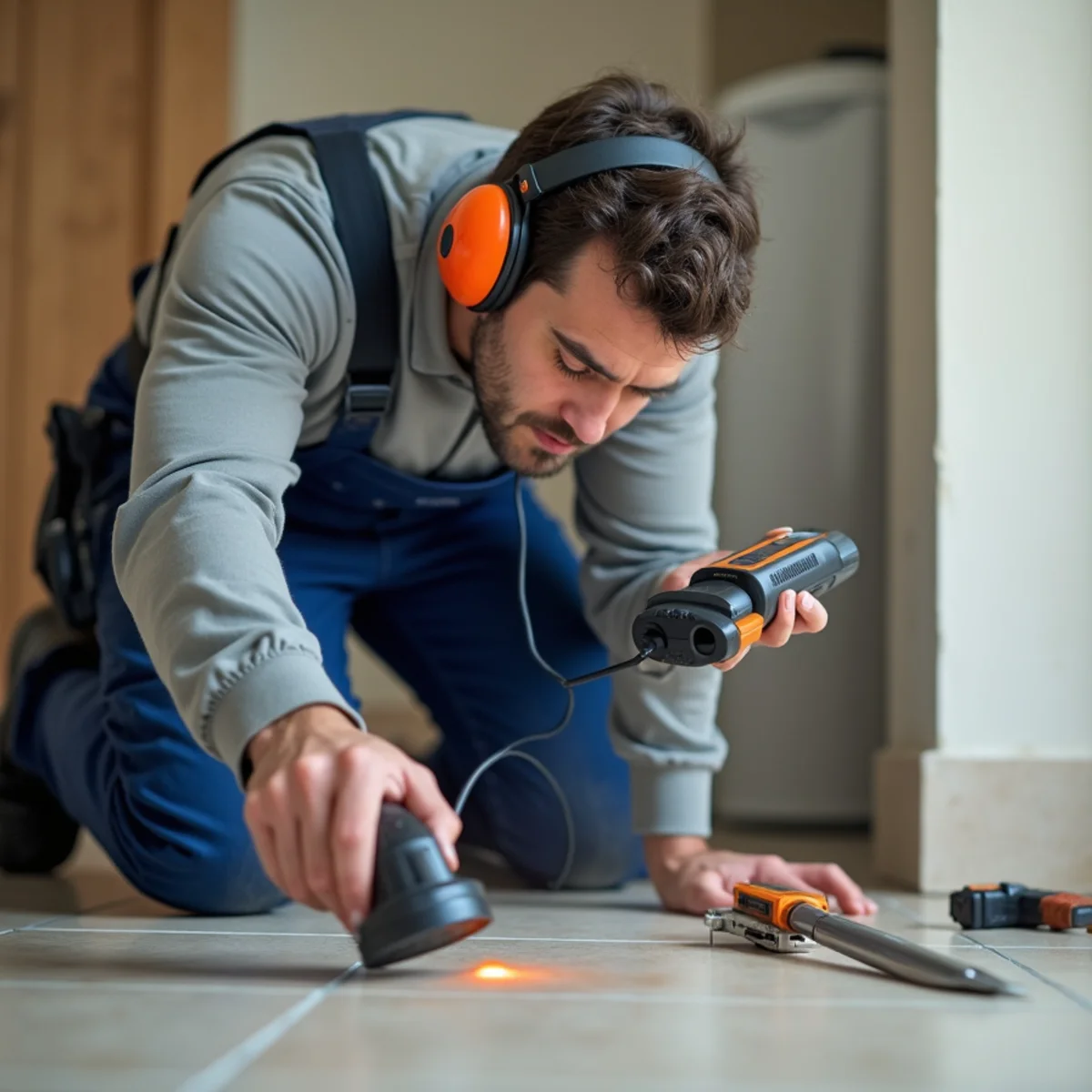
We find hidden leaks without tearing your home apart. Using acoustic sensors, thermal imaging, and moisture meters, we pinpoint the source, then coordinate the repair and handle any water damage the leak already caused.
Signs of a hidden leak
- A water bill that jumped with no change in usage
- A warm spot on the floor (a hot-water slab leak)
- The sound of running water when every fixture is off
- Low water pressure, or a meter that turns with nothing running
- Musty smells, mildew, or unexplained damp spots
Non-invasive detection, not guesswork
The old way to find a slab leak was to break up floor until you hit water. We do not work that way. Acoustic equipment lets us hear pressurized water escaping a line, thermal imaging shows the temperature signature of a hot-water leak, and moisture meters trace where the water has traveled. That combination lets us mark the spot precisely, so any access that is needed is small and targeted.
Why Placer County homes leak where they do
Sacramento Valley hard water is hard on copper. Over the years it pits the pipe from the inside, producing the pinhole leaks that are so common in Roseville's 1980s and 1990s tract homes now reaching their first repair cycle. Slab-on-grade construction across Roseville, Rocklin, and Granite Bay means many of those leaks happen under the foundation, where early detection saves a fortune in flooring and mold.
From detection to dry
Finding the leak is half the job. We coordinate the plumbing repair, then take care of the water damage the leak caused — drying the slab and flooring, treating for mold if it started, and documenting everything for your insurance claim. One call handles the whole chain.
What's included in a leak detection visit
We start by narrowing down the search area before any equipment comes out — the water bill history, where the sound of running water is loudest, whether the floor is warm anywhere, and which fixtures were recently used or replaced. That interview alone rules out a lot of ground before we start scanning. We also ask when the leak signs first appeared, since a sudden warm spot points to a different cause than a slow, months-long water bill creep.
From there, acoustic listening equipment picks up the sound of pressurized water escaping a line, even through concrete, while thermal imaging shows the temperature difference a hot-water leak leaves on the surface above it. Moisture meters confirm where water has actually traveled once it escapes the pipe. We cross-check all three before marking a spot, because acting on one signal alone is how homeowners end up with a hole in the wrong place. On yard leaks, we walk the suspected line above ground first, checking for soft or unusually green patches of grass that often mark where water has been surfacing quietly.
- Interview and visual inspection to narrow the search area before equipment comes out
- Acoustic listening equipment to hear pressurized water escaping a supply line
- Thermal imaging to spot the temperature signature of a hot-water slab or wall leak
- Moisture meters to confirm where escaped water has actually traveled
- A marked, precise location, so any access opened is small and targeted
- A written summary of the likely leak type — supply line, slab, or yard line — to hand to your plumber
Why Roseville homeowners trust us with leak detection
Guessing at a hidden leak means breaking up more of your home than necessary. Here is what our approach gets you instead:
- Non-invasive detection using acoustic, thermal, and moisture tools together, not just one method
- Local knowledge of why Roseville and Placer County homes leak where they do — hard water and slab-on-grade construction
- Licensed and insured technicians who coordinate the plumbing repair after the leak is found
- Direct insurance billing for any water damage the leak already caused
- One call that covers detection, repair coordination, and restoration of the damage — not three separate vendors
Serving Roseville and the surrounding communities
We locate hidden leaks throughout Roseville, especially in the 1980s and 1990s slab-on-grade tract neighborhoods now hitting their first major repair cycle, from areas near Sierra College Boulevard to newer construction closer to the Galleria and Fountains at Roseville.
We also serve Rocklin, Granite Bay, and Lincoln, where the same hard water and slab-on-grade construction patterns hold true, with a 60-minute response target for active leaks. The same acoustic and thermal equipment goes out on every call, whatever community it comes from. The communities we cover most are listed below.
How much does leak detection cost in Roseville, and how long does it take?
The detection visit itself is usually a smaller, separate cost from the $1,400 to $6,400 range that applies once there is actual water damage to repair — detection is billed for the time and equipment it takes to isolate the leak, not for damage. What it costs depends on whether the leak is in an accessible wall, under a slab, or out in the yard, and how many acoustic and thermal readings it takes to narrow the source down with confidence.
Most detection visits take one to two hours. If the leak already caused water damage — a wet slab, damp flooring, early mold — that part follows the same timeline as any water loss: extraction is same-day, drying runs 3 to 5 days. We coordinate the plumbing repair once the leak is marked, and we bill your insurer directly for any damage the leak already caused, separate from the detection visit itself.
- Slab and yard leaks generally take longer to isolate than an exposed wall leak
- Harder-to-access areas (finished walls, landscaped yards) add time to narrow the source
- More cross-checking between acoustic, thermal, and moisture readings adds confidence but also time on a stubborn leak
- Existing water damage from the leak is priced separately, using the same drivers as any other water loss
Our leak detection process
- 1
Interview & inspect
We review the symptoms — bill, sounds, damp spots — and inspect the likely areas.
- 2
Locate the source
Acoustic, thermal, and moisture tools pinpoint the leak with minimal access.
- 3
Coordinate the repair
We map the exact spot and coordinate the plumbing repair.
- 4
Restore the damage
We dry affected materials, treat for mold if needed, and document for your claim.
What affects leak detection cost
- Whether the leak is in a wall, under the slab, or out in the yard
- How accessible the suspected area is
- The equipment and time required to isolate the exact source
- The extent of any water damage the leak has already caused
Water damage spreads by the hour. Let's stop it.
60-minute emergency dispatch across Roseville, 24/7. We extract, dry, and rebuild — and bill your insurer directly.
- 60-min Roseville dispatch
- Licensed & insured
- Direct insurance billing
FAQ
Leak Detection & Repair Coordination — your questions
The detection visit is a smaller, separate cost from repairing any water damage the leak caused. It is priced by the time and equipment needed to isolate the source — usually one to two hours — and depends on whether the leak is in a wall, under a slab, or in the yard. Any resulting water damage is billed the same way as any other water loss, with direct insurance billing where it applies.
We use acoustic listening equipment, thermal imaging, and moisture meters to pinpoint the leak before any access is opened. When access is needed, it is small and targeted — not a torn-up floor.
A warm spot on the floor, a jump in the water bill, the sound of running water with everything off, or low pressure are all classic signs. Slab leaks are common in Roseville's older tract homes because of hard water and slab-on-grade construction.
We locate the leak and coordinate the plumbing repair, then handle the water damage it caused — drying, mold treatment if needed, and full documentation for your insurance claim.
Most visits take one to two hours, depending on how large the search area is and how many signals we need to cross-check. If the leak is under a slab, narrowing it down thoroughly is worth the extra time compared to guessing and opening the wrong spot.
Yes, and often it already has by the time a water bill jump or a warm floor spot gets noticed. That is why we check for existing water damage during every detection visit, not just the leak itself, and handle the drying and mold treatment if it is needed.
The detection visit itself is usually an out-of-pocket cost, but any water damage the leak already caused is often covered the same way a burst pipe would be. We help you understand which part of the bill your policy is likely to pick up.