
24/7 Emergency Service
Flooded Basement & Crawl Space Cleanup in Roseville, CA
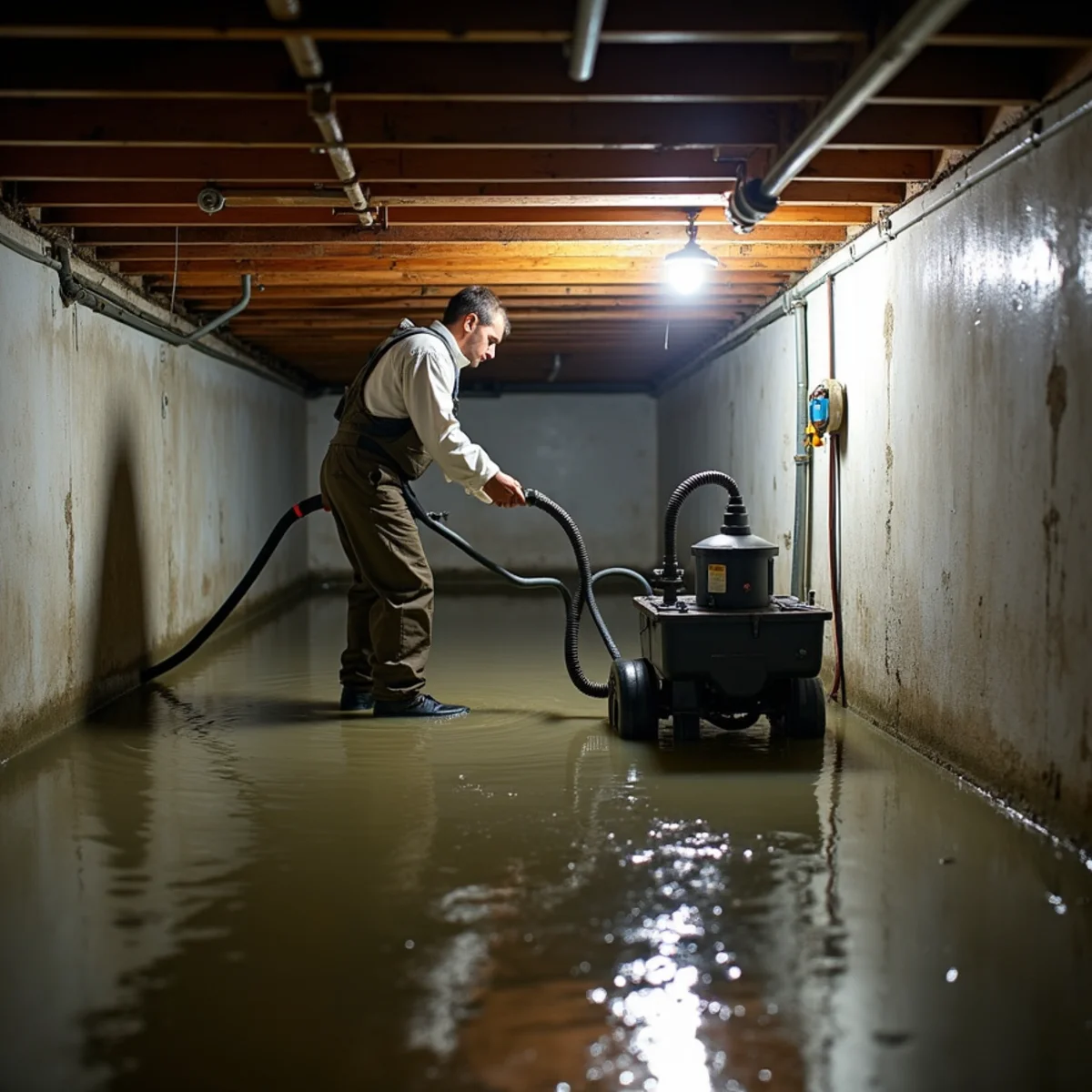
Water runs downhill, and in a home that means basements and crawl spaces flood first and dry last. These are also the spaces homeowners rarely check, so water can sit for days — soaking insulation, rotting framing, and feeding mold under the house before anyone notices the musty smell upstairs.
- 60-minute emergency dispatch across Roseville
- Licensed, insured & IICRC-certified
- Local to Roseville & Placer County
We pump out flooded basements and crawl spaces, dry them properly, and sanitize what the water touched. Most Roseville homes are slab-on-grade, but crawl spaces are common, and they need a crew that will actually get under there and do the job right.
Signs of a flooded crawl space or basement
- Standing water or saturated soil under the house
- A persistent musty or earthy smell in the home
- Sagging insulation hanging from the floor framing
- Higher indoor humidity or condensation on floors
- Efflorescence or water lines on foundation walls
Why crawl space water is easy to ignore and expensive to leave
Because you do not live in the crawl space, water there can sit unnoticed. But the air in the crawl space is the air in your house — moisture and mold spores rise through the floor. Left alone, standing water rots the subfloor and framing from below and drives up humidity throughout the home. Getting it out and drying the space protects the whole structure.
How we handle it
- Pump out standing water and remove saturated debris
- Remove and dispose of soaked insulation and vapor barrier
- Dry the framing and subfloor with air movers and dehumidifiers
- Apply antimicrobial treatment and address any mold growth
- Verify the space is dry with moisture readings, then document for your claim
Fixing why it flooded
A crawl space that flooded once will flood again unless the cause is addressed. We help you understand the source — poor exterior drainage, a plumbing or slab leak overhead, or groundwater during a wet Roseville winter — so the fix holds. Sometimes that means grading and drainage, sometimes it means a leak repair, and we point you the right way.
What a proper crawl space dry-out actually involves
Pumping the standing water out is the easy part. The harder part is confirming the framing, subfloor, and any remaining insulation are actually dry — crawl spaces are tight, often under three feet of clearance, and it is not a space you can eyeball from the access hatch and call finished. We put a technician under the house with air movers, dehumidification, and moisture meters, and we do not sign off until the numbers say dry.
Vapor barriers matter here too. A torn or missing vapor barrier lets ground moisture back into a crawl space we just spent days drying out, so we check and replace it as part of the job — otherwise you are paying to dry the same space again next winter.
- Pump-out of standing water with submersible pumps sized to the space
- Technician-level inspection under the house, not just a look through the access hatch
- Removal of saturated insulation and damaged vapor barrier
- Air movers and dehumidifiers set for a low-clearance crawl space, not a generic room setup
- Vapor barrier replacement to keep ground moisture from undoing the dry-out
Why Roseville homeowners trust us with flooded crawl space and basement cleanup
Crawl space work is hard to inspect yourself, which is exactly why it matters who you hire. Here is what stands behind ours:
- IICRC S500 standard applied to drying and sanitizing, even in spaces most companies rush through
- Licensed and insured technicians who actually go under the house
- 60-minute dispatch target so standing water is not sitting under your home for days
- Direct insurance billing for covered losses
- One crew handles pump-out, drying, sanitizing, and any framing repair — no separate contractor for each step
- We know which Roseville and Placer County neighborhoods run crawl spaces versus slab-on-grade, and how local drainage and grading tend to fail
Serving Roseville and the surrounding communities
Crawl space flooding shows up most in the older, non-slab pockets of Roseville and in the foothill communities where lots slope and drainage does more work. We handle pump-outs and dry-outs across Roseville, from West Roseville to the areas near Cirby Creek and Linda Creek, where storm runoff during a wet winter can push groundwater higher than usual.
We also cover Rocklin, Granite Bay, Loomis, Citrus Heights, Orangevale, and Folsom on a regular basis. If your crawl space has flooded before, we can usually tell you why after one look — and help you get ahead of the next storm instead of just cleaning up after it. Our most-served communities are linked below.
How much does flooded basement and crawl space cleanup cost in Roseville, and how long does it take?
Crawl space and basement jobs land in the same $1,400 to $6,400 range as a typical Roseville water loss, but where yours falls depends on how much insulation and vapor barrier has to be pulled out, whether the framing itself absorbed water long enough to need treatment, and how accessible the space is — a tight, low-clearance crawl space simply takes a technician longer to work in than an open basement.
Pump-out of standing water happens same-day. Drying the framing and subfloor typically takes 3 to 5 days, sometimes longer in a low-clearance space where airflow is harder to direct evenly. We don't call it finished on a timer — we call it finished when moisture readings hit target. Insulation and vapor barrier replacement, plus any framing repair, get scoped once the space is confirmed dry. We bill covered losses directly to your insurer.
- How much saturated insulation and vapor barrier needs to be removed and replaced
- Clearance and access — a cramped crawl space slows down both drying and inspection
- Whether framing or subfloor absorbed enough water to need structural repair
- Whether the flooding source (drainage, a leak) also needs correcting so it doesn't recur
Our basement & crawl space process
- 1
Assess & pump
We evaluate the space and pump out standing water.
- 2
Remove wet materials
We take out soaked insulation, vapor barrier, and debris.
- 3
Dry & sanitize
We dry the framing and subfloor and treat for microbial growth.
- 4
Verify & advise
We confirm dryness, document it, and advise on preventing the next flood.
What affects the cost
- The volume of water and the size of the space
- How much insulation and material must be removed and replaced
- Accessibility of the crawl space and drying time required
- Whether drainage or a leak source needs to be corrected
Water damage spreads by the hour. Let's stop it.
60-minute emergency dispatch across Roseville, 24/7. We extract, dry, and rebuild — and bill your insurer directly.
- 60-min Roseville dispatch
- Licensed & insured
- Direct insurance billing
FAQ
Flooded Basement & Crawl Space Cleanup — your questions
True basements are less common here than crawl spaces, since most homes are slab-on-grade. We handle both — the approach to pumping out, drying, and sanitizing is the same, and crawl spaces need just as much attention.
Usually poor exterior drainage, groundwater during wet winters, or a plumbing or slab leak above it. We identify the source so the fix actually holds, rather than pumping it out again every storm.
It can. Crawl space air rises into the home, carrying humidity and mold spores. Drying and sanitizing the space improves the air quality in the living areas above it.
Most crawl spaces reach target dryness in 3 to 5 days with proper air movement and dehumidification, similar to a standard water loss. Tight clearance, heavy saturation, or a large footprint can extend that — we give you a realistic estimate once we've assessed the space.
We'd rather you didn't. Standing water under a house can hide electrical hazards, sharp debris, and unstable footing, and Category 2 or 3 water carries contamination risk. Let a crew with the right equipment handle it.
Yes, saturated insulation gets removed and replaced as part of the job — leaving wet insulation in place just keeps the space damp and gives mold something to grow on.
Yes. If joists, subfloor, or sill plates were weakened by standing water, we assess the structural damage and handle the repair as part of the same job, rather than leaving you to find a separate framing contractor after the fact.
Most jobs run $1,400 to $6,400, similar to other Roseville water losses. The main cost drivers are how much insulation and vapor barrier need replacing, how accessible the space is for a technician to work in, and whether the framing needs treatment or repair — we give you a real number after assessing the space, not before.