
Dealing with this right now? See our water heater leak cleanup service, and we respond fast across West Roseville. Or call +1 (201) 277-9344 any time — we answer 24/7.
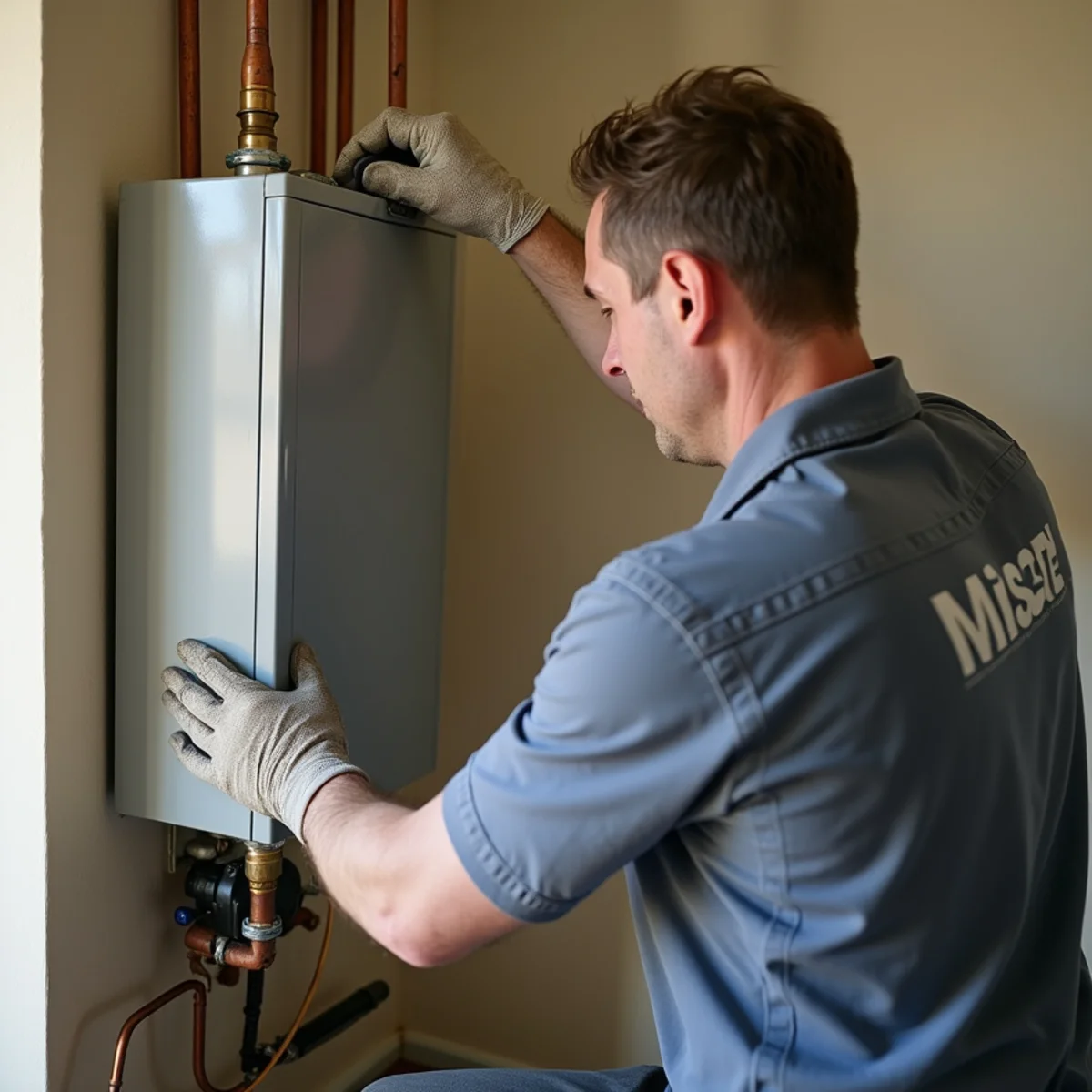
California law requires every residential water heater to be braced, anchored, or strapped to resist falling during an earthquake. Health and Safety Code Section 19211 has been on the books for decades, and it is one of the most commonly overlooked pieces of home maintenance in Roseville garages.
This guide explains what the law actually requires, why garage-mounted water heaters in West Roseville's tract-home stock are especially exposed, and what happens — and what to do — when a poorly strapped or unstrapped heater lets go.
What HSC 19211 Actually Requires
California Health and Safety Code Section 19211 requires residential water heaters to be braced, anchored, or strapped to resist horizontal displacement during an earthquake. The intent is straightforward: a water heater that tips over can snap its gas line and start a fire, or shear its water connections and flood the space around it.
The law applies statewide and is typically verified at the point of sale — sellers sign a Water Heater Bracing, Anchoring, or Strapping statement as part of a real estate transaction. That means most Roseville homeowners have technically certified compliance at some point, even if the original straps have since corroded, loosened, or were never installed to spec.
Why West Roseville Garages Are Ground Zero
Most water heaters in West Roseville's 1990s and 2000s-era tract homes sit in the garage, tucked against an exterior wall or in a small closet built specifically for it. That location makes sense for venting and access, but it also means a failure starts on a concrete slab a few feet from the door into the house.
Garage floors slope slightly toward the driveway in most of these homes, which can buy a little time before water reaches the interior threshold — but not much. Once forty to fifty gallons of tank water combines with an unchecked supply line, it finds the door, the drywall base plate, and often a shared wall with a bedroom or laundry room.
What Proper Strapping Looks Like
Correct strapping is not a single zip tie or a bungee cord looped around the vent pipe, which we still see more often than you would expect.
- Two metal straps, one in the upper third of the tank and one in the lower third
- Each strap anchored into wall studs or approved blocking, not just drywall
- Adequate clearance maintained between the tank and the strap anchor points per manufacturer guidance
- A flexible connector or short rigid section on the gas line that can flex without shearing
A West Roseville Job That Started With a Missing Strap
We were called to a West Roseville home built in the late 1990s where the original builder-grade water heater had one intact strap and one that had rusted through years earlier. A stack of storage bins in the garage nudged the tank just enough to stress the cold-water inlet fitting, and it cracked overnight.
By morning, the family found close to an inch of standing water across the garage floor and a wet stripe running along the base of the shared wall into the laundry room. We extracted the standing water, pulled the wet baseboard and lower drywall in the laundry room, and ran air movers and a dehumidifier for four days to bring moisture readings back to normal before the drywall went back up.
It Is Not Just Earthquakes
Strapping is written into law because of seismic risk, but an unstrapped or loosely strapped tank is vulnerable to more everyday hazards too — a bumped garage door track, a stack of boxes shifting, or simple settling over twenty-plus years. Corrosion at the base of the tank and a failed temperature-and-pressure relief valve are common failure points completely separate from strapping, and either one can dump water just as fast.
Homes original to the late 1990s and early 2000s building boom in West Roseville are now old enough that first-generation water heaters, angle stops, and flexible connectors are reaching the age where manufacturers expect them to fail. Hard water across the Sacramento Valley accelerates corrosion inside the tank and at fittings, which shortens that window further.
If Your Water Heater Floods the Garage
Shut off the water supply valve at the top of the tank and the gas or electric supply if you can safely reach it. Do not walk through standing water near an electrical panel or outlet.
- 1Shut off the cold-water supply valve on top of the tank
- 2Turn off the gas valve or breaker feeding the unit
- 3Move anything on the garage floor that can be lifted out of the water
- 4Call a restoration crew before mopping — trapped moisture under baseboard and drywall needs extraction and drying equipment, not a towel
How We Restore a Garage and Adjoining Rooms
We extract standing water first, then use moisture meters and thermal imaging to map exactly how far the water traveled inside walls and under flooring, since garage floods routinely wick further into a home than what is visible. Wet baseboard and drywall usually need to come out; concrete slabs and framing dry with air movers and dehumidifiers over three to five days.
We are IICRC-certified, work to the S500 water-damage standard, and are CSLB-licensed and insured. We bill your insurer directly for covered work and can recommend a licensed plumber to correct the strapping before we close out the job, so the same failure does not happen twice.
What Our Crews Watch For When We Inspect a Water Heater
When we're on a call for a different issue entirely — a slab leak, a dishwasher failure — our techs still glance at the water heater strap job on the way past, because it's one of the easiest failures to catch before it becomes a claim. The most common mistake we find is not a missing strap but a strap anchored into drywall alone instead of the wood stud or blocking behind it. Under real seismic load, or even just the tank settling and shifting over years, drywall anchors pull straight out, and the strap ends up doing nothing.
The second thing we check is whether the water heater has a drain pan with a line routed to a drain or outside the structure, since a pan with nowhere for the water to go just delays the flood by a few minutes rather than preventing it. A drain pan is not required everywhere a water heater sits, but for any unit installed above living space or where a leak would travel toward finished rooms, it is inexpensive insurance we recommend homeowners add when they replace strapping or the tank itself.
- Straps anchored into drywall only, with no visible screw into a stud or blocking
- A single strap instead of two — upper third and lower third of the tank
- A drain pan with no drain line, or a drain line that dead-ends inside a cabinet
- A rigid gas connection with no flex section where the code calls for one
DIY Strapping vs. Calling a Plumber
A basic strapping kit costs well under fifty dollars, and installing it correctly is within reach for most homeowners with basic tools, which is part of why the law does not require a licensed contractor to do it. Where it goes wrong is when the straps get treated as a five-minute afterthought — looped around the vent pipe, snugged with a ratchet strap not rated for the job, or anchored into whatever surface is closest instead of a stud. If you are not confident you hit a stud on both sides, it is worth having a plumber check the job during a water heater flush or inspection.
Strapping is also easy to forget about once it is installed, which is why we suggest treating it as part of an annual garage check rather than a one-time task. Give the straps a firm tug once a year, ideally around the same time you test your smoke detectors or check your irrigation backflow device, and look for rust developing where the strap meets the tank or the wall anchor. Hard water across the Sacramento Valley speeds up corrosion on metal hardware just as it does inside the tank, so hardware that looked fine at installation can weaken years before the tank itself fails.
- Do not substitute a zip tie, bungee cord, or ratchet strap not rated for seismic bracing
- Do not anchor a strap into drywall alone — it needs to reach a stud or code-approved blocking
- Do not strap directly over the vent pipe or the T&P relief valve, which blocks access in an emergency
- Do not assume a strap installed at the original build date is still tight — check it annually
Frequently asked questions
Yes. California Health and Safety Code Section 19211 requires residential water heaters to be braced, anchored, or strapped to resist falling during an earthquake, and it applies statewide, including every home in Roseville.
Most standard homeowners policies cover sudden and accidental water damage from a failed water heater, though coverage details vary by policy. We document the loss and bill your insurer directly for covered work; you are responsible for your deductible.
Look for two metal straps anchored into wall studs, one near the top third of the tank and one near the bottom third, not just wrapped around drywall. If you are not sure, a licensed plumber can check it in a few minutes.
Yes. Even a small ongoing leak that never floods the floor can wick into a base plate or adjoining wall and support mold growth within 24 to 48 hours. If you notice a musty smell near your water heater, have it checked before it becomes a bigger job.