Dealing with this right now? See our burst pipe cleanup service, and we respond fast across Granite Bay. Or call +1 (201) 277-9344 any time — we answer 24/7.
Roseville does not get a real winter by most standards — hot, dry summers above 100 degrees are the story most people tell about this part of Placer County. But the record low sits at 24 to 26 degrees, and on the coldest nights of the year, pipes here do freeze and burst, especially at the higher elevations toward Granite Bay and East Roseville.
This guide covers why the foothill edge of our service area sees more freeze damage than the valley floor, which pipes are most exposed, and what to do before and after a hard freeze warning.
Does It Actually Freeze Here?
Roseville averages roughly 20 inches of rain a year, almost all of it between November and March, and most winter nights stay well above freezing. But the historical record low for the area sits at 24 to 26 degrees, and every winter brings at least a handful of nights that dip below 32.
Because hard freezes are rare here rather than routine, homes and irrigation systems are not built the way they would be in a genuinely cold climate. That gap between how often it freezes and how well homes are prepared for it is exactly why a single cold snap can cause disproportionate damage.
Why Granite Bay and East Roseville See It Worse
Elevation matters more than most people expect over a short distance. The eastern edge of our service area, including Granite Bay and the higher ground toward East Roseville, sits noticeably above the valley floor, and higher, more open ground loses heat faster on a clear, still night.
Larger lots with more open exposure, common in Granite Bay, also cool faster than a tightly packed subdivision where homes and pavement hold onto daytime heat. On a still, clear night after a cold front pushes through, that combination can put pipe temperatures a few critical degrees lower than what a thermometer in downtown Roseville is reading at the same hour.
The Pipes Most Likely to Burst
Freeze damage almost never starts with a pipe buried deep inside conditioned living space. It starts at the edges — anywhere plumbing runs through an unconditioned or exposed area.
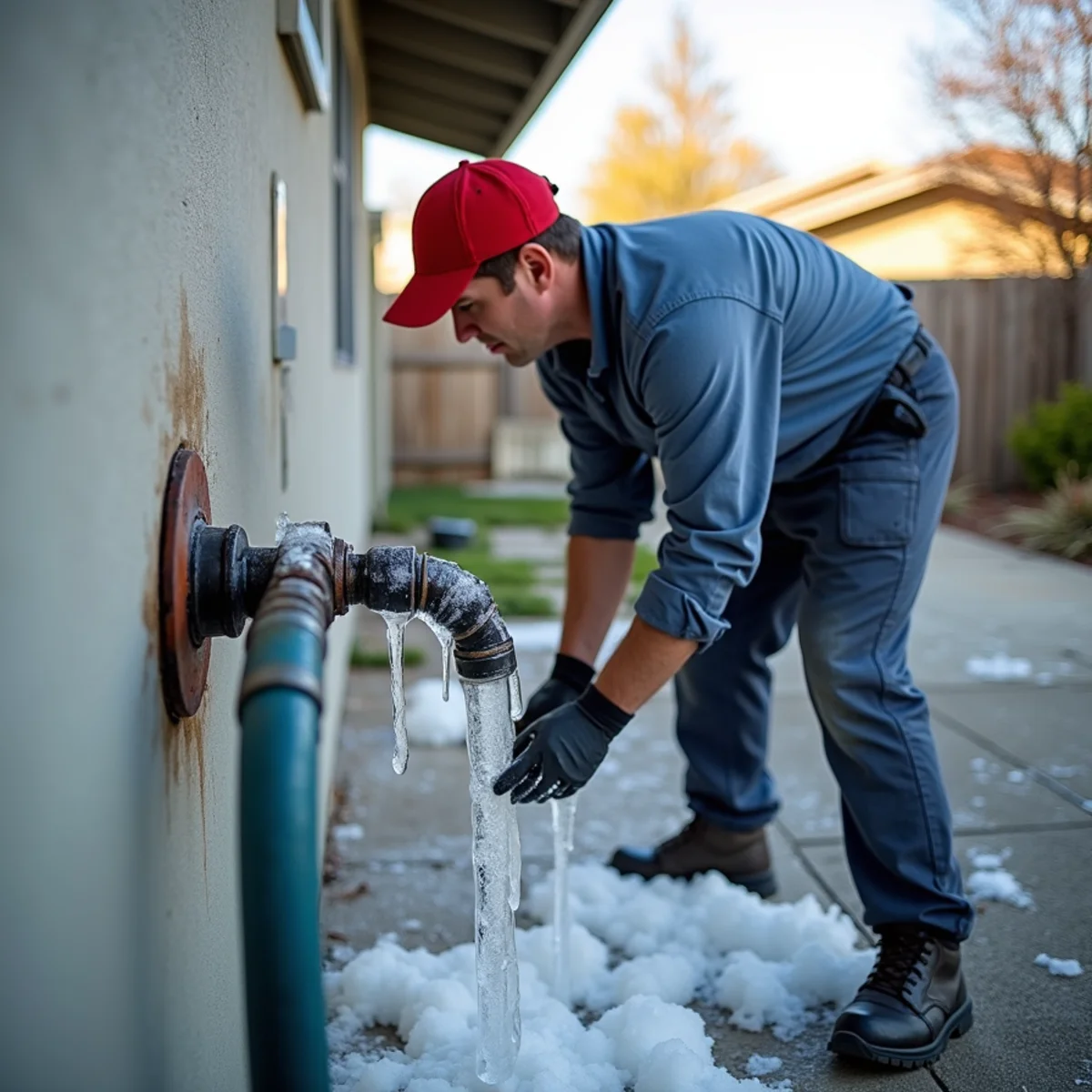
- Exterior hose bibs and the short run of pipe just inside the wall behind them
- Pipes running through an uninsulated garage, especially along an exterior wall
- Irrigation backflow preventers and valve boxes left exposed above or near grade
- Crawl space plumbing in older homes without skirting or insulation
- Attic runs near soffit vents in homes with minimal insulation
Why Roseville Homes Are More Exposed Than Colder-Climate Homes
A home built in a place with real winters typically buries water lines deeper, insulates exposed runs as a matter of code, and equips exterior fixtures with frost-proof hardware. Homes built for a Sacramento Valley climate skip most of that, reasonably, because a hard freeze here is the exception rather than the rule.
That means a cold snap that a Midwest home would shrug off can catch a Roseville-area home unprepared. A hose bib without a frost-proof design, a garage wall with minimal insulation, or a backflow device sitting exposed in a valve box are all normal here — and all vulnerable during the handful of nights a year when it matters.
What to Do Before a Hard Freeze Warning
When the forecast calls for overnight lows near or below freezing, a few minutes of prep can prevent days of drying equipment later.
- Disconnect garden hoses and let exterior bibs drain
- Wrap exposed hose bibs and backflow devices with insulating covers or even a towel and plastic bag
- Let a faucet fed by an exposed line drip slightly overnight — moving water is far less likely to freeze
- Open cabinet doors under sinks on exterior walls so household warmth can reach the pipes
- Know where your main shutoff valve is before you need it in the dark
A Granite Bay Job That Started With One Cold Night
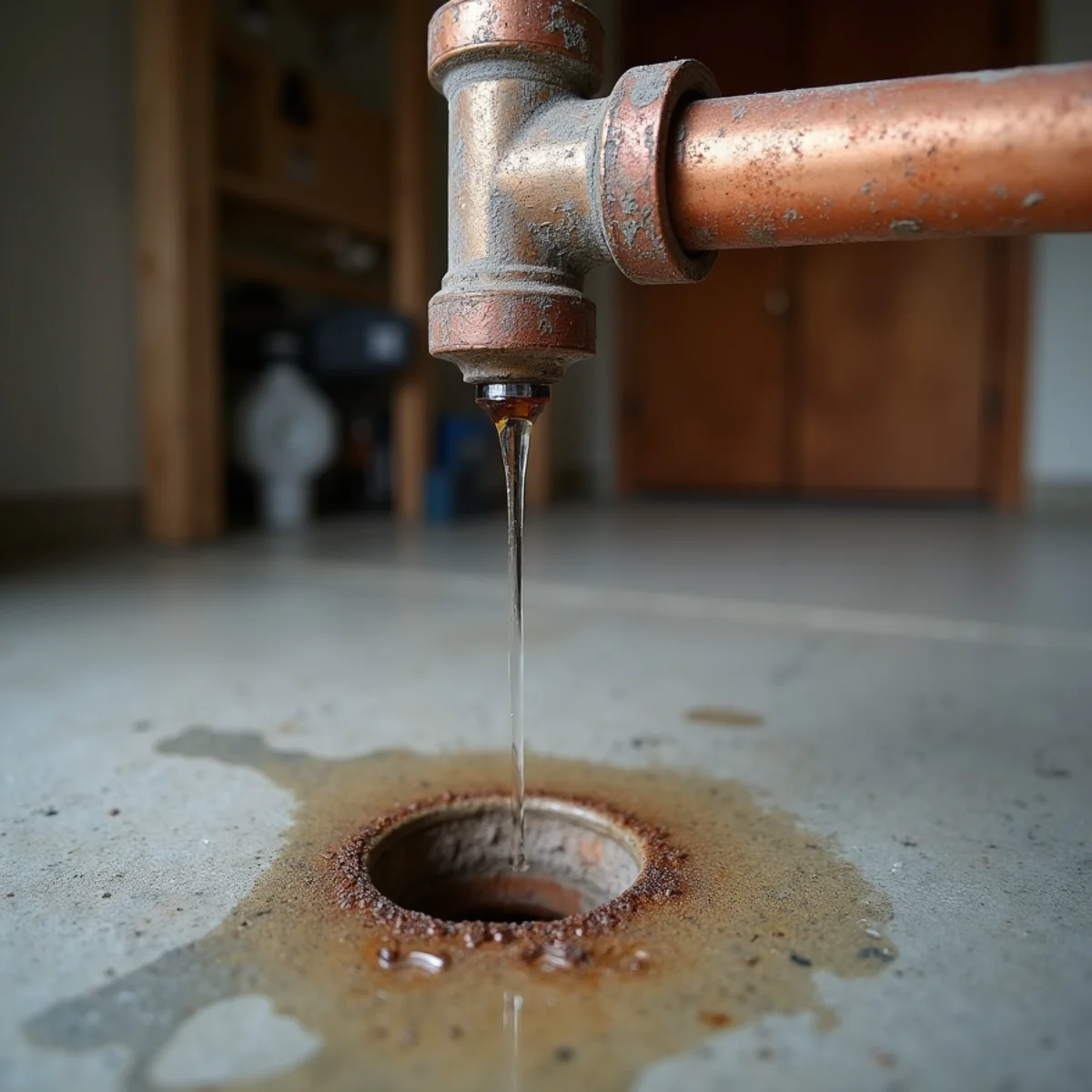
After an overnight cold snap pushed temperatures into the mid-20s, we responded to a Granite Bay home where a supply line running through an uninsulated section of garage wall split as the ice inside it expanded. The homeowner did not notice until the following afternoon, when water had already tracked across the garage slab and along the base of a shared interior wall into a bedroom closet.
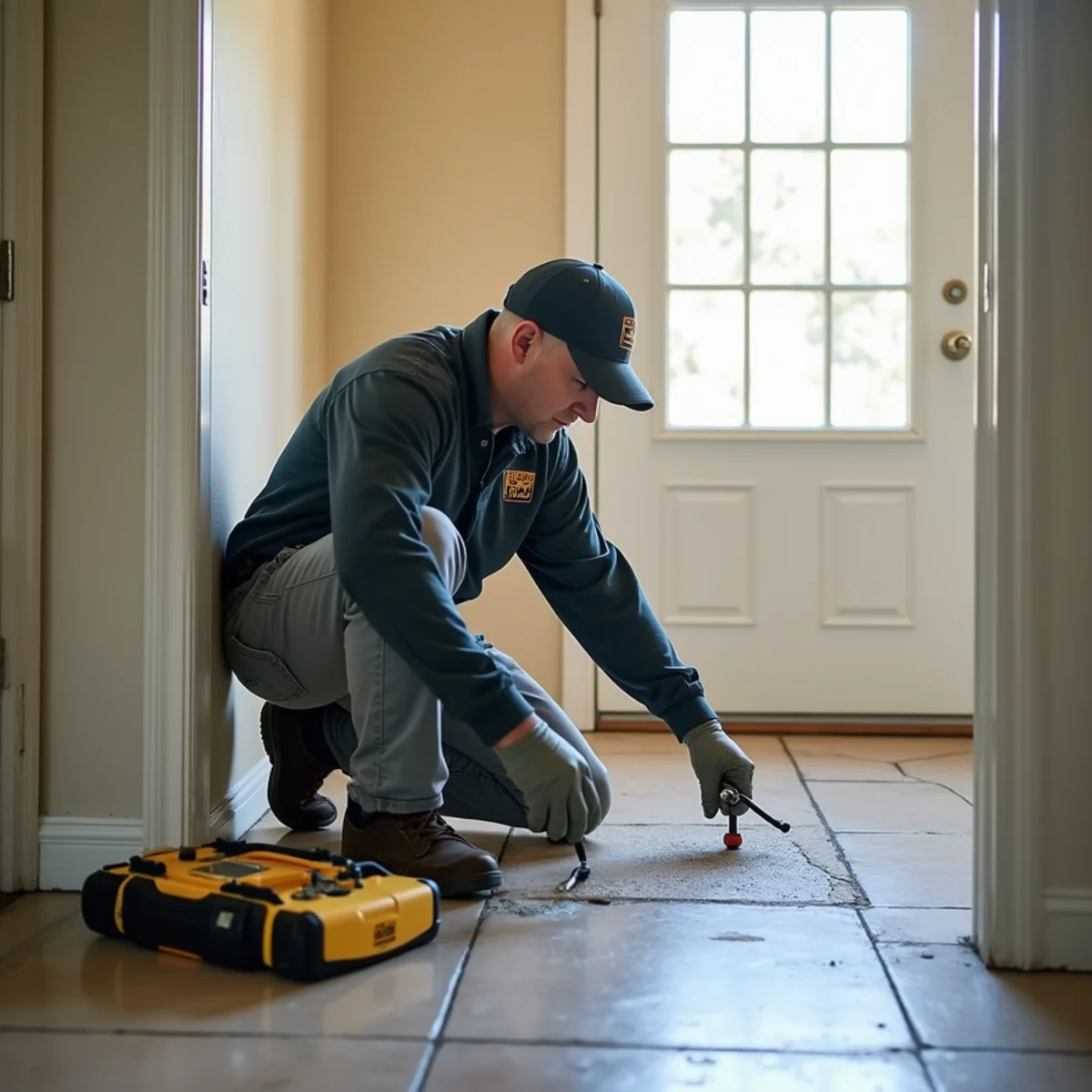
We shut off the water at the main, extracted the standing water, and pulled wet baseboard and the lower section of drywall in the closet. Moisture readings in the wall cavity stayed elevated for several days even after the visible water was gone, which is typical — we ran air movers and a dehumidifier for four days before readings matched the rest of the house.
What to Do the Moment a Pipe Bursts
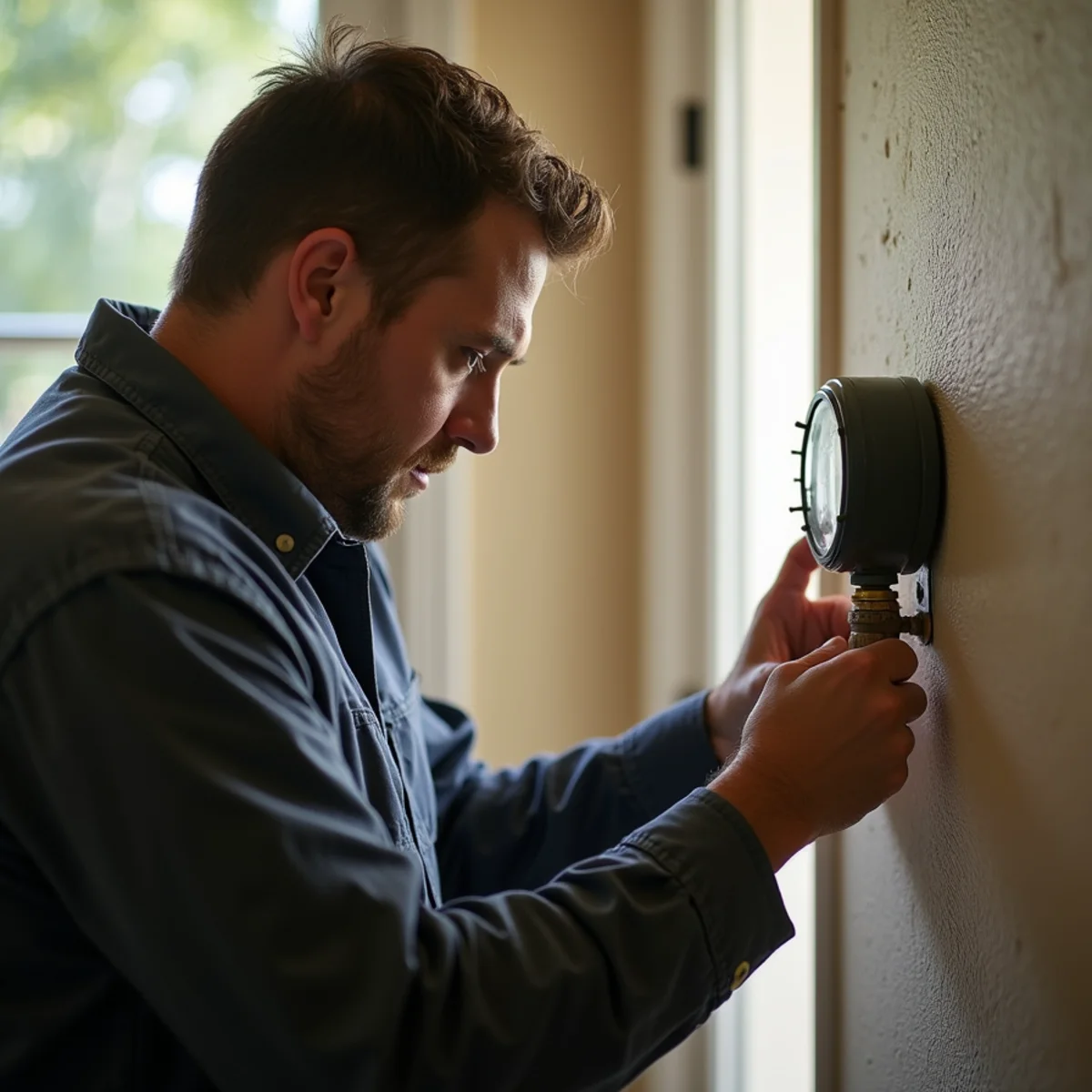
Shut off the water at the main valve first, not just the fixture nearest the break, since a freeze crack can be feet away from where the leak actually shows up. Move anything valuable off the floor and out of the path of the water if it is safe to do so.
Call a restoration crew before you start mopping. Cold-weather bursts often push water into wall cavities and under flooring where a towel cannot reach, and that trapped moisture is exactly what turns into mold within 24 to 48 hours if it is not extracted and dried properly.
What Our Crews Watch For After a Freeze Warning
The pattern we see after almost every hard freeze in Granite Bay and East Roseville is a delay between the actual freeze and the call for help. Ice inside a pipe does not usually announce itself with a leak — the leak shows up once the ice thaws and pressure returns to the line, which is often twelve to twenty-four hours after the cold snap has already passed and the homeowner has stopped thinking about it. By the time water is visible, it may have been running for hours inside a wall or under a slab.
The mistake that turns a contained freeze into a bigger loss is trying to speed up the thaw with direct heat — a space heater aimed at a wall, a hair dryer on a suspected frozen section, or worse, an open flame near a pipe. Uneven, rapid heating on a pipe that already has a hairline crack from ice expansion can turn a slow weep into a full split the moment the ice inside lets go. If you suspect a frozen but not yet burst pipe, shutting off the water and letting it thaw gradually, or calling a plumber, is safer than any DIY heating shortcut.
Irrigation Systems and Freeze Risk on Granite Bay's Larger Lots
Granite Bay's larger, more heavily landscaped lots carry more exposed irrigation infrastructure than a typical Roseville subdivision, and that system is often the first thing to fail in a hard freeze — not because it matters less, but because it sits entirely outside and gets far less attention than the pipes inside a wall. A cracked backflow preventer or a split drip line does not flood a house, but a fitting that fails at 5 a.m. during an automated cycle can run for hours before anyone notices, wasting enormous amounts of water once the system pressurizes again.
Winterizing an irrigation system is a different job than protecting household plumbing, and it is worth treating as a separate checklist rather than an afterthought tacked onto pipe insulation. None of this requires professional blow-out service in most Roseville-area yards, since our freezes are brief rather than sustained, but a few extra minutes on the irrigation side prevents a surprise on the water bill even when the house itself stays dry.
- Insulate or wrap the backflow preventer with a foam cover or towel, the same as an exterior hose bib
- Turn off the irrigation controller or set it to rain-delay so a scheduled cycle does not run during the freeze
- Drain water from any exposed above-ground piping or valve boxes where it can pool and freeze
- Check drip-line fittings in garden beds for cracks each spring, since a freeze-damaged fitting often is not found until the next watering season
Frequently asked questions
It is uncommon but real. The recorded low for the area sits at 24 to 26 degrees, and most winters bring at least a few nights cold enough to freeze exposed plumbing, especially at higher elevations like Granite Bay and East Roseville.
Exterior hose bibs, pipes running through an uninsulated garage wall, irrigation backflow devices, and crawl space or attic plumbing are the most exposed. Anything inside fully conditioned living space is rarely the problem.
Disconnect hoses, insulate or cover exposed hose bibs and backflow devices, let a faucet on an exposed line drip overnight, and open cabinet doors under sinks on exterior walls. A few minutes of prep can prevent a multi-day dry-out.
Shut off the water at the main valve, not just the nearest faucet, and call a restoration crew before mopping up. We answer 24/7 and aim for a 60-minute arrival to extract standing water and dry out the walls and flooring properly.