Dealing with this right now? See our water extraction & removal service, and we respond fast across South Roseville. Or call +1 (201) 277-9344 any time — we answer 24/7.
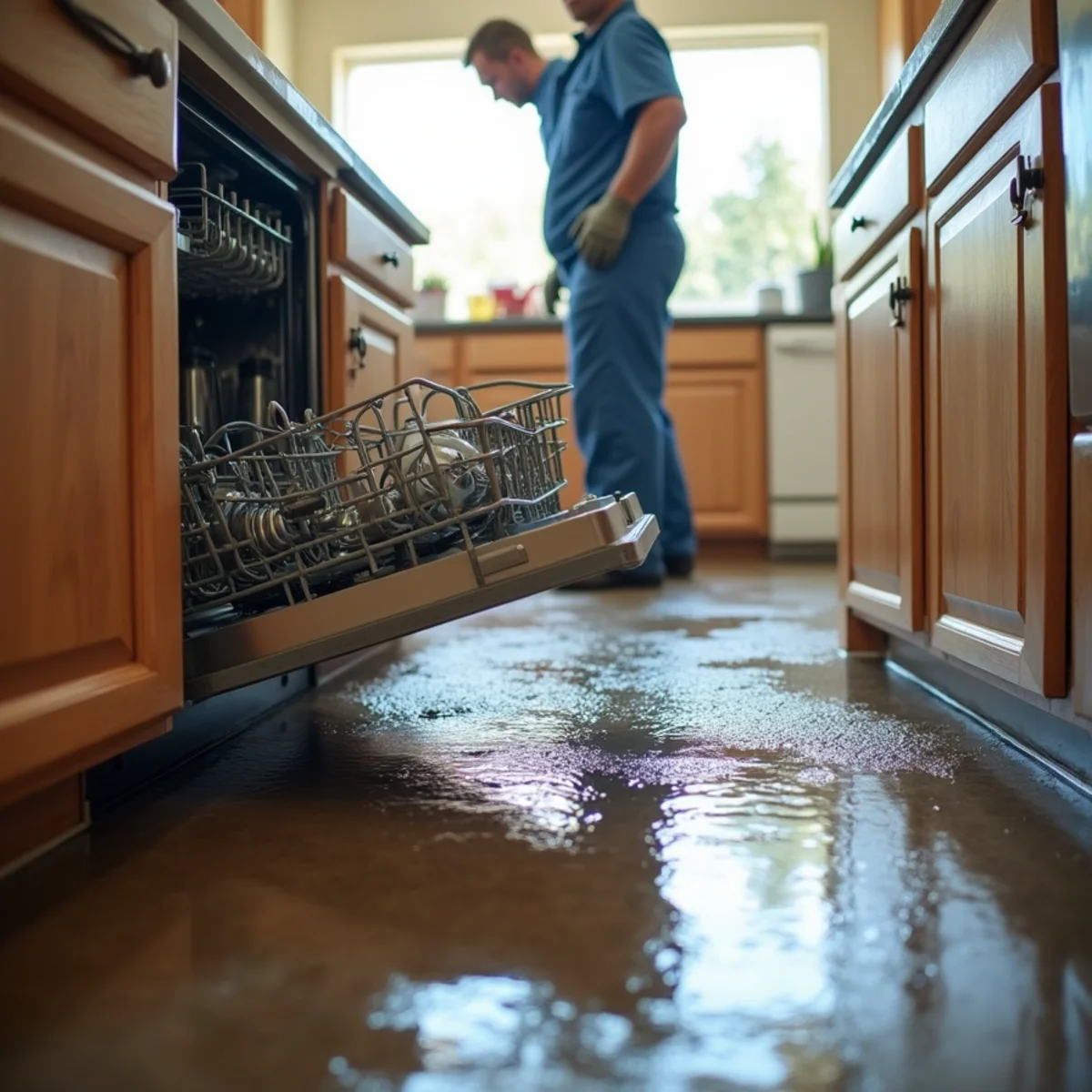
You walk into the kitchen in the morning and your socks get wet before your coffee does. The dishwasher ran its cycle overnight and something failed - a hose, a door seal, a pump - and now there is water across the floor, possibly under cabinets, possibly already into the dining room. Unlike a burst pipe, this water has had hours to sit and spread while everyone slept.
Here is what to check first, what to do about the water itself, and why the hours of head start this kind of leak gets make a fast call more important, not less.
Shut off the water and stop the cycle
Find the shutoff valve under the kitchen sink, usually on the hot water line, since most dishwashers run off hot water only. Turn it clockwise until it stops. If you cannot find a dedicated dishwasher valve, shut off the main line under the sink or your home's main shutoff.
Do not run the dishwasher again, even to try to finish or cancel the cycle normally, until the source of the leak is identified. If it is mid-cycle, unplug it or switch off its breaker instead of pressing buttons on a wet control panel.
Assess how far the water traveled overnight
This is the part that makes overnight leaks different from ones you catch immediately - the water has had a full night to spread. Check the obvious spot first, then widen your search. Kitchens often connect directly to dining rooms, hallways, or living rooms with only a thin threshold, and hardwood or laminate flooring can wick water several feet from the source before it is visible on the surface.
- Check under and inside the sink base cabinet next to the dishwasher
- Check the toe-kick along the full run of cabinets, not just near the dishwasher
- Look for water under the refrigerator if it is nearby
- Check adjoining rooms for water that traveled under baseboards
Deal with cabinets before they swell
Kitchen cabinets are typically particleboard or MDF under a laminate or wood veneer, and both materials swell quickly when they absorb water - often within hours, not days. Open every cabinet door near the leak, remove items from the bottom shelves, and prop the doors open to let air circulate. Do not wait until later in the day to check this; overnight leaks have already had a head start.
Call us before you start pulling up flooring
It is tempting to start pulling baseboards or lifting flooring to check for water damage yourself, but that can spread wet material to dry areas and make it harder for us to assess how far the water actually traveled. Call us at +1 (201) 277-9344 instead. We use moisture meters to map the full extent under flooring and inside cabinets without unnecessary demolition, and we only remove what genuinely cannot be saved.
Why overnight leaks are harder than they look
A leak caught in the moment is usually contained to a small area. A leak that ran for six or eight hours overnight has had time to reach floor seams, travel under cabinet toe-kicks, and in some cases wick into an adjoining room's carpet or subfloor. Category also matters here: dishwasher discharge water is Cat 2, meaning it carries some contamination from food residue and detergent, and it should not be treated the same as clean supply-line water.
We treat Cat 2 water with more thorough cleaning and, where materials cannot be adequately cleaned and dried, removal - particularly with porous materials like cabinet particleboard, carpet padding, or laminate flooring that has already begun to swell or delaminate.
Many Roseville kitchens have hardwood or engineered wood flooring installed over the original tract-home slab, and that flooring is especially vulnerable to overnight leaks. Once water gets under a plank seam, it can cup or buckle the wood within a day, well before the surface shows an obvious sign of water damage to someone glancing at the floor.
What our crew does on a kitchen leak call
We extract standing water, pull affected toe-kicks and cabinet bottoms if needed to dry the cavity behind them, and set air movers and dehumidifiers targeted at the kitchen and any adjoining rooms the water reached. We take daily moisture readings until everything reads dry, generally three to five days, and coordinate directly with your insurance adjuster if the loss is covered.
We are IICRC certified, follow IICRC S500 standards for water categorization and drying, and are CSLB-licensed and insured. Where flooring has already started to cup or buckle, we document the extent clearly so your adjuster has photos and moisture logs that support the scope of repair.
Do not wait to see if it dries on its own
A kitchen floor that looks dry on the surface can still be wet underneath. Call +1 (201) 277-9344 so we can confirm with moisture meters rather than guessing.
What our crews watch for on kitchen leak calls
The mistake we see most is the instinct to run the dishwasher one more short cycle just to see if it is still leaking. If a pump seal or drain line is the actual problem, that adds more water into cabinets and flooring that are already saturated at the exact moment you are trying to assess the damage, not add to it. Wait until the cause is identified before running it again at all.
There is a tradeoff in how quickly we pull toe-kick panels versus the cabinet boxes themselves. Kick panels are usually stapled or clipped in place, so they are cheap and easy to remove and reinstall, and we lean toward pulling them early to check the cavity behind them. The cabinet carcass itself is a bigger job to replace, so we try to dry that in place with directed airflow whenever the material still tests solid, since replacing a full run of cabinets costs far more than a section of toe-kick.
One more pattern worth naming: people notice the leak, clean up the obvious puddle, and go about their day assuming the worst is over, without addressing whether the dishwasher itself is safe to run again once repaired. A pump seal or hose that failed once under normal operating pressure is telling you something about the unit's age or install, and running it again without fixing the actual cause just resets the clock on the same failure.
What determines whether this stays a small job or becomes a bigger one
Not every dishwasher leak turns into the same size job. A few factors decide whether this is a floor and toe-kick repair or something that reaches cabinetry, adjoining flooring, and a longer dry-out. How long the water sat before anyone found it is the biggest one - and an overnight leak already starts at a disadvantage compared to one caught mid-cycle.
The material involved matters just as much as the time. Some floors and cabinet builds simply hold up to water longer than others, which is why two kitchens with the same size leak can end up with very different repair scopes.
None of these factors are things you can change after the fact, which is why response time matters more than almost anything else on a kitchen leak call. The same amount of water, caught within an hour instead of overnight, is routinely a same-day fix instead of a project that touches cabinetry and flooring. Here is what specifically moves the needle:
- How long the water sat before it was found - a few hours versus a full night changes what can be saved
- Flooring type - engineered hardwood and laminate swell and cup faster than tile or sealed concrete
- Cabinet material - original builder-grade particleboard swells faster than solid wood or plywood boxes
- How far the water traveled - a single cabinet run dries faster and cheaper than water that reached an adjoining dining room or hallway
- Whether the leak was caught immediately or ran through multiple cycles before anyone noticed
Frequently asked questions
Swelling, delamination of the laminate surface, or a soft, spongy feel when you press the particleboard are signs that section needs replacement. We assess each cabinet individually - often only the base and lower few inches need work, not the whole unit.
It is Cat 2 gray water, meaning it carries some contamination from food particles and detergent residue. It is not as high-risk as sewage, but it should be cleaned and dried thoroughly rather than treated like plain clean water.
In most cases, yes, once standing water is extracted - we work around your household as much as possible. If cabinets or flooring need to come out, we will walk you through what areas to avoid until drying is complete.
Common causes include a worn door gasket, a cracked or loose supply hose, a failed pump seal, or a clogged drain line backing up. We focus on the water damage; a licensed appliance repair technician or plumber can pinpoint the exact mechanical cause.