
Dealing with this right now? See our water damage restoration service, and we respond fast across Citrus Heights. Or call +1 (201) 277-9344 any time — we answer 24/7.
California homeowners policies do not treat all water the same way. A burst pipe at 2 a.m. and a slow leak under a bathroom vanity can both leave you with wet drywall and a ruined floor, but one is likely covered and the other likely is not. The difference is a phrase buried in most policies: sudden and accidental.
This article walks through what typically falls inside that line and what falls outside it, how flood water is handled differently from every other kind of water, and what documentation actually moves a claim forward instead of stalling it.
The line every policy draws: sudden and accidental vs. gradual
Most California homeowners policies cover water damage that happens suddenly and accidentally, a supply line that bursts, a water heater tank that fails, a washing machine hose that blows off its fitting overnight. These events happen without warning and without anything the homeowner reasonably could have prevented.
What they generally exclude is damage from a leak that developed gradually, a slow drip under a sink that went unnoticed for months, a worn toilet wax ring that seeped for weeks, or ongoing seepage through a foundation crack. Insurers reason that gradual damage is a maintenance issue, not an insurable accident, and adjusters look closely for staining, warping, or mold that suggests a leak was present long before the claim was filed.
Where slab leaks and hidden pipes get complicated
Slab leaks sit in a gray area that trips up a lot of homeowners. If a copper line under the slab suddenly ruptures, the resulting water damage is often covered even though the pipe itself may not be. Many policies pay to access and repair the specific section of pipe that failed, plus the damage the water caused, but do not pay to replace the entire plumbing system.
That distinction matters in Sacramento Valley's older slab-on-grade tract homes, where hard water has spent decades pitting copper supply lines. One pinhole leak might be a covered water-damage claim. A homeowner who ignores three prior leaks and then asks for a full repipe is asking for something most policies were never designed to pay for.
We see this scenario often in older Citrus Heights and Roseville-area tract homes, where the original copper is now old enough to develop its first pinhole failures. The water damage claim and the plumbing repair are almost always handled as two separate conversations, one with your insurer, one with your plumber, even though both stem from the same event.
Sewage backups usually need an endorsement
Standard homeowners policies frequently exclude sewage and drain backups unless you have added a specific endorsement, sometimes called water backup or sewer backup coverage. Without it, a backed-up sewer line that floods a bathroom or laundry room may be a cost you carry alone.
It is worth pulling your declarations page and confirming whether this endorsement is present before you need it. It is inexpensive relative to what a category 3 sewage loss costs to clean up correctly.
Flood water is a different policy entirely
Storm and creek flooding, water that enters from outside the home, like rising water from Dry Creek, Linda Creek, or Miners Ravine during a heavy atmospheric river, is generally excluded from a standard homeowners policy. That kind of loss requires a separate flood insurance policy, typically through the National Flood Insurance Program.
Roseville's location along several Placer County Flood Control channels means this is not a hypothetical for homes near creek corridors or in FEMA AE or AO zones. The short version: check your flood coverage separately from your homeowners policy, since they almost never overlap the way people assume.
What your deductible actually does
A covered claim does not mean a free claim. Your deductible, the amount stated on your declarations page, comes out of your pocket first, and your insurer covers the documented, approved cost above that line. On a mid-size Roseville water loss, mitigation and repair often lands between $1,400 and $6,400 depending on scope, so a $1,000 or $2,500 deductible can represent a meaningful share of a smaller claim.
This is one reason we always recommend getting a written scope before deciding whether filing a claim even makes financial sense on a small loss.
Documentation is what actually gets a claim approved
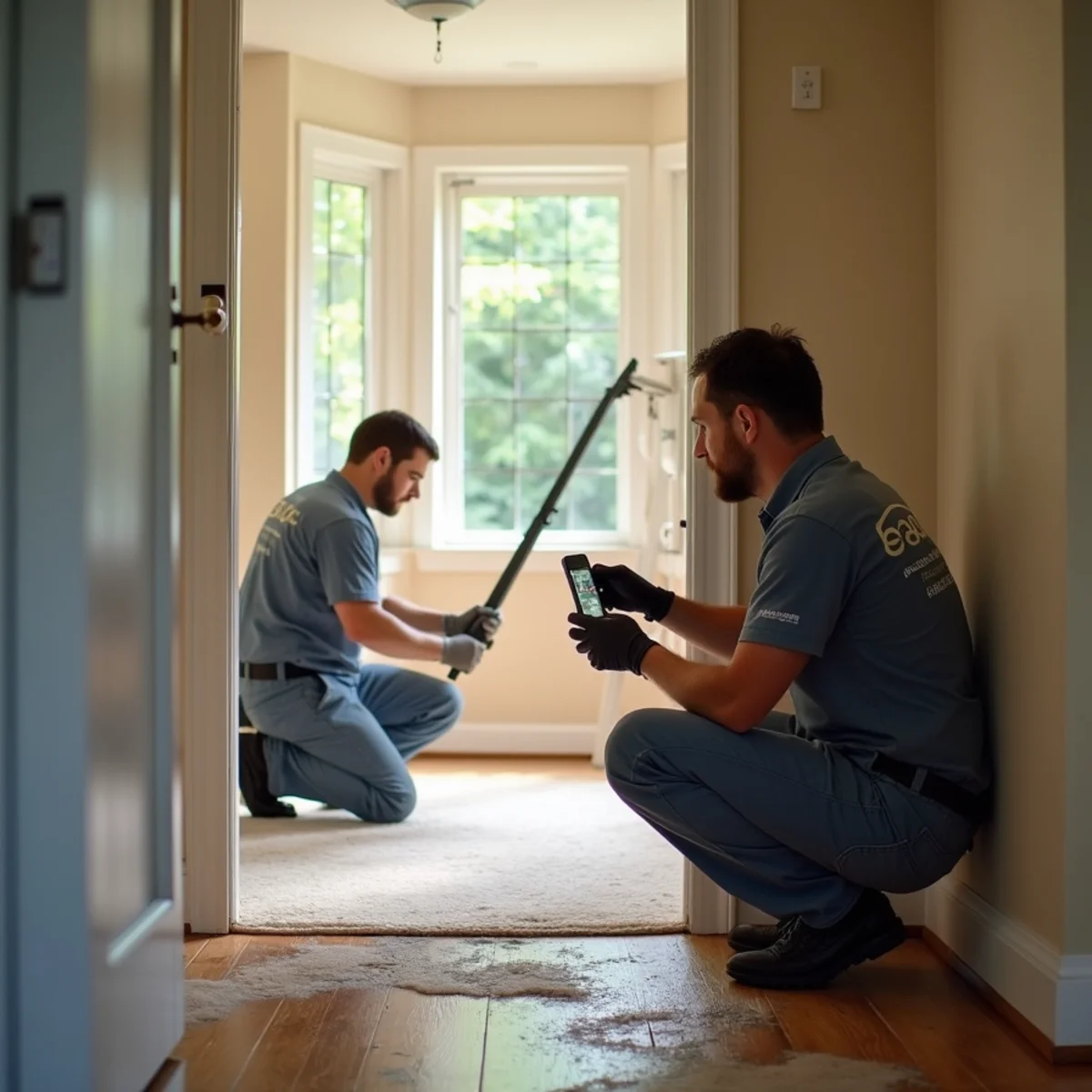
Adjusters approve claims based on evidence, not descriptions. We photograph and log every affected area before we touch anything, record moisture readings throughout the drying process, and provide a written scope of work that itemizes category of water, materials affected, and labor. That packet is what your adjuster reviews to determine coverage and payment.
We also bill most insurers directly for the covered portion of the work, so you are not fronting the full restoration cost and waiting on reimbursement. You are still responsible for your deductible.
How to check your own policy before you need to
Pull your policy's declarations page and look for three things: your dwelling coverage limit, your deductible amount, and any endorsements for water backup or service line coverage. Then check whether flood coverage exists separately, since it almost never comes bundled with a standard homeowners policy in California.
It also helps to know your policy's claim history rules. Multiple water claims in a short period, even small ones, can affect your renewal or premium, which is one more reason a written scope helps you decide whether a smaller loss is worth filing at all versus paying out of pocket.
If a leak happens tonight, none of that reading matters yet, shut off the water, call us, and we will document the loss correctly from the first visit so your adjuster has what they need.
What we watch for that determines whether a claim gets paid
The biggest claim killer we see is not the water, it is the delay. An adjuster who finds mismatched drywall texture, old staining under fresh paint, or a musty smell that does not match a story of finding the leak yesterday is going to ask harder questions, and sometimes deny the claim outright. Reporting fast and documenting what you see the moment you see it protects coverage more than almost anything else you can do.
There is also a tradeoff worth knowing about insurer-referred contractor lists. Working with a vendor your insurer suggests can speed up scheduling, but the scope they write is built for that insurer's process by default, not necessarily for you. California law lets you choose your own restoration company, and an independent, itemized scope built for your file is what protects you if the insurer's number and your actual repair cost do not match.
Replacement cost, actual cash value, and the clauses that change your payout
Even a covered claim can pay out differently depending on how your policy defines the payout itself. Replacement cost value pays what it actually costs to replace damaged material with new material of similar kind and quality. Actual cash value subtracts depreciation first, so fifteen-year-old carpet might be reimbursed at a fraction of what new carpet costs, even though the claim itself is fully approved.
A few policy features are worth confirming before you ever need them:
- Loss-of-use or additional living expenses: pays for a hotel or rental if the home is not livable during repairs
- Ordinance or law coverage: covers bringing repaired areas up to current building code, which older Roseville-area homes often require
- Equipment breakdown endorsement: covers mechanical failure of a water heater or appliance itself, separate from the water damage it causes
- Scheduled personal property: covers specific high-value items a standard contents limit might not fully reimburse
Frequently asked questions
Often, yes, for the water damage it causes, since a sudden pipe rupture under the slab is typically treated as sudden and accidental. Coverage for the plumbing repair itself varies by policy, so check your specific language or ask your adjuster.
Sudden damage happens without warning, like a burst pipe. Gradual damage develops over time, like a slow drip a homeowner could have caught sooner. Insurers generally cover the first and exclude the second, and adjusters look for signs of long-term moisture to tell them apart.
Usually not. Storm and creek flooding typically requires a separate flood insurance policy. Standard homeowners coverage is built around interior water losses like burst pipes and appliance failures, not water entering from outside.
Many standard policies exclude sewer and drain backups unless you add this endorsement. Given how common tree-root intrusion and clogged lines are in older neighborhoods, it is worth checking your declarations page and adding it if it is missing.