Dealing with this right now? See our slab leak water damage restoration service, and we respond fast across Diamond Oaks. Or call +1 (201) 277-9344 any time — we answer 24/7.
A pinhole leak under a slab forces a decision most homeowners never expected to make: fix the one spot that failed, or repipe the whole house before the next one shows up. Diamond Oaks and other 1980s and 1990s slab-on-grade neighborhoods in the Roseville area are reaching the age where original copper is starting to pit from decades of hard water, and we get this question weekly.
This article compares what a spot repair versus a full repipe typically involves, what drives the cost of each, and how homeowners insurance treats the water damage those leaks leave behind.
Why hard water is catching up with older slab homes
Sacramento Valley water carries enough mineral content to accelerate pitting corrosion inside copper pipe, especially at joints and areas with turbulent flow. Homes built through the 1980s and 1990s are now old enough that this slow process is producing its first generation of pinhole leaks, a tiny failure point that can leak for weeks before anyone notices a warm spot on the floor, a spike in the water bill, or the sound of running water with every fixture off.
One leak does not necessarily mean the whole system is failing. But a homeowner who has now had two or three separate pinhole leaks in different rooms over a couple of years is looking at a pipe material reaching the end of its service life, not a string of bad luck.
Diamond Oaks in particular has a concentration of homes from this era, which is why we treat a slab leak call there differently than we might in a neighborhood built more recently with PEX from the start. Age and pipe material tell us almost as much as the leak itself.
What a spot repair actually involves
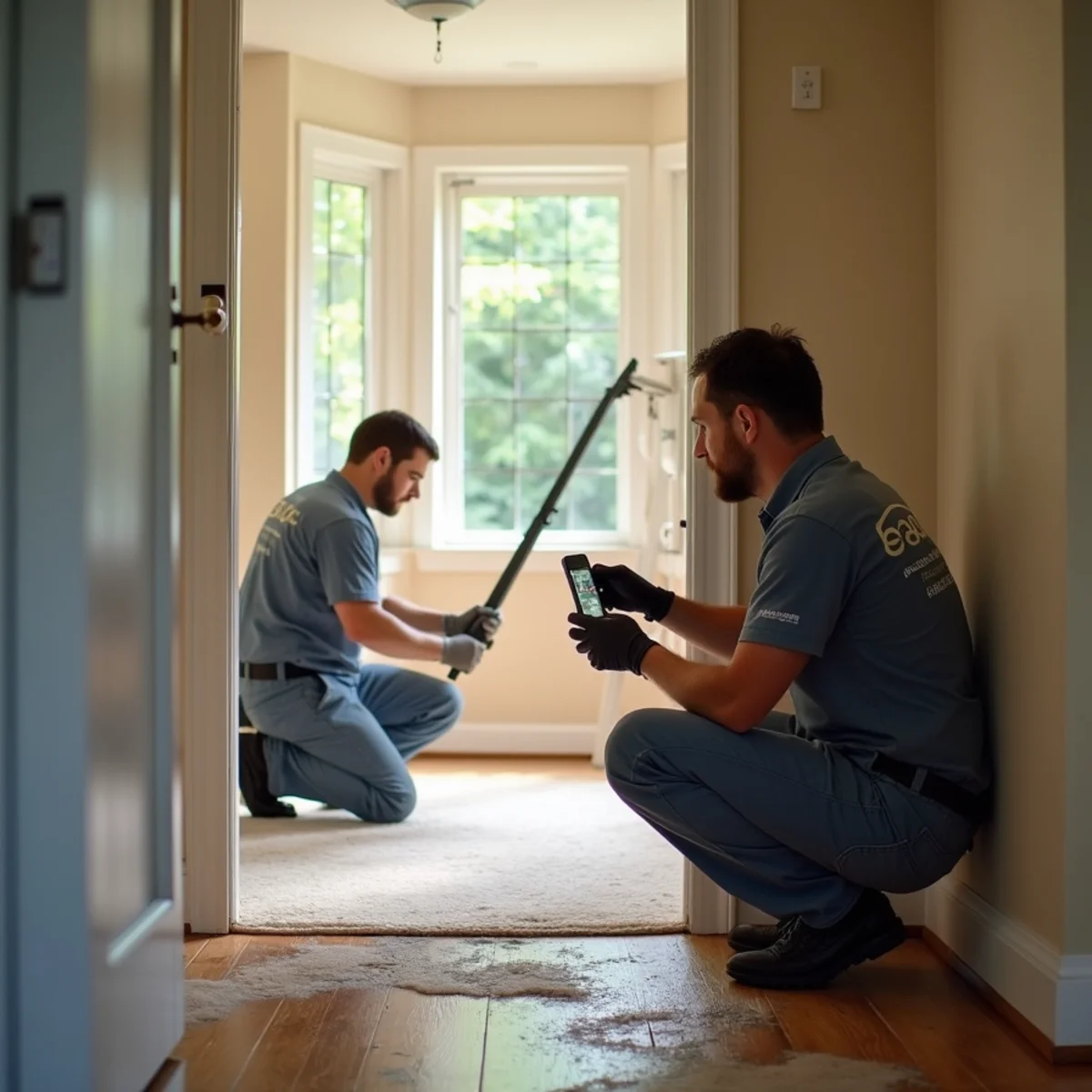
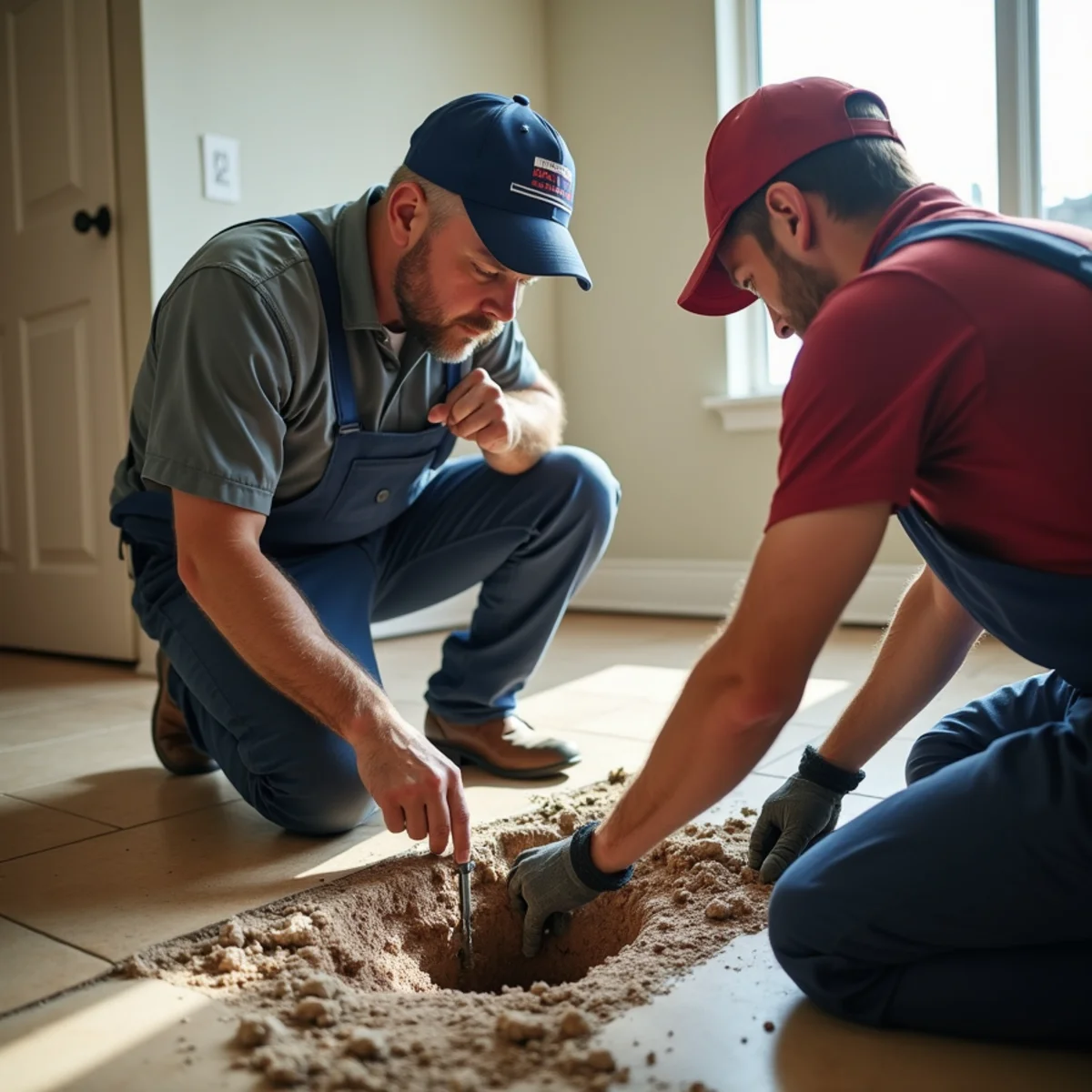
A spot repair means locating the exact point of failure with acoustic or thermal leak-detection equipment, then accessing it, usually by cutting a small section of slab or, when the geometry allows, rerouting that one line through the attic or a wall instead of back through the floor. It is faster and less invasive than a repipe, and it is the right call for a single, isolated failure in an otherwise sound system.
On our side, the restoration work runs in parallel: extracting water that reached the surface, drying the slab and any affected flooring, and checking framing moisture before anything gets closed back up.
What pushes a homeowner toward a full repipe instead
A whole-house repipe replaces the supply lines throughout the home, typically with PEX, and removes the pinhole-leak risk instead of patching it one failure at a time. It costs significantly more than a single spot repair and involves more disruption, access points cut into multiple walls or a slab, drywall patching afterward, and several days of a plumbing crew in the house.
We see homeowners choose this route after a second or third leak, when a plumber flags widespread pitting during inspection, or when they are already opening walls for a larger renovation and want to solve the pipe material problem once rather than repeatedly.
How insurance treats the two differently
This is the part that surprises people: insurance generally covers the water damage a slab leak causes, but not the cost of the plumbing repair itself. A sudden pipe failure is typically treated as sudden and accidental, so the resulting wet flooring, drywall, and drying costs are usually a covered claim, subject to your deductible.
The pipe repair or repipe is considered maintenance and replacement of a failed component, which most policies exclude regardless of cause. That means your insurer may pay to dry out and rebuild what the water damaged, while the plumbing invoice for locating and fixing the leak, or for a full repipe, comes to you or your plumber directly.
What each option costs in practical terms
A single spot repair plus the associated water damage restoration is the more affordable path, and it is common for the restoration portion alone to fall within our typical local range of about $1,400 to $6,400 depending on how far the water traveled and how long it sat before discovery. The plumbing repair itself is a separate line item from your plumber.
A full repipe is a larger standalone investment, priced by your plumber based on square footage, number of fixtures, and access difficulty, and it is not something restoration pricing folds into. We recommend getting a written scope from us for the water damage side and a separate written bid from a licensed plumber for the pipe work, so you can see both numbers clearly before deciding.
Either way, get both numbers in writing before signing anything. A verbal ballpark from a plumber standing in your driveway is not the same as an itemized bid you can compare against a second opinion if the number surprises you.
Questions worth asking before you choose
Ask your plumber whether the pitting they found is isolated or systemic, that answer should drive the decision more than price alone. Ask your insurer specifically whether your policy's water damage endorsement covers slab leak detection costs, since some do and some do not.
And before either crew leaves, get a written scope from each: one for the drying and rebuild, one for the pipe work. That paper trail is what your adjuster needs, and it is what protects you if a second leak shows up in a different room next year.
If your home has had more than one leak, ask your plumber to check pressure. Chronically high water pressure accelerates pinhole formation across the whole system, and a simple pressure-reducing valve can extend the life of whatever pipe material you end up with, spot-repaired or fully replaced.
What our crews watch for on repeat slab leak calls
The mistake we see most is homeowners calling a different plumber for each leak, which means no one has the full picture. Three isolated invoices from three different companies do not tell the story that one continuous record would: leak one, two years ago, near the hallway; leak two, eight months ago, near the kitchen. Sticking with one plumber and one restoration crew across repeat calls means someone is actually watching for the pattern instead of treating every visit as a fresh, unrelated problem.
There is a real tradeoff between cutting the slab and rerouting through the attic that is worth understanding before a plumber starts. Slab access is often faster and cheaper for a single line, but it means cutting concrete and patching flooring on top of it. Rerouting avoids the slab entirely but adds more running length of pipe and sometimes more access points through walls or ceilings. Neither is universally right, it depends on the specific line and the home's layout.
What actually moves the needle on repipe cost
Repipe bids vary more than homeowners expect, and pipe material is only part of it. A single-story slab home is generally faster and less invasive to repipe than a two-story home, since a two-story job often means running new lines through a shared attic and down through interior walls on both levels, with more drywall to patch afterward on each end.
A few things worth asking your plumber to itemize separately:
- Pipe material: PEX is now standard for repipes and resists the pitting corrosion that affects copper in hard water areas
- Story count and attic access: single-story slab homes with open attic access are typically faster and less invasive to repipe than two-story homes or homes with vaulted ceilings and little attic space
- Permit and inspection: a whole-house repipe typically requires a permit and inspection, which adds time but protects you at resale
- Drywall and paint: patching and repainting every access point is often a separate line item from the plumber's own bid, worth confirming who handles it
Frequently asked questions
Rarely. Most policies cover the water damage a sudden pipe failure causes but treat the plumbing repair or replacement as a maintenance cost outside the policy. A few policies include limited service-line coverage as an add-on, so it is worth checking your declarations page.
We use acoustic listening equipment and thermal imaging to narrow the leak to a specific area before any cutting happens. That keeps a spot repair to a small, targeted access point instead of an exploratory demolition.
Not necessarily. One isolated pinhole leak in an otherwise sound system is often just that. A pattern of repeated leaks across different rooms over a short period is the signal that points toward a system-wide repipe conversation with your plumber.
Call us first if there is active water, we extract and start drying immediately to limit spread, and we coordinate directly with a licensed plumber for the leak location and repair so both parts of the job move together.