
Dealing with this right now? See our leak detection & repair coordination service, and we respond fast across Diamond Oaks. Or call +1 (201) 277-9344 any time — we answer 24/7.
If you've lived in Diamond Oaks or anywhere else in Placer County for more than a decade, you've probably noticed the white scale that builds up on shower heads, faucet aerators, and the inside of a tea kettle. That's hard water at work, and it doesn't stop at fixtures — it's slowly working on the inside of every copper pipe in your house too.
Pinhole leaks are one of the most common calls we get that don't start with a dramatic burst. They start small, stay hidden, and cause real damage before anyone notices. This article explains the chemistry behind it, where these leaks tend to show up in Diamond Oaks homes, and what early detection actually looks like.
Why Sacramento Valley water is hard on copper
Water hardness comes from dissolved minerals — mostly calcium and magnesium — picked up as water moves through the ground before it reaches treatment plants. The Sacramento Valley, including the water serving Placer County, runs moderately to significantly hard depending on the source and season. On top of mineral content, municipal water is treated with chloramine as a disinfectant, and chloramine is more aggressive toward copper pipe than the chlorine treatment used in some other regions.
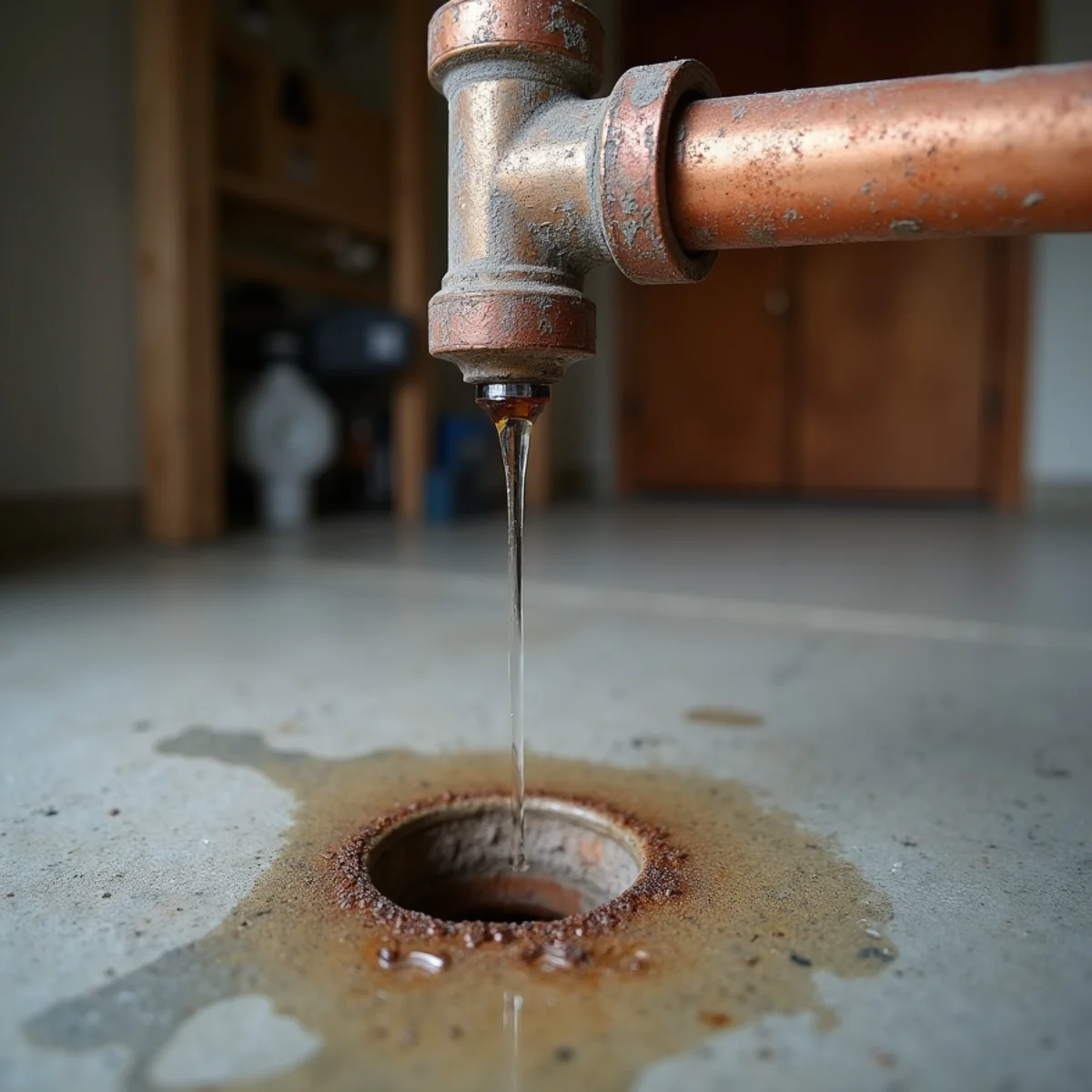
The combination matters. Mineral deposits create uneven surfaces inside the pipe, and chloramine attacks the exposed copper at those irregular spots faster than it would attack a smooth surface. Over years, that uneven corrosion — called pitting — eats through the pipe wall from the inside out at one specific point rather than wearing it down evenly, which is exactly why the result is a pinhole leak instead of a pipe that just gradually gets thinner everywhere.
Where pinhole leaks tend to show up first
Hot water lines usually fail before cold water lines, because heat speeds up the corrosion reaction. That means water heater closets, the pipe runs feeding upstairs bathrooms, and any hot line that makes a tight turn are common failure points — sharp bends create turbulence, and turbulence wears through the protective mineral scale inside the pipe faster than a straight run does.
In Diamond Oaks homes with copper plumbing from the 1970s through 90s, we also see pinhole failures concentrated where pipe passes through a wall plate or where two dissimilar metals meet, like a copper line connected to a steel fitting. Electrolytic reaction between the two metals adds another layer of corrosion on top of what the water chemistry is already doing.
- Hot water lines corrode faster than cold due to accelerated reaction rates
- Sharp bends and elbows wear through protective mineral scale first
- Water heater closets and upstairs bathroom supply runs are common failure points
- Copper-to-steel fitting transitions add electrolytic corrosion on top of pitting
What a pinhole leak looks like before it's obvious
A pinhole leak is often a fine mist rather than a stream, which is part of why it goes unnoticed. Homeowners describe a faint hissing sound near a wall, a small green-tinged stain on drywall (copper leaves a telltale verdigris residue as it corrodes), or a slight but persistent dampness at the base of a wall that never quite has an obvious source.
Because the leak sprays rather than drips in many cases, the water can travel further inside a wall cavity than people expect, wetting insulation and framing several feet from where the stain eventually appears on the drywall surface. That's Category 1 clean water at the start, but clean water sitting inside a wall cavity for even a few days creates the moisture and warmth mold needs to establish.
A recent Diamond Oaks call
A homeowner in Diamond Oaks called us about a faint but persistent smell in a hallway near the water heater closet, plus a water bill that had crept up over two billing cycles. There was no visible water anywhere. Using moisture meters and thermal imaging, we traced elevated moisture into the wall cavity behind the water heater, where a pinhole leak in the hot supply line had been misting into the insulation for what looked like several weeks.
We extracted saturated insulation, opened a small access section of drywall, set air movers and a dehumidifier, and monitored the wall cavity with daily moisture readings until it read dry, roughly four days start to finish. The homeowner's plumber replaced the corroded section of copper with the wall still open, which kept the whole job efficient and avoided a second round of drywall work.
Slowing down future pinhole leaks
You can't reverse corrosion that's already happened, but a few things reduce the rate going forward: a whole-house water softener or conditioner reduces mineral content, and keeping water heater temperature from running excessively hot slows the corrosion reaction on hot lines specifically. Neither eliminates the risk in a home with original 1970s-90s copper, which is why catching leaks early with attention to water bills and unexplained damp spots matters more than any single preventive fix.
If your copper plumbing is original to a home built more than 25 years ago, treat any unexplained increase in your water bill as worth investigating, not ignoring.
Notice a green stain, a hiss, or a rising water bill?
Those are classic pinhole leak signs in Placer County's hard water. Call us and we'll pinpoint the leak with moisture meters and thermal imaging before it spreads further into your walls.
The mistake that turns a small pinhole into a bigger job
The most common misstep we see is treating a visible pinhole as solved once it stops spraying. Epoxy putty or a wrap clamp can stop the leak long enough to get a plumber scheduled, but it isn't a permanent fix, and homeowners sometimes mistake that temporary quiet for the problem being over. The copper on either side of that pinhole corroded under the exact same water chemistry for the exact same number of years, so a second failure a few inches away is common, not unusual — and it often shows up behind fresh drywall or paint where nobody's looking for it anymore.
The related mistake is patching and painting a stain without checking moisture behind it first. Fresh paint over a damp patch looks finished, but if the wall cavity underneath is still wet, that paint just hides the ongoing problem instead of solving it, and it can trap moisture against the drywall paper backing where mold has the warm, dark conditions it needs. We always check moisture content before we call a wall dry, not just the surface temperature or appearance.
A five-minute test that catches a lot of these leaks early
You don't need equipment to get a first read on whether a pinhole leak might already be running somewhere in a Diamond Oaks home with original copper. Most water meters have a small leak indicator — a spinning triangle or dial — that moves whenever water is flowing anywhere on the property, and it's the fastest way to catch a leak before it ever shows up as a stain or a smell, whether you're in Diamond Oaks or an original-copper home over in Crocker Ranch.
It won't tell you which pipe or which wall, and it won't distinguish a pinhole leak from a running toilet, so a positive result is a reason to call for a proper inspection, not a diagnosis on its own. Pair it with a look at the higher-risk spots mentioned above — the water heater closet, upstairs bathroom supply runs, and any sharp elbow in a hot line — and you've got a reasonable early-warning routine that takes less time than a coffee break.
- 1Turn off every fixture and appliance that uses water, including the ice maker if it's connected
- 2Find your water meter and note the position of the small leak indicator dial or triangle
- 3Wait 30 to 60 minutes without using any water in the house
- 4Check the indicator again — if it's moved, water is escaping somewhere even with everything off
- 5If it moved, call for a moisture assessment rather than waiting for a visible stain to confirm it
Frequently asked questions
Mineral scale from hard water builds unevenly inside copper pipe, and chloramine-treated water corrodes the exposed metal at those uneven spots faster than the surrounding surface. That concentrated corrosion eats through the pipe wall at one point, creating a pinhole rather than a general clog.
Most policies cover the sudden water damage that results from a pinhole leak — drying, extraction, and repair of affected materials — though gradual damage that built up over a long, unaddressed period can be scrutinized more closely. We document the timeline and moisture readings to support your claim.
A softener reduces mineral content going forward and can slow future corrosion, but it won't repair pitting that has already formed in existing pipe. Homes with original copper from the 1970s-90s are still at risk regardless of a softener installed later.
Right away. A pinhole leak that's misting into a wall cavity can wet insulation and framing well beyond the visible stain, and clean water left inside a wall for a few days starts creating conditions for mold. Call us for a moisture assessment before more material takes on water.