
Water Damage Restoration
Slab Leak Water Damage Restoration in Roseville, CA
A slab leak is a leak in the water lines running beneath your home's concrete foundation. Because it is hidden under the slab, it can run for weeks — quietly warming a floor, spiking your water bill, and saturating the ground under your flooring — before anyone realizes what is happening.
- 60-minute emergency dispatch across Roseville
- Licensed, insured & IICRC-certified
- Local to Roseville & Placer County
Slab leaks are especially common in Roseville. Slab-on-grade construction is the norm here, and Sacramento Valley hard water pits the copper lines that run through the slab, which is why the area's 1980s and 1990s tract homes are seeing so many of them now. We detect the leak, coordinate the repair, and restore the water damage.
Signs of a slab leak
- A warm spot on the floor (a hot-water line leak)
- A water bill that climbed with no change in use
- The sound of running water when everything is off
- Cracked or heaving flooring, or damp carpet with no spill
- Low water pressure or a moving water meter with nothing running
Why Roseville homes get slab leaks
Two local factors stack up. First, nearly all homes here are built slab-on-grade, with water lines running in or under the concrete. Second, the region's hard water is corrosive to copper — over years it pits the pipe from the inside until a pinhole opens. Homes built in the 1980s and 1990s across Roseville, Rocklin, and the surrounding tracts are now old enough that their original copper is failing, which is exactly why we see so many slab leaks in these neighborhoods.
Detection without demolition
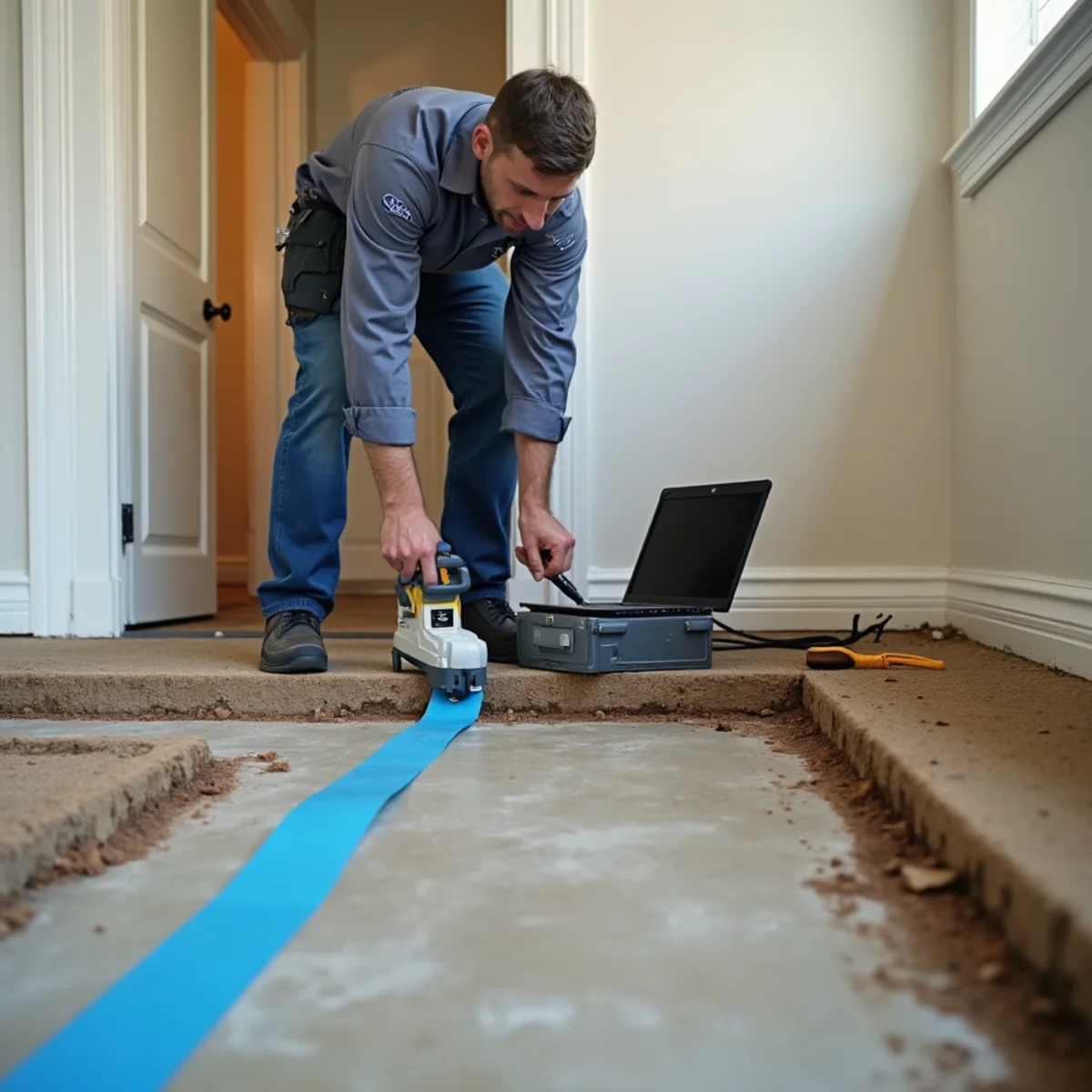
You do not have to jackhammer the whole floor to find a slab leak. We use acoustic listening equipment to hear the water escaping the pressurized line, thermal imaging to spot the temperature signature of a hot-water leak, and moisture meters to trace where the water has spread. That lets us pinpoint the leak so the repair access is small and targeted.
Repair options and full restoration
Once located, a slab leak can be fixed by a spot repair through the slab, by rerouting the affected line, or as part of a repipe if the copper is failing throughout — we help you weigh the options with your plumber. Then we handle the water damage: drying the slab and flooring, treating for mold if it started, and rebuilding. We document the whole loss for your insurance claim.
What's included when we handle a slab leak
A slab leak call gets the same disciplined process every time. We start with detection — pinpointing exactly where the line is compromised rather than guessing — because a wrong guess means unnecessary concrete removal. From there we map how far the water traveled under the flooring, since a leak that ran for weeks can wick well past the room where the warm spot showed up.
Once the plumbing side is handled, restoration means pulling any flooring that cannot be salvaged, drying the slab itself with commercial dehumidification, and monitoring moisture daily until the concrete and subfloor hit documented dry targets. If mold has started in cabinetry, baseboard, or framing that sat in moisture, we treat it before anything is closed back up.
- Acoustic and thermal detection to pinpoint the leak before any concrete is opened
- Moisture mapping of the slab, subfloor, and flooring to see how far the water traveled
- Coordination with your plumber on spot repair, reroute, or repipe
- Commercial dehumidification and slab drying monitored against documented targets
- Removal and reinstallation of flooring, baseboard, or cabinetry where it was compromised
- Mold treatment on any framing or built-ins that sat in standing moisture
Why Roseville homeowners trust us with slab leak restoration
Slab leaks are a specialty here, not a sideline — Roseville's slab-on-grade tract homes and hard water make them one of the most common calls we get. That means we are not learning on your job.
- Drying performed to the IICRC S500 water damage restoration standard
- Licensed and insured for both the detection work and the structural restoration
- 60-minute dispatch to Roseville addresses, 24/7, because a slab leak does not wait for business hours
- Direct insurance billing so you are not fronting the restoration cost
- One crew from leak detection support through drying and rebuild — no handoffs
- Local knowledge of which Roseville neighborhoods and home vintages are most exposed
Serving Roseville and the surrounding communities
We answer slab leak calls throughout Roseville — East Roseville, West Roseville, Diamond Oaks, and the older tracts near downtown where 1980s and 1990s slab-on-grade construction is now reaching the age where copper pinhole leaks become common. We also cover Sun City, where similar-era plumbing is failing on a similar timeline.
Beyond Roseville, we respond to Rocklin, Citrus Heights, Granite Bay, Lincoln, Folsom, and Loomis with the same 60-minute target from our Vernon Street base. The communities we serve most often are linked below.
How much does slab leak water damage restoration cost in Roseville, and how long does it take?
Most slab leak water damage jobs in Roseville land in the same range as any water-damage loss here — about $1,400 to $6,400 — but where yours falls depends on how the leak behaved before anyone found it. A leak caught within a week or two, confined to one room, costs far less to dry and rebuild than one that ran for a month and wicked under flooring in two or three rooms. The repair approach matters too: a spot repair through the slab is a smaller footprint than a full repipe, which touches more of the house and takes plumbing crews longer to finish.
On the restoration side, extraction and setup happen the same day we arrive, and slab drying typically runs 3 to 5 days once the plumbing side is handled and the area is sealed back up for dehumidification. Flooring replacement and any rebuild work follow once the slab and subfloor read dry, not before — closing up over damp concrete just invites mold. We bill your insurer directly for the covered water damage portion; your deductible still applies, and the pipe repair itself is typically billed separately by your plumber.
- A leak found within days of starting keeps the job toward the lower end of the range
- Tile and hardwood take longer to remove and reinstall than carpet or vinyl
- A full repipe adds time beyond the drying window as plumbing work continues
- Mold treatment adds a day or more if the leak ran long enough for growth to start
Our slab leak process
- 1
Detect
We pinpoint the leak with acoustic, thermal, and moisture tools — minimal access.
- 2
Coordinate repair
We help you choose spot repair, reroute, or repipe, and coordinate the plumbing work.
- 3
Dry the slab
We dry the slab, flooring, and affected materials to documented targets.
- 4
Restore & document
We rebuild what was opened and document the loss for your claim.
What affects slab leak restoration cost
- How long the leak ran and how far the water spread under the flooring
- The repair approach — spot repair, reroute, or full repipe
- The flooring type and how much must be lifted and dried or replaced
- Any mold treatment and the scope of reconstruction
Water damage spreads by the hour. Let's stop it.
60-minute emergency dispatch across Roseville, 24/7. We extract, dry, and rebuild — and bill your insurer directly.
- 60-min Roseville dispatch
- Licensed & insured
- Direct insurance billing
FAQ
Slab Leak Water Damage Restoration — your questions
Policies often cover the water damage a slab leak causes and the cost to access the pipe, even when they do not cover the pipe repair itself. Coverage varies, so we document everything thoroughly to support your claim.
We use acoustic listening equipment, thermal imaging, and moisture meters to pinpoint the leak before any concrete is opened. Access, when needed, is small and targeted rather than a torn-up floor.
Somewhat, yes. Roseville's 1980s-90s slab-on-grade homes have original copper that hard water has been pitting for decades, so they are entering the age where slab leaks become common. Catching one early saves flooring and prevents mold.
Locally, slab leak water damage jobs typically run about $1,400 to $6,400, depending on how long the leak ran, how much flooring is affected, and whether mold treatment or reconstruction is needed. We provide a written scope after a free on-site assessment so you know the number before work starts.
Most slab leak drying takes 3 to 5 days with commercial dehumidification and daily monitoring, though a leak that ran for a long time or spread into multiple rooms can take longer. We only stop once the slab and flooring hit documented dry targets, not on a guess.
Weeks, sometimes longer. Because the leak is under the concrete, the first signs are indirect: a warm spot on the floor, a jump in the water bill, or the faint sound of running water with everything off. By the time flooring warps, the ground under it has usually been saturated for a while, which is why early detection saves so much.
No. We pinpoint the leak first with acoustic and thermal equipment, so any access to the pipe is small and targeted rather than a torn-up floor. Once the plumbing side is handled, we dry the slab and flooring to documented moisture targets and rebuild only what had to be opened.
Detection is usually same-day. Drying the slab and flooring typically takes 3 to 5 days once the plumbing repair is done and equipment is running. Add time for the repair approach your plumber recommends — a spot repair is quick, a repipe takes longer — plus rebuild time for any flooring or drywall that had to come out. Most straightforward jobs wrap in one to two weeks start to finish; a repipe or a multi-room spread can run longer.