
Dealing with this right now? See our flood cleanup service, and we respond fast across Folsom. Or call +1 (201) 277-9344 any time — we answer 24/7.
During a January atmospheric river, a Folsom family near a low-lying street watched water back up from the yard and push under the garage door into a converted room, soaking boxes, furniture, and flooring before it receded. Once the water was gone, they were left staring at a room full of wet belongings and one question: what actually needs to be thrown away?
Stormwater is not the same as a clean supply-line leak, and that distinction changes almost everything about what can be saved. This guide walks through how we categorize floodwater, what typically survives, and what has to go.
Why stormwater gets treated differently from a clean leak
The IICRC classifies water intrusions into three categories, and stormwater that has touched the ground almost always falls into Category 2, gray water, or Category 3, black water, depending on what it picked up before it reached your home. Runoff carries soil, fertilizer, vehicle fluids from streets and driveways, and sometimes sewage from overwhelmed storm drains or septic systems.
That is fundamentally different from a burst supply line, which starts as Category 1 clean water. Contaminated water changes the calculus on nearly every porous material in its path, because cleaning the surface does not remove what has soaked into it.
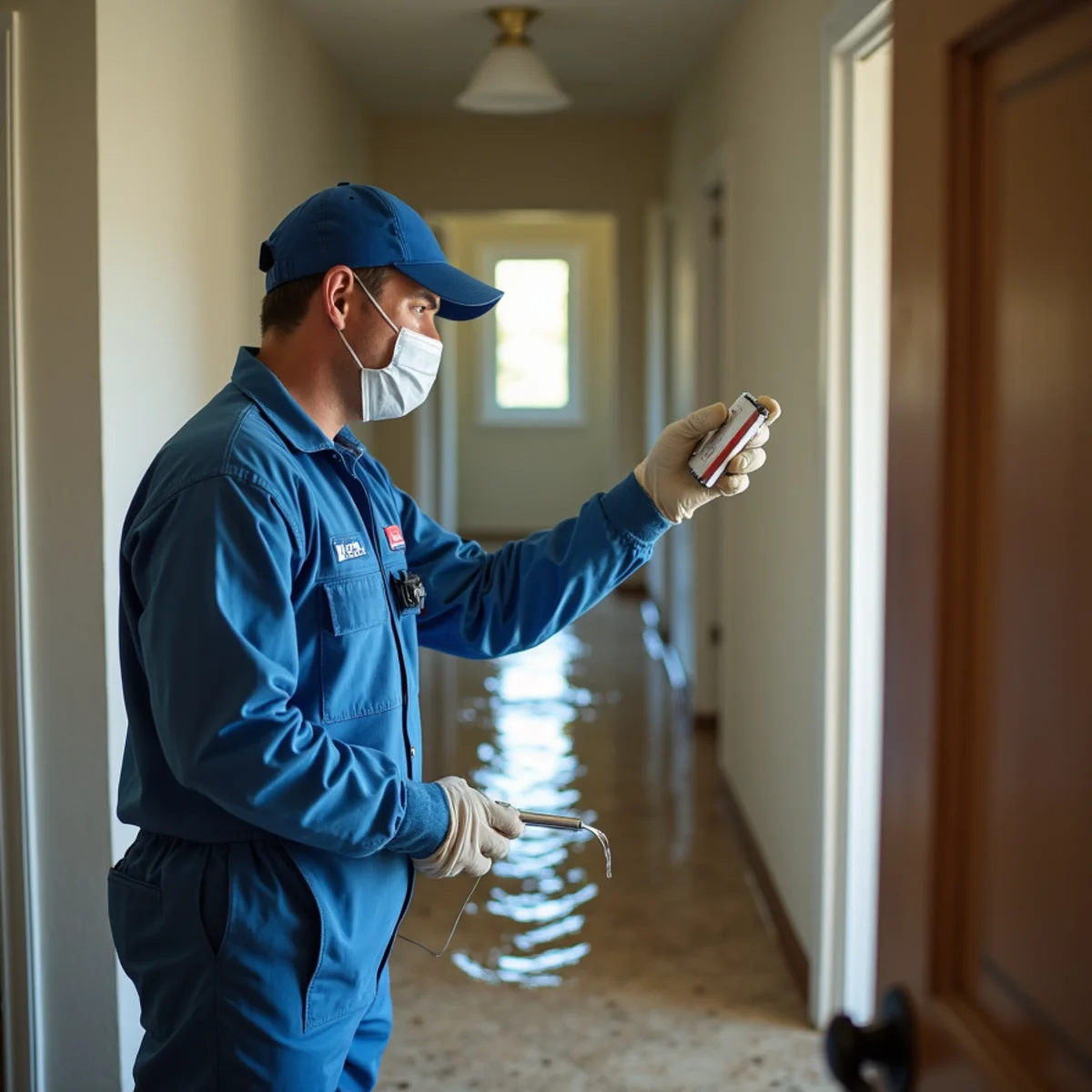
The classification is not a formality. It determines whether our crew works in standard protective equipment or full contamination gear, what gets disinfected before it dries, and how we advise a family on what to do with belongings they are emotionally attached to but that the water has made unsafe to keep.
The general rule: porous items that touched contaminated water go
Porous materials absorb whatever is in the water, including bacteria and contaminants that cannot be fully cleaned back out. That is the line we use on most flood jobs to sort what stays from what goes, and it is a more useful rule than judging an item by how expensive or sentimental it is.
On the Folsom job, that meant cardboard boxes, upholstered furniture, and a area rug that had absorbed floodwater were bagged and removed rather than dried and cleaned.
- Porous and almost always discarded: carpet and pad, upholstered furniture, mattresses, cardboard boxes, paper documents, particleboard furniture, wet insulation
- Non-porous and typically salvageable after cleaning and disinfection: solid wood furniture, metal items, glass, hard plastic storage bins, tile and sealed stone flooring
- Case-by-case: photographs and documents (often freezable and professionally dried), electronics (depends on exposure and whether they were powered), clothing and washable textiles (often salvageable with proper laundering)
What we did with the flooring and framing
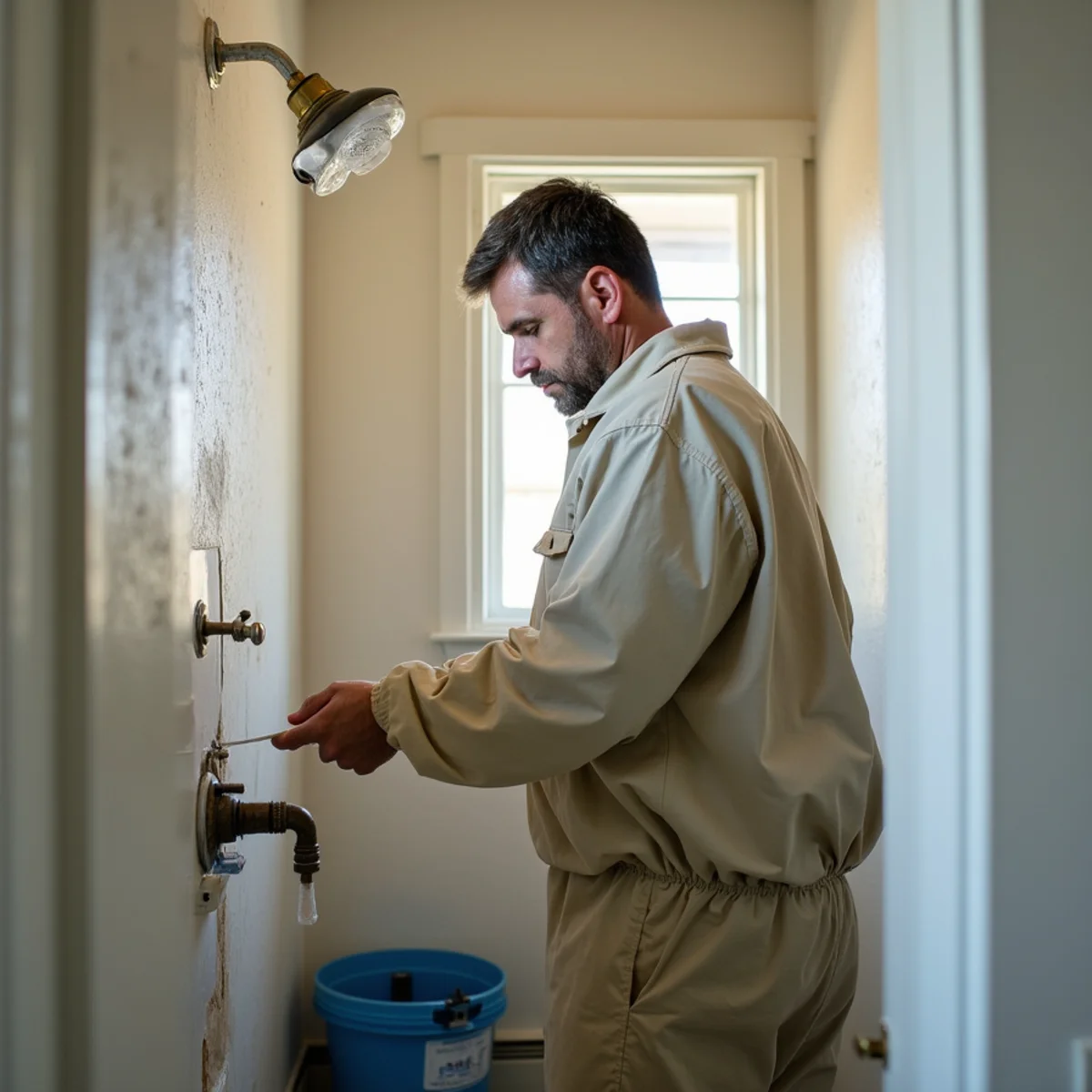
The converted room had vinyl plank flooring over a wood subfloor, and drywall around the lower two feet of every wall. Given the Category 2 classification of the water and the fact that it had been sitting for several hours before the family called, we removed the flooring, made a flood cut on the drywall about 18 inches above the visible waterline, and pulled the wet insulation from the wall cavities.
Framing itself, the wood studs and subfloor joists, is non-porous enough at the structural level that it typically survives with proper cleaning, disinfection, and drying rather than replacement, as long as it has not begun to show rot or delamination.
We also checked the garage door track and the exterior grading where the water had pushed under the door, since a stormwater intrusion is rarely a one-time event if the entry point is never addressed. That is a conversation we have with almost every flood client: drying the room solves today's damage, but it does not stop the next storm from doing the same thing again.
Cleaning and disinfection, not just drying
Category 2 and 3 losses require more than air movers and a dehumidifier. Surfaces that stay in the home, including framing, subfloor, and any non-porous items being saved, get cleaned with an antimicrobial treatment appropriate to the contamination level before the drying phase finishes, following IICRC S500 protocols for contaminated water categories.
This step is why flood cleanup takes real equipment and training rather than a mop and a fan. Drying contaminated water in place without disinfecting first just seals bacteria into a dry, hidden environment.
What about sentimental items?
We understand the instinct to save everything, especially photographs, documents, and family items. Where it is physically possible and the contamination level allows it, we work with homeowners on those items specifically, sometimes freezing wet documents and photographs to stop further damage until they can be professionally dried, separate from the disposal decision on the rest of the room.
What we will not do is tell a family an item is safe to keep when it has absorbed Category 2 or 3 water and cannot be reliably disinfected. That is a health call, not a sentimental one, and we are straightforward about the difference.
Documenting the loss for your adjuster
Before anything leaves the home, we photograph and log it, room by room, because your insurance claim depends on a clear record of what was lost and why it could not be salvaged. We provide that documentation directly to your adjuster along with our written scope of work and moisture logs from the drying phase.
On the Folsom claim, that documentation supported both the contents loss and the structural repair, and the family did not have to reconstruct the inventory from memory weeks later.
What our crews check first when stormwater got inside
The first thing we look at is not the water in the room, it is how the water got in. Water pushing under a door or through a threshold is a different problem than water rising up through a slab or foundation from saturated ground outside, and the two call for different fixes once the cleanup is done. We check the exterior grading, the door threshold, and any nearby drainage before we finish the interior scope, because treating the room without addressing the entry point just sets up the next storm to do it again.
The mistake we see most often is not made by us, it is made in the hour before we arrive, when a family starts moving wet boxes and furniture into a garage or another room to sort through later. That instinct to get organized actually spreads contaminated water and sediment across flooring that was never touched by the flood, which then has to be treated as contaminated too. It turns a contained loss into a bigger one, usually without anyone realizing it happened until we test the "clean" room and it comes back positive for contamination.
Why some Roseville streets flood and others nearby stay dry
Roseville's flood control system, built around Dry Creek, Cirby Creek, Linda Creek, and Miners Ravine, along with the Miners Ravine detention basin completed in 2007, is a real reason most neighborhoods handle a normal winter storm without incident. The city holds a Class 1 rating in the Community Rating System for floodplain management, which reflects that infrastructure. But most neighborhoods is not every property, and homes near one of those named creeks, on a lower-lying street, or in older sections built before the detention basin went in can still see water intrude during an intense storm the way parts of the area did during the February 1986 cloudburst and the January 1995 storm, which was roughly a 200-year event.
We ask a few questions on nearly every stormwater call that help us understand whether this was a one-time fluke or something likely to happen again with the next serious storm.
- The home was built before 2007, in a lower section of a neighborhood near Dry Creek, Cirby Creek, Linda Creek, or Miners Ravine
- The driveway, yard, or a neighbor's yard slopes toward the house instead of away from it
- The street has a documented history of ponding or standing water during heavy rain
- A title report or disclosure at purchase mentioned a flood zone or drainage easement
- Gutters or a nearby storm drain have visibly struggled to keep up during past storms
Frequently asked questions
Any water that has touched the ground outside, come through a storm drain, or backed up from a sewer or septic system should be treated as contaminated, either Category 2 or Category 3. Even water that looks clear can carry bacteria and chemicals picked up from soil, streets, or storm systems.
Generally no. Carpet and pad are porous enough that contaminated water soaks in past the point where cleaning removes it reliably. On nearly every flood job involving Category 2 or 3 water, we recommend removing carpet and pad rather than attempting to dry and disinfect it in place.
Do not attempt to clean or dry contaminated items yourself, and avoid direct contact with the water where possible. Photograph everything you can before it is moved or discarded, since that documentation helps your insurance claim, and let us handle sorting once we assess the water category.
Coverage depends on your policy and the source of the water. Storm-driven surface water intrusion is often a separate flood policy issue rather than standard homeowners coverage, while water that entered through a covered peril, like a roof failure during a storm, may be covered differently. We document everything so your adjuster has what they need regardless of which policy applies.