Dealing with this right now? See our sewage cleanup & backup removal service, and we respond fast across Granite Bay Woods. Or call +1 (201) 277-9344 any time — we answer 24/7.
A mature tree is one of the best things about an older neighborhood, and it is also one of the most common reasons a sewer line backs up. Roots do not punch through solid pipe. They find a hairline gap at a joint or a crack from ground settling, and they grow toward the moisture and nutrients inside a sewer line like it is the best water source on the block.
By the time a full backup happens, the roots have usually been building inside that pipe for months or years. This guide covers the signs that show up before the emergency call, so you have a chance to get a camera inspection and a cleanout scheduled instead of dealing with a Category 3 loss in your bathroom.
Why root intrusion happens in the first place
Older sewer laterals made of clay or cast iron have joints every few feet, and those joints are exactly the weak point roots exploit. Even newer PVC lines are not immune if a joint was not sealed correctly or the ground has shifted enough to crack a section. Roots grow toward the warmth, moisture, and organic material inside a working sewer line.
Once a root gets a foothold, it does not stay small. Roots thicken over seasons, and every bit of thickening narrows the space wastewater has to move through. What starts as a fine root hair working through a joint can become a dense mat that catches toilet paper, wipes, and grease until the line closes almost entirely.
The early signs most homeowners miss
The signs of root intrusion tend to show up gradually, which is exactly why they get missed. Slow drains throughout the house — not just one fixture — are one of the earliest tells, since a partial blockage in the main line affects everything upstream of it.
Gurgling sounds from drains when other fixtures run, sewage odor near an outdoor cleanout or in a low-lying bathroom, and a patch of unusually green or lush grass along the path of your sewer lateral are all worth paying attention to. That green patch means the line is leaking small amounts of wastewater, fertilizing the ground above it.
- Multiple drains running slow at the same time
- Gurgling from one fixture when another one runs
- Sewage odor near an outdoor cleanout
- An oddly lush or green strip of lawn over the lateral line
- Recurring clogs that come back within weeks of clearing
Which trees and yards are highest risk
Willows, cottonwoods, and many mature ornamental trees planted close to a home's sewer lateral are aggressive root growers looking for water. Roseville's older streets and established neighborhoods often have exactly this combination — mature landscaping planted decades ago, paired with clay or older PVC laterals that are now reaching the age where joints start to fail.
If your home was built before the 1990s and has large trees within 20 to 30 feet of where the sewer line runs to the street, that is worth a proactive camera inspection even if you have not had a backup yet.
What happens if you wait for the backup
Once a root mat closes the line enough, the backup usually shows up at the lowest drain in the house — often a shower or a downstairs bathroom — and it comes up as Category 3 sewage water. That means everything the water reaches, from flooring to baseboard to drywall, needs assessment for contamination and often removal, not just cleaning.
Catching the problem early, before the mat is dense enough to fully block flow, generally means a plumber can clear it with an auger or hydro-jetting and you never see standing water in the house at all.
If you already have a backup
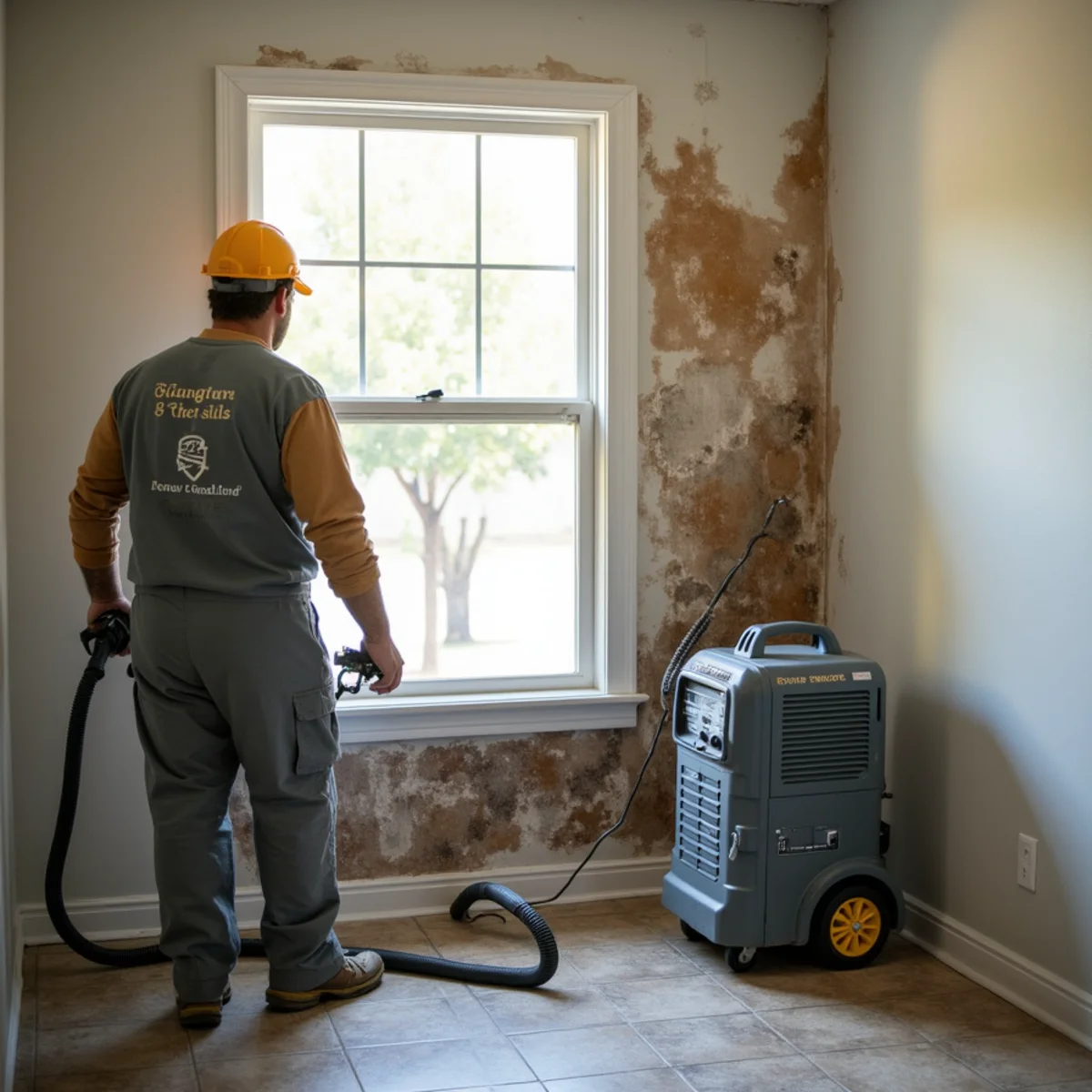
If sewage has already come up through a drain, stop using water in the house and call for extraction before you touch anything. We arrive with PPE, extract the contaminated water, remove porous materials that cannot be safely cleaned, and disinfect the structure while a plumber addresses the actual root blockage with a camera inspection and clearing.
We coordinate that timing so the plumbing work and the restoration work happen in the right order, instead of drying a space that is about to get wet again.
A camera inspection tells you what you are dealing with
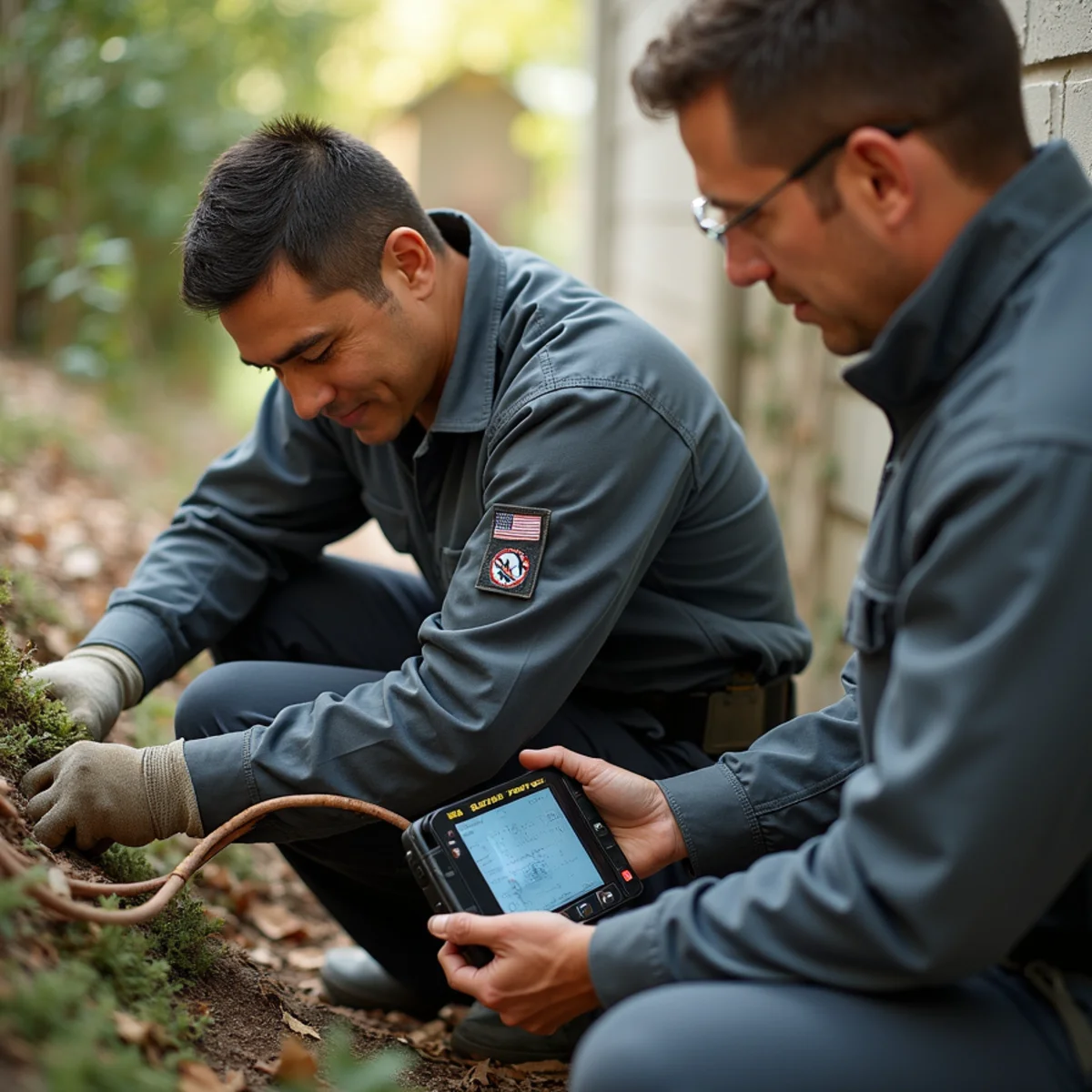
A sewer camera run by a plumber shows exactly where roots have intruded and how bad the damage is — worth doing before a backup, and necessary after one, so the same problem does not repeat.
What we see on repeat calls to the same address
We go back to some homes more than once for what looks like a one-time clog, usually six months to a year apart. Augering or hydro-jetting clears the immediate blockage but does not seal the cracked joint or gap that let the roots in to begin with, so roots find that same opening again once they regrow. Clearing the line is often the cheapest short-term fix, but if a house is calling for the same problem every year, it is worth asking the plumber whether a spot lining repair makes more sense than clearing it again on a loop.
The other pattern we see is homeowners waiting for a full backup with standing sewage water in the house before addressing a problem the drains had already been signaling for months through slow flow and gurgling. Scheduling a camera inspection and a clearing on your own timeline is a plumbing bill. Cleaning up a Category 3 backup after the line finally closes is a restoration bill on top of that same plumbing bill, plus the disruption of losing a bathroom for days.
We also flag these repeat-call addresses when we coordinate with your plumber, since a documented history of two or three backups at the same fixture over a short stretch is useful evidence when you are deciding whether a scheduled repair is worth it versus continuing to pay for emergency clearing and cleanup every time it happens.
- A pipe cleared once that re-clogs within six to twelve months usually means the joint gap is still open
- Hydro-jetting clears roots without the pipe damage an old-style rigid auger can sometimes cause
- A camera run right after clearing shows the actual condition of the joint, not just that flow is restored
What actually fixes root intrusion, not just clears it
Once a camera confirms roots and shows where the joint or crack is, a plumber will usually lay out a few options that trade cost against how much of the yard gets disturbed. None of this is restoration work, but knowing the range helps you understand what a plumber is proposing and why.
The choice usually comes down to how often the same spot is failing and how accessible it is. A joint that has only intruded once might not need more than a scheduled clearing. A joint that keeps reopening, or a pipe with multiple bellied sections, is where a permanent repair starts to pencil out against paying for repeat emergency calls.
What sits above the lateral matters too. Trenchless pipe bursting and spot lining are worth asking about specifically if the line runs under mature landscaping, a driveway, or hardscape you do not want torn up, since both avoid the open trench a full replacement requires. A yard with the kind of established trees that caused the root intrusion in the first place is often exactly the yard where a homeowner most wants to avoid trenching to fix the pipe underneath it.
It is worth asking your plumber directly which option they are recommending and why, rather than assuming the first quote is the only path. A spot repair that addresses the specific joint roots found their way into is sometimes all a line needs, while a line with root intrusion at several points along its run is a different conversation than one clean joint failure near the cleanout.
- 1Routine rooter or hydro-jet clearing — cuts roots out, cheapest option, needs repeating on a schedule if the joint stays open
- 2Spot lining (cured-in-place patch) — seals a specific damaged joint or crack without digging up the yard
- 3Trenchless pipe bursting — replaces the full lateral by pulling new pipe through the old one, with minimal yard disruption
- 4Full trench dig-and-replace — the most invasive option, usually reserved for a lateral that has collapsed or bellied in multiple spots
Frequently asked questions
Foaming root killers can slow regrowth for a while but do not remove an established root mat or fix a cracked joint. A plumber's camera inspection tells you the real condition of the pipe, which a chemical treatment cannot.
For homes with mature trees near the lateral and pipe older than 25 to 30 years, every couple of years is a reasonable check, or sooner if you notice slow drains or recurring clogs.
Typically the line itself is a plumbing repair and not covered, but the water damage inside your home from a resulting backup may be covered depending on your policy and any sewer backup endorsement. We document the loss and bill your insurer directly for covered restoration work.
Yes, we run emergency calls throughout Granite Bay Woods and the surrounding area with 24/7 dispatch. Older lots with mature oaks near the sewer lateral are common there, so we see root-related backups regularly.
Slow drains across several fixtures at once, a toilet that gurgles when the washer drains, and a faint sewage smell in the yard are the early tells. Catching those before a full backup is the difference between a scheduled camera inspection and an emergency Category 3 cleanup.