Dealing with this right now? See our water heater leak cleanup service, and we respond fast across Twelve Bridges. Or call +1 (201) 277-9344 any time — we answer 24/7.
Most plumbing components in a house don't announce their age. A washing machine hose looks fine right up until it doesn't, and a water heater can run quietly for years past the point it should have been swapped out. We get called after the failure far more often than before it, usually to a garage or laundry room with several hundred gallons on the floor from a part that cost fifteen dollars to replace.
Lincoln's Twelve Bridges neighborhoods and a lot of Placer County's 1980s and 1990s tract homes are now old enough that original fixtures, water heaters, and supply lines are reaching or past their expected service life. Here's what actually needs replacing, and on what schedule, based on what we see fail in the field.
Why age matters more than appearance
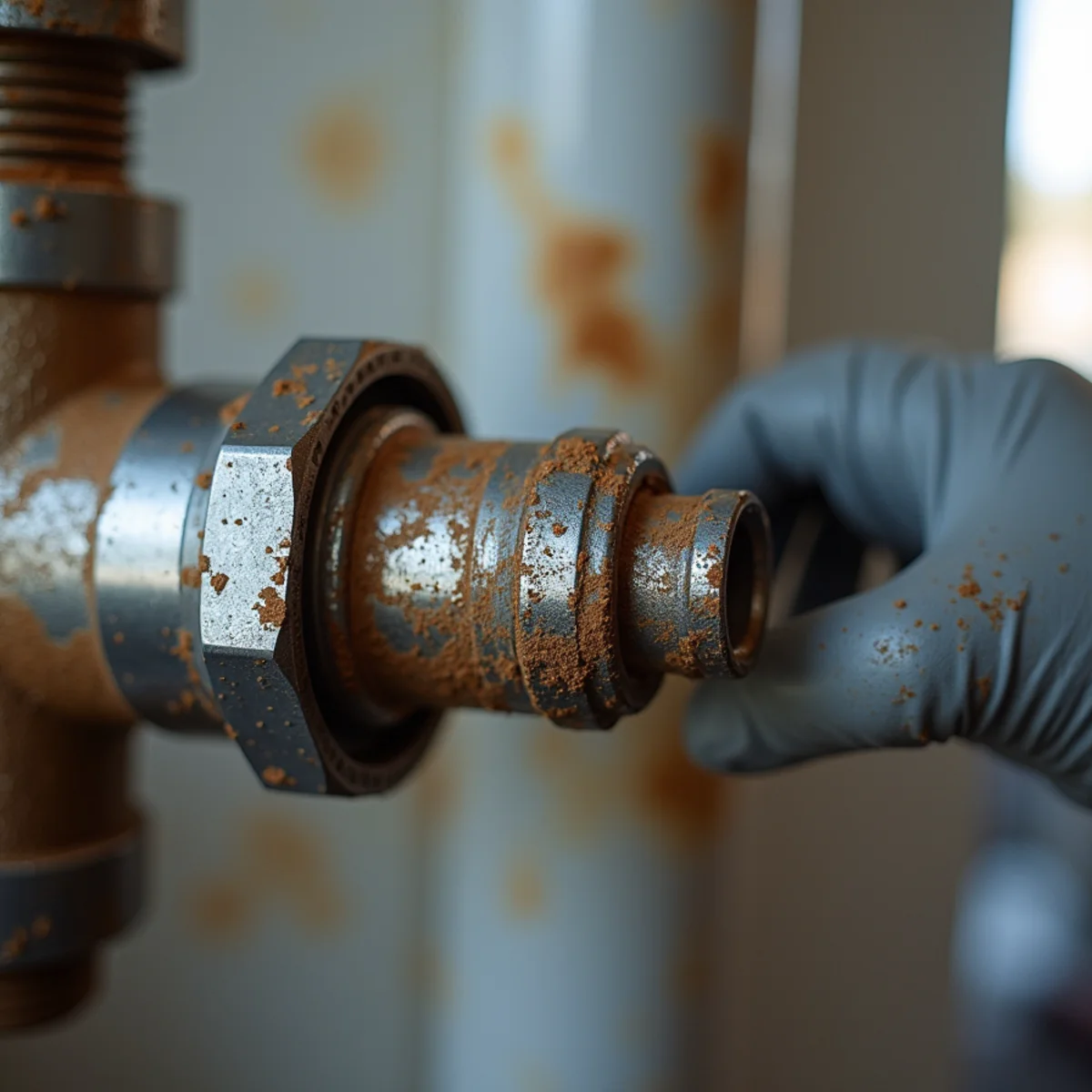
A rubber hose or an aging water heater tank usually fails from the inside out. The exterior can look completely intact right up until a fitting lets go or a tank seam gives way, because the failure mechanism is corrosion, mineral scaling, or material fatigue that isn't visible from outside the part.
Sacramento Valley's hard water accelerates several of these failure modes. Mineral scale builds up inside water heater tanks and supply lines faster here than it would in a region with softer water, which shortens the practical service life of both below their rated maximum.
Washing machine hoses: five years for rubber, longer for braided steel
Standard black rubber washing machine hoses are rated for about five years of service, and that's under normal use, not the constant-pressure environment they actually sit in. They stay pressurized the entire time the washer is plugged in, whether it's running or not, which is why they're one of the most common sources of sudden, large-volume water loss in a home.
Braided stainless steel hoses cost a little more but typically last eight to ten years and resist bulging and cracking far better. If your hoses are original to a water heater or washer that's more than five years old, replace them now, before they fail, not after.
Water heaters: 8 to 12 years, shorter with hard water and no maintenance
Most tank water heaters are built for an 8 to 12 year service life. Roseville and Lincoln's hard water shortens that range by accelerating sediment buildup at the bottom of the tank, which makes the burner or element work harder and stresses the tank from the inside.
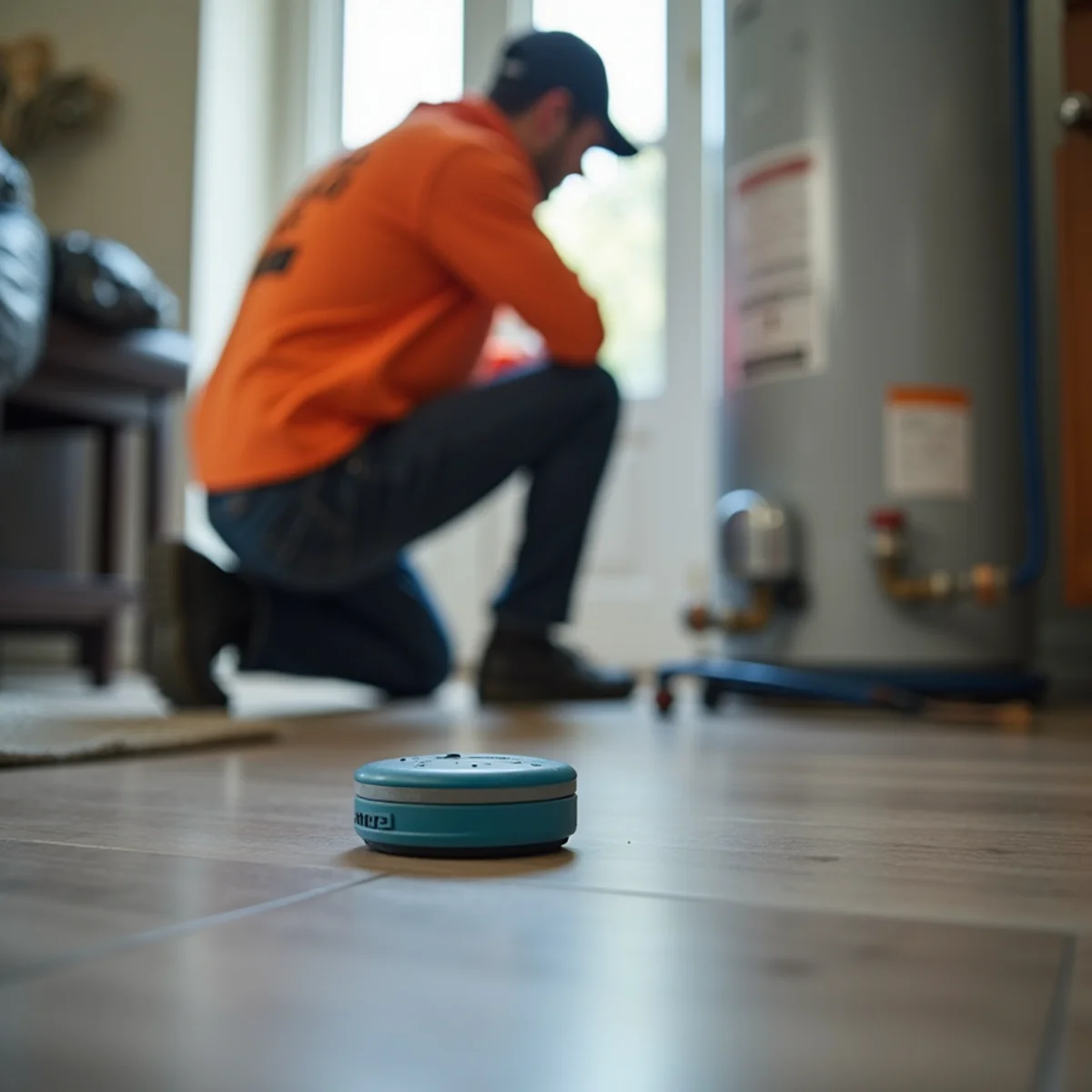
A water heater rarely fails as a slow leak you can catch early. More often the tank seam or a fitting gives way at once, and because these units usually sit in a garage near finished living space, that failure can send water under a wall plate and into a bedroom or hallway before anyone notices. If your water heater is past year eight, budget for replacement rather than waiting for a warning sign that may not come.
Supply lines and angle stops under sinks and toilets
The braided or plastic-core supply lines running from a wall's angle stop to a faucet, toilet, or ice maker have a similar lifespan to washing machine hoses, roughly 5 to 10 years depending on material. The angle stop valve itself can seize with age, especially in hard-water areas where mineral deposits build up inside the valve body.
- Replace visibly corroded or chalky supply lines immediately, don't wait for a drip
- If an angle stop won't turn smoothly, have it replaced rather than forcing it during an emergency
- Match supply lines to fixture age: if the toilet or faucet is original to the house, assume the line is too
Ice maker lines and dishwasher supply lines
Refrigerator ice maker lines are often the thinnest, cheapest tubing in the house, sometimes still the original quarter-inch plastic line the appliance shipped with years ago. These fail more often than their size would suggest, usually at the compression fitting behind the fridge, and because they're tucked against a wall, a slow leak here can run for days before anyone pulls the refrigerator out to look.
Dishwasher supply lines see less pressure cycling than a washing machine hose but sit in a cabinet with far less visibility. If yours is original to the dishwasher and the unit is more than eight years old, replace the line during your next service call rather than waiting for the appliance itself to fail.
- Replace plastic ice maker lines with braided steel, ideally within 5 years of installation
- Check dishwasher supply lines whenever the unit is serviced or pulled out for cleaning
The seismic strap almost every garage water heater is missing or loose
California Health and Safety Code §19211 requires seismic strapping on garage water heaters, and it's one of the most commonly skipped or degraded pieces of home maintenance we see. Straps loosen over time, get removed during other garage work and never reinstalled, or were never installed correctly to begin with. A strap doesn't extend a water heater's service life, but it does prevent a tank from tipping and shearing its water and gas connections during an earthquake, which turns a bad leak into a much worse one.
We've seen this play out in a Lincoln garage where an unstrapped tank, well past its 12th year, cracked at a fitting during routine settling, not even an earthquake, and emptied 40 gallons across the garage floor and under a shared wall into a bedroom closet. A five-dollar strap and a replacement scheduled two years earlier would have prevented both the fall risk and the failure itself.
A simple way to actually track this
Age tracking fails when it depends on memory. Make it visible instead.
- Write the install date directly on the water heater with a paint marker
- Keep a phone note listing install dates for hoses, the water heater, and any recent supply line replacements
- Set a recurring calendar reminder at year five to inspect hoses and supply lines, not just replace them blindly
When it's already too late for replacement
If a hose, tank, or supply line has already failed and water has reached flooring, drywall, or insulation, replacing the part is only half the job. We extract standing water, pull wet materials that won't dry in place, and run structural drying equipment with daily moisture checks, typically three to five days depending on how far the water traveled. We're CSLB-licensed and insured, follow IICRC S500 drying standards, and bill your insurer directly for covered work.
What our crews see fail first, and the mistake that compounds it
When we get called to a hose or supply line failure, the water on the floor is rarely the whole story. Half the time the homeowner tells us they couldn't find the shutoff fast enough, or found it and it wouldn't turn. A hose that's failed and a valve that won't close are two separate problems that combine into one much bigger loss, and replacing the hose on schedule without ever testing the valve behind it is the mistake that turns a five-minute fix into a flooded laundry room.
The honest tradeoff with proactive replacement is that it costs money for parts that look and work fine, which is exactly why it gets skipped. The way around that isn't a stricter calendar reminder, it's batching: replace hoses and supply lines whenever you're already having a plumber out for something else, or whenever you replace the appliance itself. Piggybacking the fifteen-dollar part onto a service call you're already paying for removes the friction that usually keeps this task on the list for years.
- Test the shutoff valve for a hose or line whenever you replace it, not just the part itself
- Batch hose and supply line replacement onto other service calls or appliance swaps rather than scheduling it separately
What actually shortens these lifespans in a Placer County home
Hard water gets most of the blame for accelerated failures here, and it deserves a lot of it, but water pressure is the factor we see overlooked most often. A home with static water pressure above 80 psi, common in parts of Placer County depending on elevation and proximity to a pressure zone boundary, puts meaningfully more stress on every hose, fitting, and valve in the house than the manufacturer's rated lifespan assumes. That pressure runs 24 hours a day, not just when a fixture is in use.
A pressure-reducing valve installed at the main, checked every few years since these also wear out, is one of the more overlooked upgrades for extending the service life of everything downstream of it. It won't turn a five-year rubber hose into a fifteen-year part, but it removes one of the variables working against every hose, fitting, and supply line in the house at once.
- High static water pressure, above 80 psi, shortens the service life of hoses, fittings, and valves throughout the house
- A whole-house water softener reduces scale buildup inside water heaters and valves, but adds its own fittings that need the same periodic inspection
- Direct sun exposure degrades exterior hose bib washers and fittings faster than interior supply lines
- A pressure-reducing valve at the main is worth testing every few years; these fail too, just less dramatically
Frequently asked questions
It's reasonable to wait until year 10 or 12 if it's running well, but budget for it now and watch closely for rust at the base, a popping sound during heating, or lukewarm water. Waiting past year 12 in hard-water conditions meaningfully raises the odds of a sudden tank failure rather than a slow warning.
Yes. They cost a few dollars more but last roughly twice as long and are far more resistant to the bulging and splitting that causes rubber hoses to fail suddenly, usually while no one is home.
Shut off the angle stop valve for that fixture, or the home's main shutoff if you can't isolate it quickly, then call us. The faster standing water is extracted, the less likely it soaks into cabinetry and subfloor beyond repair.
We handle the extraction, drying, and any needed rebuild, and we coordinate directly with your plumber or your adjuster so the repair and the restoration timeline line up instead of leaving the area wet longer than necessary.