Dealing with this right now? See our structural drying & dehumidification service, and we respond fast across Loomis. Or call +1 (201) 277-9344 any time — we answer 24/7.
A Loomis homeowner called us three weeks after a small kitchen leak, convinced the problem was fixed. She had mopped up the water herself the day it happened and run a couple of box fans overnight. The floor felt dry. But every time she walked into the kitchen, she noticed the same musty, slightly sour smell, and it was not going away on its own.
That smell is not your imagination and it is not something an air freshener solves. It almost always means moisture is still sitting somewhere the eye and the hand cannot reach. This guide covers where that moisture usually hides and how we track it down.
Dry to the touch does not mean dry
Surfaces can feel dry within a day, especially with a fan running, while the material underneath or behind them stays wet for much longer. Cabinet toe kicks, subfloor under vinyl or tile, and the base of drywall are all places where the surface dries first and traps moisture behind it.
That trapped moisture is exactly what mold needs. Mold can begin growing within 24 to 48 hours of a material staying wet, and once it establishes, it produces the musty, earthy odor that box fans and time alone will not resolve.
The most common hiding spots for lingering moisture
On the Loomis job, the leak had come from a supply line under the kitchen sink and had run along the cabinet base before reaching the floor. She had cleaned up what she could see. What she could not see was moisture that had wicked under the cabinet toe kick and into the subfloor beneath the vinyl plank flooring.
That pattern is common enough that we check the same handful of spots on almost every follow-up call for a lingering odor.
- Under cabinet toe kicks and inside the cabinet base near the leak source
- Subfloor beneath vinyl, tile, or laminate flooring, where moisture is sealed in
- Behind baseboard, where water wicks up into drywall from the bottom edge
- Inside wall cavities near the original leak point, especially around insulation
- Under area rugs or furniture that sat on damp flooring without airflow
Why a fan on the surface does not fix this
Box fans and open windows move air across a surface. They do not pull moisture out of a cabinet cavity, through vinyl flooring, or out of a wall cavity behind baseboard. Without a dehumidifier actively lowering the humidity in the room and without airflow directed specifically at the trapped area, that moisture just sits and slowly evaporates into a space it cannot fully escape.
That slow evaporation into an enclosed space, like under a cabinet or behind a baseboard, is often exactly the environment mold prefers: dark, humid, and undisturbed. A fan running for a day or two can even make the smell seem to fade temporarily, simply because it dilutes the odor in the room air, while the actual moisture source keeps feeding it from behind a wall or under a floor.
How we trace a musty smell to its source
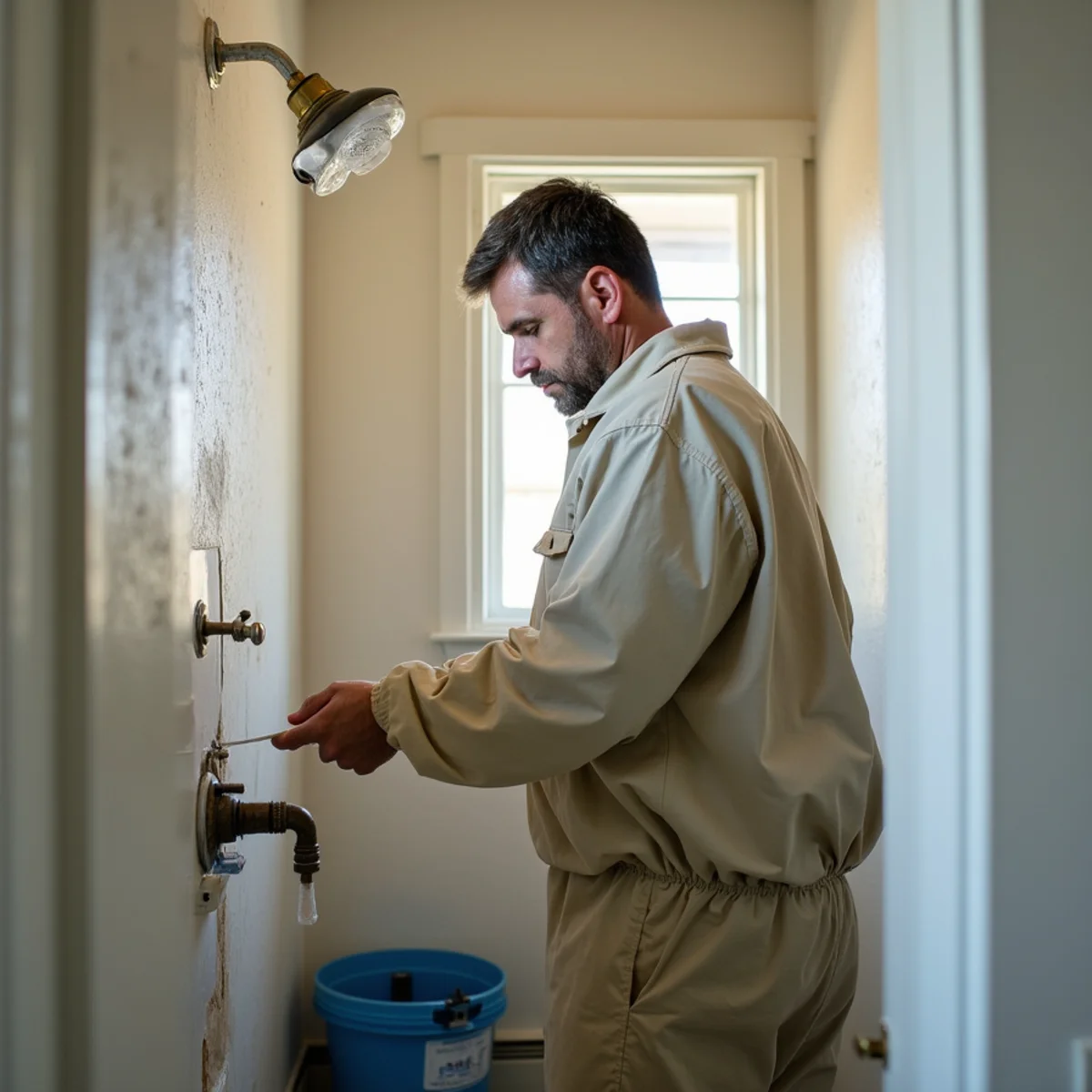
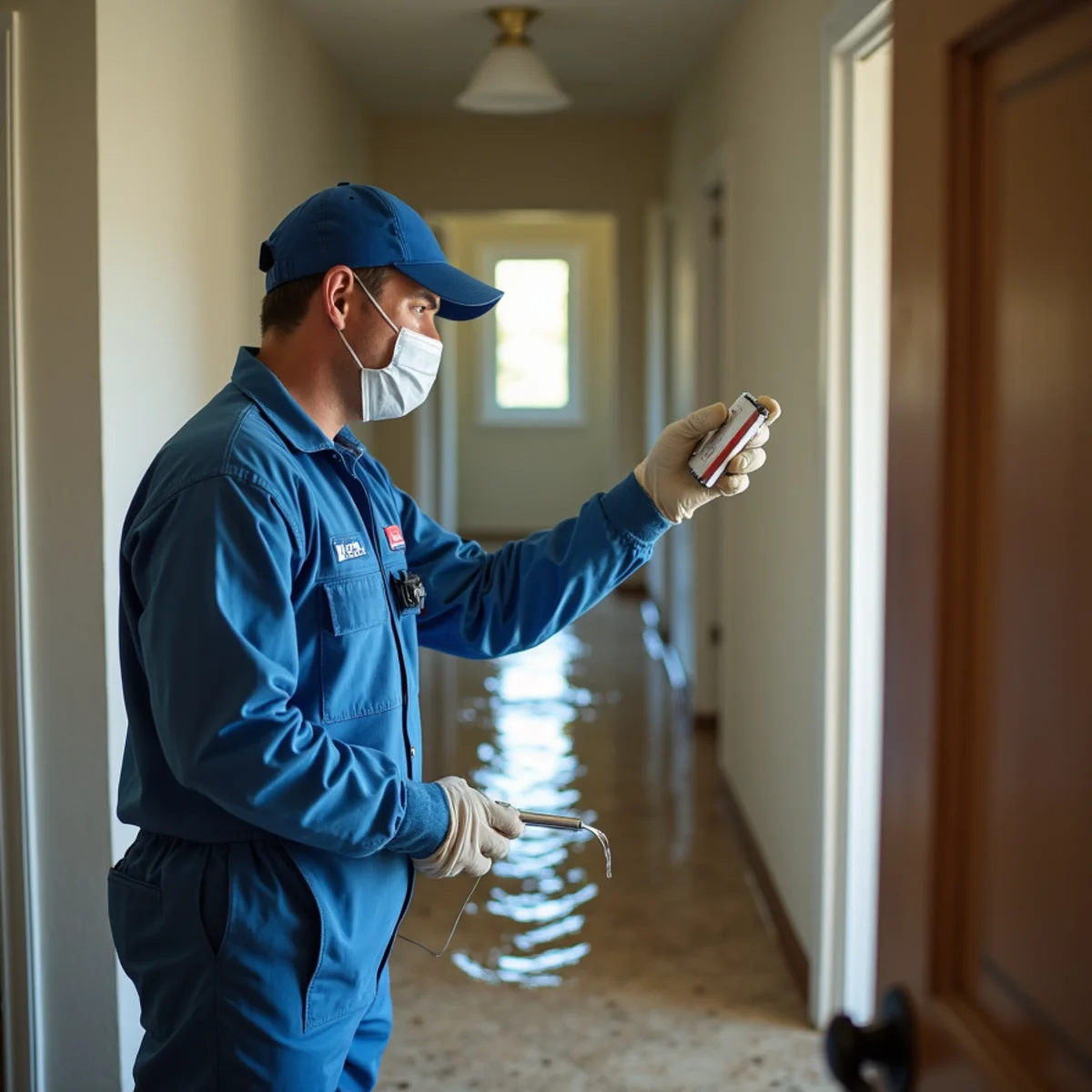
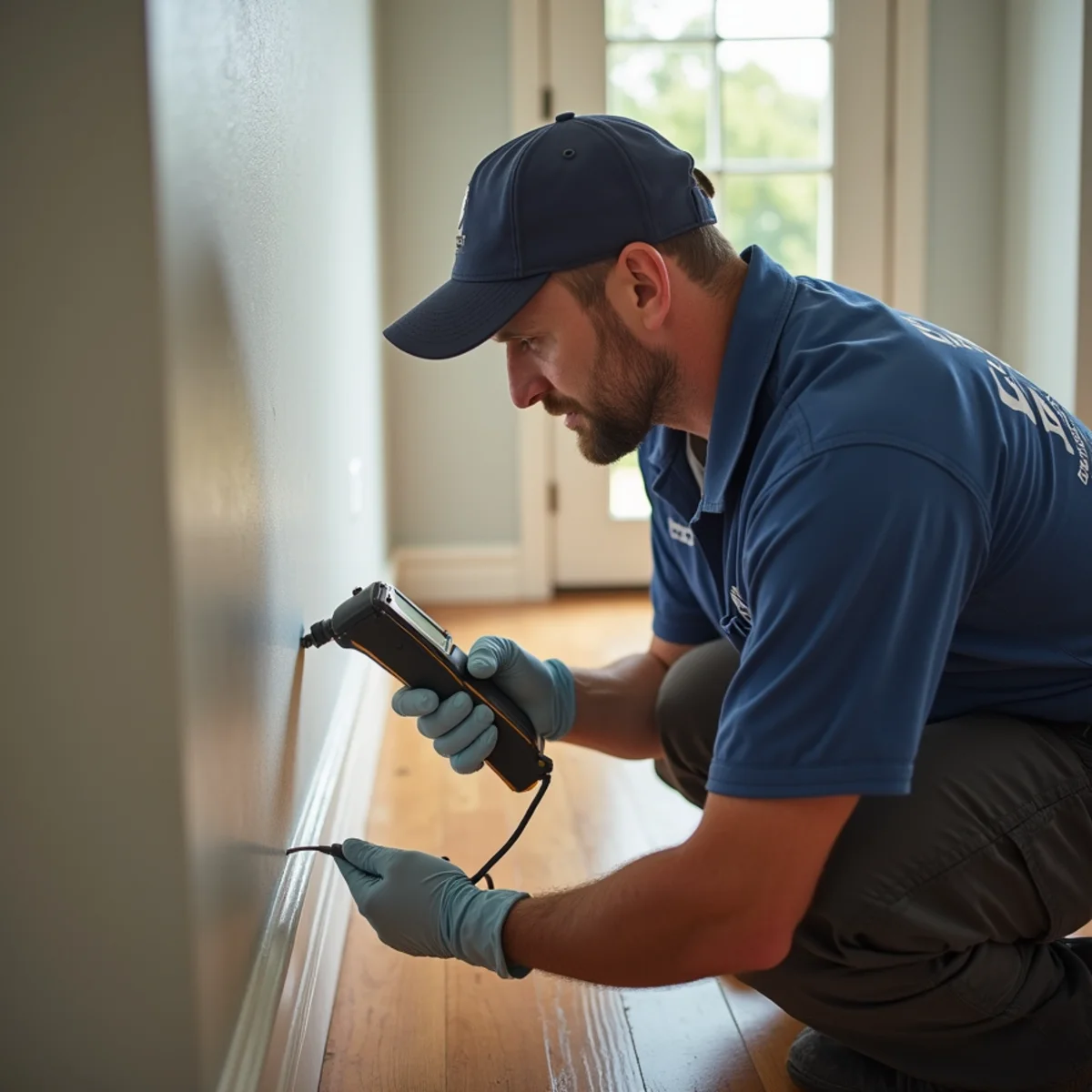
We start with a moisture meter along baseboards, cabinet bases, and flooring near the original leak location, working outward until readings return to a dry baseline. Where the source is not obvious, thermal imaging helps identify temperature differences that often indicate hidden moisture behind a wall or under a floor.
On the Loomis kitchen, moisture readings at the cabinet toe kick and the surrounding two feet of subfloor came back elevated, well past what the visible cleanup had addressed. That confirmed the odor was coming from trapped moisture, not just residual smell.
What it takes to actually fix it
Once we find where moisture is trapped, the fix depends on what is holding it. Sometimes it is a matter of removing a section of toe kick or baseboard to expose the cavity to air movers and a dehumidifier. Other times, especially with flooring that has sealed moisture underneath, sections of flooring or subfloor material need to come out because there is no way to dry them in place through a sealed surface.
On this job, we removed the cabinet toe kick and a small section of vinyl plank near the sink to expose the wet subfloor, set air movers and a dehumidifier for three days, and confirmed dry readings before closing it back up. The odor was gone by day two of drying, well before the moisture readings hit dry standard, which is a reminder that smell alone is not a reliable test either.
When a musty smell means mold has already started
If it has been more than 48 hours since the original water event and the smell is strong, sour, or accompanied by visible discoloration, treat it as a likely mold situation rather than just trapped moisture. At that point, opening the area up for drying is not enough on its own, and remediation of any established mold growth needs to happen alongside the drying.
We test for both at the same time on any job where the timeline or smell suggests mold may have already taken hold, rather than drying first and hoping the smell resolves on its own. Waiting to see if a musty smell goes away by itself almost always means the growth has more time to spread before anyone addresses it.
What our crews smell for that most homeowners miss
By the second or third day on a drying job, our crews can usually tell the difference between the flat, mineral smell of damp building material and the sharper, sour smell of mold that has already started. That distinction changes what we do next: a damp smell means keep drying and monitoring, while a mold smell means we test before we close anything back up, even if the moisture readings still look borderline.
The tradeoff we manage constantly is how much to open up versus how much to trust monitoring. Cutting into every suspect wall or cabinet the moment we smell something invites demolition costs that were not necessary. Waiting too long on a real mold smell lets a contained pocket spread past where a small, affordable remediation could have handled it. We lean on a moisture meter and thermal imaging together before committing to a cut, so the decision is based on readings, not a guess.
A musty smell is not always a leak, and winter makes it worse
Not every lingering musty smell traces back to a known water event. HVAC condensate lines and drain pans are a common source that has nothing to do with a leak anyone remembers, and they get overlooked because homeowners are searching for a spill or a pipe, not their air conditioner. We found exactly that on a Citrus Heights follow-up call: a musty smell the homeowner assumed was left over from an old dishwasher leak turned out to be a clogged condensate line quietly dripping into the drywall behind the furnace closet.
Roseville's rainy season, November through March, is also when we get the most musty-smell calls, and that is not a coincidence. Indoor humidity runs higher during those months, air conditioning is not running to help pull moisture out of the air the way it does all summer, and homes get closed up against the cold instead of aired out. A house that dealt with a leak the previous spring and seemed fine all summer can develop a musty smell again once winter humidity returns, simply because a small amount of trapped moisture that summer heat was masking finally has the conditions to turn into a smell.
- Press firmly on baseboard and drywall near the suspected area and feel for softness or give
- Run a flashlight low across the floor to look for a discoloration halo around flooring or cabinet edges
- Check under sink cabinets and around toilet bases for standing water or swelling
- Note whether the smell gets stronger right after it rains
- Check the HVAC drain pan and condensate line for standing water, even without a known leak
Frequently asked questions
Not always, but it always means moisture. Sometimes it is simply damp material that has not fully dried and has not yet developed mold. Given that mold can begin growing within 24 to 48 hours of a material staying wet, though, a lingering musty smell after that window is worth treating seriously.
Cleaning products and air fresheners mask the smell temporarily at best. They do not remove trapped moisture, and if mold has started, they do not address the growth itself. The smell comes back because the source is still there.
We use non-invasive moisture meters and thermal imaging to narrow down the area before removing anything. In most cases we can pinpoint the wet zone closely enough that only a small section of flooring, toe kick, or baseboard needs to come out to access it.
If a musty smell is still present three or four days after the original leak, and especially after it has been more than a week, that is a strong signal moisture is trapped somewhere the initial cleanup missed. Do not wait for it to resolve on its own.