
Water Damage Restoration
Carpet Water Damage Cleanup in Roseville, CA
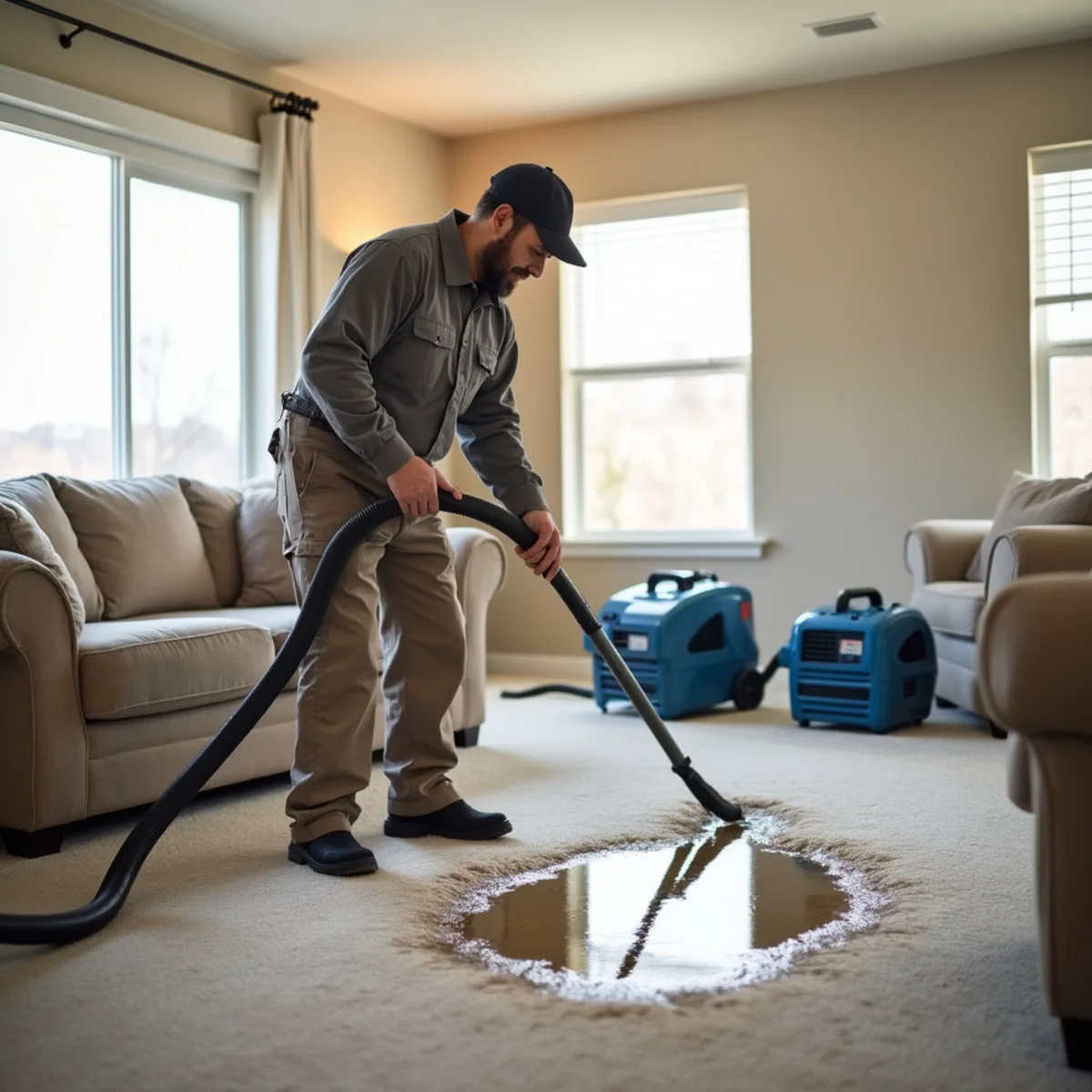
Wet carpet is deceptive. The surface fibers can feel almost dry within hours while the pad underneath stays soaked — a sponge sitting directly on your subfloor, holding water against the structure and growing bacteria and mold if it is not dealt with fast. Whether the carpet itself can be saved usually comes down to how clean the water was and how quickly it was extracted.
- 60-minute emergency dispatch across Roseville
- Licensed, insured & IICRC-certified
- Local to Roseville & Placer County
We pull far more water than a rented shop-vac or a wet/dry vacuum ever can, then decide with you what the carpet and pad actually need. Clean water caught early often means the carpet is lifted, the pad is replaced, and the carpet is dried and re-stretched back down. Contaminated water, or carpet left wet for days, usually means it comes out — and we will tell you which it is rather than drying something that should be replaced.
Signs your carpet has water damage that needs a pro
- Carpet that squishes or releases water when you step on it
- A pad that stays wet and spongy even after the surface feels dry
- A musty or sour smell that returns a few days after the carpet looked dry
- Discoloration, rippling, or loose, lifting edges where the carpet pulled from the tack strip
- Water that came from a dishwasher, washing machine, toilet, or outside — not a clean supply line
- Delamination — the carpet backing separating into layers where it stayed saturated
The pad almost always comes out — the carpet often does not
The single most important thing to understand about flooded carpet is that the carpet and the pad are two different materials with two different fates. The pad underneath is designed to absorb and cushion, so it holds water like a sponge and is cheap to replace — in the large majority of wet-carpet jobs, the pad comes out no matter what. The carpet itself is the more durable, more expensive layer, and it is frequently the part we save. Confusing the two is why people either throw out salvageable carpet or try to dry a pad that will never dry clean.
What the water category decides
Whether your carpet can be saved at all starts with where the water came from. We classify it the same way the IICRC S500 standard does, because it governs what is safe to keep.
- Category 1 (clean water — a supply line, a sink overflow caught early): carpet is usually saveable with deep extraction and in-place drying; the pad is typically replaced.
- Category 2 (gray water — a dishwasher, washing machine, or clean toilet overflow): carpet may be saveable with professional cleaning and sanitizing if treated quickly; the pad is removed.
- Category 3 (black water — sewage, a toilet overflow with waste, outdoor floodwater): the carpet and pad are removed and disposed of — contaminated carpet cannot be reliably sanitized in place.
What to do before we arrive
A few quick moves in the first hour protect your subfloor and improve the odds the carpet is saved. Keep it simple and safe.
- 1If the water is near outlets, baseboard heaters, or the electrical panel, treat it as a shock hazard and stay off it until power to the area is off.
- 2Stop the water source, then lift furniture off the wet carpet or slip foil or wood blocks under the legs — wood stain and metal rust bleed into carpet fast.
- 3Pull up small area rugs and anything with dye that could transfer, and move valuables off the floor.
- 4If you have a wet/dry vac, pull what surface water you safely can — but know it only reaches the top layer; the pad underneath stays soaked.
- 5Call us. The faster we get deep extraction going, the more likely the carpet dries in place instead of coming out.
Careful with contaminated water
If the water came from a sewage backup, a toilet with waste, or outside flooding, don't try to clean or dry it yourself — Category 3 water carries pathogens. Keep people and pets off it and let us handle removal and sanitizing in proper PPE.
How professional extraction beats a shop-vac
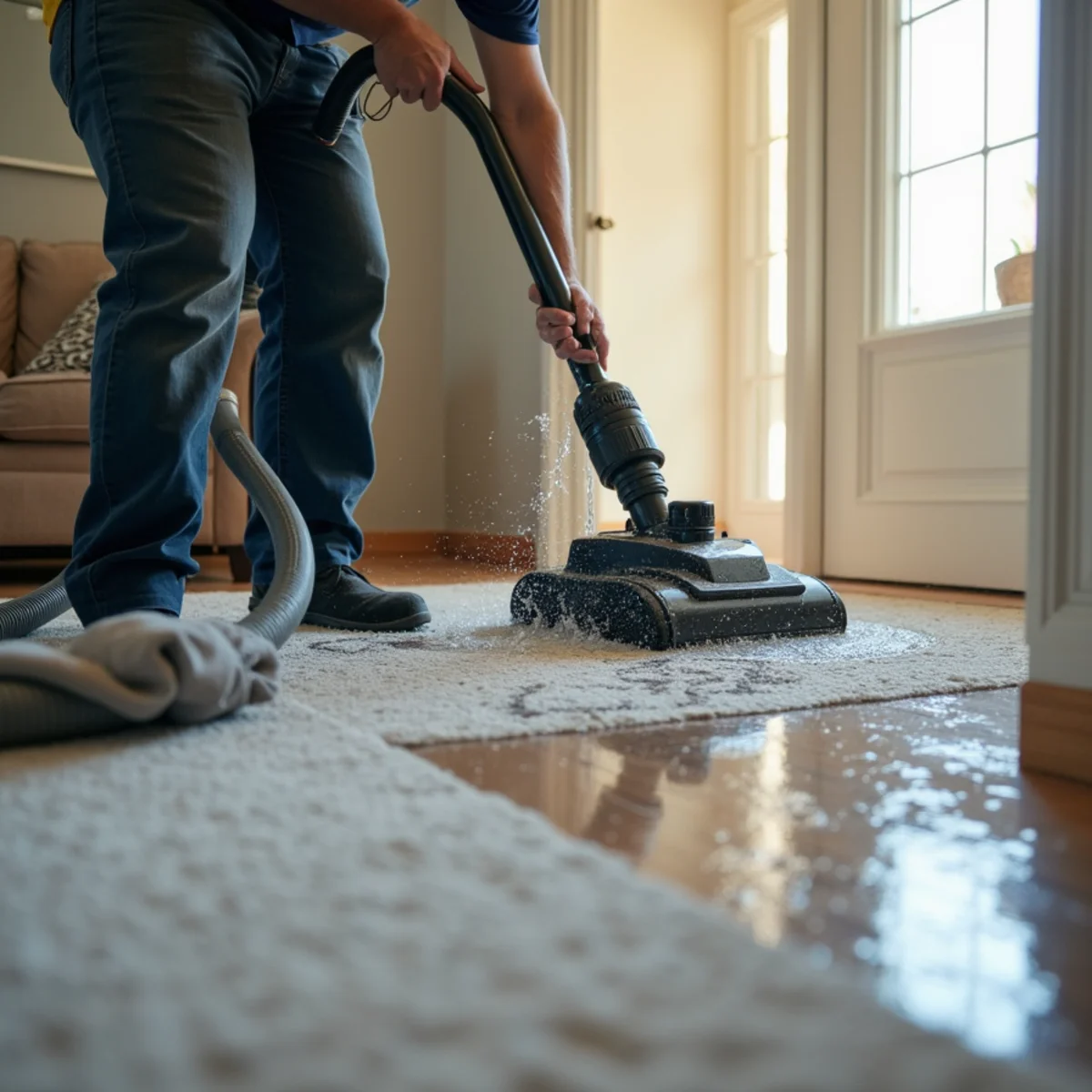
A wet/dry vacuum pulls the water sitting on top of the fibers. It does not reach the water trapped in the pad and the backing, which is where most of it is. We use truck-mounted and portable extraction units — including weighted extraction tools you stand on that press the water up out of the pad and carpet under your body weight — to remove dramatically more water in the first hour. Getting that water out fast is what makes in-place drying possible instead of a tear-out.
Drying carpet in place — floating and re-stretching
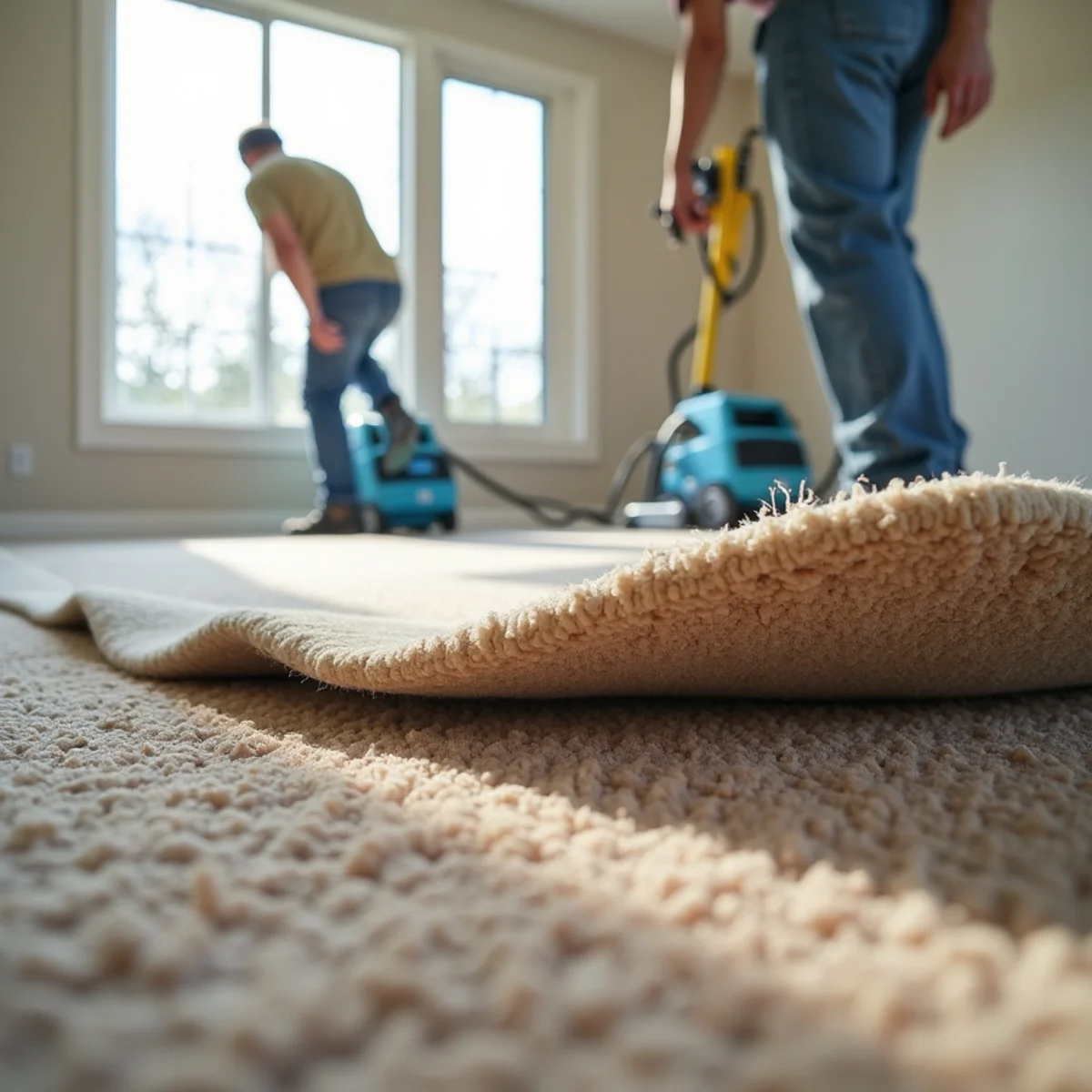
When the carpet is worth saving, we lift it along an edge, remove and dispose of the soaked pad, and dry the subfloor underneath directly. For larger areas we float the carpet — lifting it and pushing warm, dry air underneath with air movers — so both sides dry evenly instead of trapping moisture against the floor. Once the subfloor and carpet reach a documented dry standard, fresh pad goes in and the carpet is re-stretched and re-secured to the tack strip so it lies flat and tight, the way it did before.
When wet carpet is a loss
We will tell you plainly when drying does not make sense. Carpet that delaminated, sat wet long enough to grow mold, or was soaked by contaminated water is a removal — trying to save it risks the health of everyone in the home and usually fails anyway. In those cases we remove and bag it to standard, dry and sanitize the subfloor it was sitting on, and document the loss so new flooring is part of your claim.
Why Roseville homeowners trust us with wet carpet
Wet carpet is where a lot of corners get cut — fans dropped on top, no pad removal, no moisture checks. Here is what we do instead:
- Deep truck-mounted and weighted extraction, not a vacuum that only reaches the surface
- IICRC S500 category assessment so the save-or-replace call is based on the water, not a guess
- Subfloor dried and verified to target before any carpet goes back down
- Honest removal recommendations when the carpet is genuinely a loss — no drying something that should be replaced
- Direct insurance billing and documentation on covered losses
- Re-stretch and re-secure so saved carpet lies flat, not rippled
Serving Roseville and the surrounding communities
We handle wet and flooded carpet across Roseville, from apartments and condos near the Galleria to two-story family homes in Westpark and Highland Reserve where an upstairs supply line or water heater sends water down into carpeted bedrooms and hallways. The faster we extract, the more carpet we save.
We also respond in Rocklin, Granite Bay, Citrus Heights, Lincoln, Loomis, and Folsom. Wherever the carpet is, the first move is the same: pull the water deep and fast, then make an honest call on what stays and what goes. Communities we serve most often are linked below.
How much does wet carpet cleanup cost in Roseville, and how long does it take?
Wet-carpet jobs sit toward the lower end of the $1,400 to $6,400 range that covers most Roseville water losses, since carpet dries faster than wood or a saturated wall assembly. The cost is driven mostly by how much area took on water, whether the pad alone is replaced or the carpet comes out too, and what category the water was — a clean supply-line leak in one room is far less than a sewage backup across a finished floor.
Extraction is same-day, and drying a floated carpet and its subfloor typically runs 2 to 4 days with air movers and a dehumidifier — faster than hardwood. Re-stretching and re-securing saved carpet happens once the subfloor is confirmed dry. Covered sudden-water losses are billed directly to your insurer.
- Area of carpet and pad affected and how far the water spread
- Whether only the pad is replaced or the carpet is removed as well
- The water category — clean, gray, or contaminated
- Re-stretch and reinstallation, or new carpet when it is a total loss
Our wet carpet process
- 1
Extract deep
We pull water from the carpet, pad, and backing with truck-mounted and weighted extraction tools.
- 2
Assess & lift
We classify the water category, remove the soaked pad, and expose the subfloor to dry it directly.
- 3
Dry to target
We float and dry the carpet and subfloor with air movers and a dehumidifier to a documented standard.
- 4
Reinstall or replace
We lay fresh pad and re-stretch saved carpet, or remove and document carpet that is a loss for your claim.
What affects wet carpet cleanup cost
- The area of carpet and pad affected
- Whether the pad alone is replaced or the carpet is removed too
- The water category — clean, gray, or contaminated
- Re-stretch and reinstallation versus full carpet replacement
Water damage spreads by the hour. Let's stop it.
60-minute emergency dispatch across Roseville, 24/7. We extract, dry, and rebuild — and bill your insurer directly.
- 60-min Roseville dispatch
- Licensed & insured
- Direct insurance billing
FAQ
Carpet Water Damage — your questions
It depends on the water and the timing. Carpet soaked by clean water and extracted quickly is usually saveable — the pad underneath is replaced, and the carpet is dried and re-stretched. Carpet hit by gray or contaminated water, or left wet for days, typically comes out. The carpet and the pad are different materials, so it is common to save one and replace the other.
In the large majority of wet-carpet jobs, yes. The pad is built to absorb and cushion, so it holds water like a sponge and is slow and unreliable to dry clean — and it is inexpensive to replace. Saving the carpet while replacing the pad underneath is the normal outcome for a clean-water loss.
A wet/dry vacuum only pulls the water sitting on top of the fibers. Most of the water is trapped in the pad and the carpet backing against the subfloor, where a shop-vac cannot reach. We use truck-mounted and weighted extraction tools that press that water up and out, which removes far more in the first hour and is what makes saving the carpet possible.
Usually 2 to 4 days once we have floated the carpet and set air movers and a dehumidifier — faster than hardwood or a saturated wall. Extraction and pad removal happen the same day; drying time depends on how much water was involved and how well the room holds dry air while equipment runs.
That smell almost always means the pad or the subfloor underneath is still wet, or mold has already started where moisture was trapped. Surface-dry carpet over a wet pad is exactly the situation that causes it. We check moisture under the carpet, not just on top, and dry or remove whatever is holding water.
The window is about 24 to 48 hours. Clean-water carpet that is extracted deep and dried within the first day usually survives; past roughly two days, mold starts in the pad and backing and the odds of saving it fall quickly. Contaminated water shortens that window to effectively zero — it comes out regardless. The single biggest factor in whether carpet is saved is how fast real extraction begins.