Dealing with this right now? See our carpet water damage service, and we respond fast across Highland Reserve. Or call +1 (201) 277-9344 any time — we answer 24/7.
A homeowner in Highland Reserve called us the morning after a washing machine hose let go overnight. Water had crept from the laundry room into the family room carpet. He had already spent two hours with a shop-vac, emptying the tank a dozen times, and the carpet still squished under his feet. He wanted to know if he had done something wrong.
He had not. He had just run into the limit of what a wet-dry vac can do. This guide covers the difference between surface pickup and true extraction, what professional equipment pulls out of carpet, pad, and the subfloor beneath it, and how to tell whether your carpet is a save or a pull.
A shop-vac only reaches the top third of the problem
Carpet fiber holds water like a sponge, and the padding underneath holds even more. A household wet-dry vac uses a small motor and a narrow hose. It can lift standing water off the surface and pull some moisture out of the top of the pile, but it does not generate the suction or the flow rate to draw water out of a compressed foam pad or through dense carpet backing.
That is why the carpet in the Highland Reserve living room still squished after two hours of vacuuming. The visible puddle was gone. The water sitting in the pad and wicking into the tack strip and baseboard was not.
What a truck-mount extractor actually pulls out
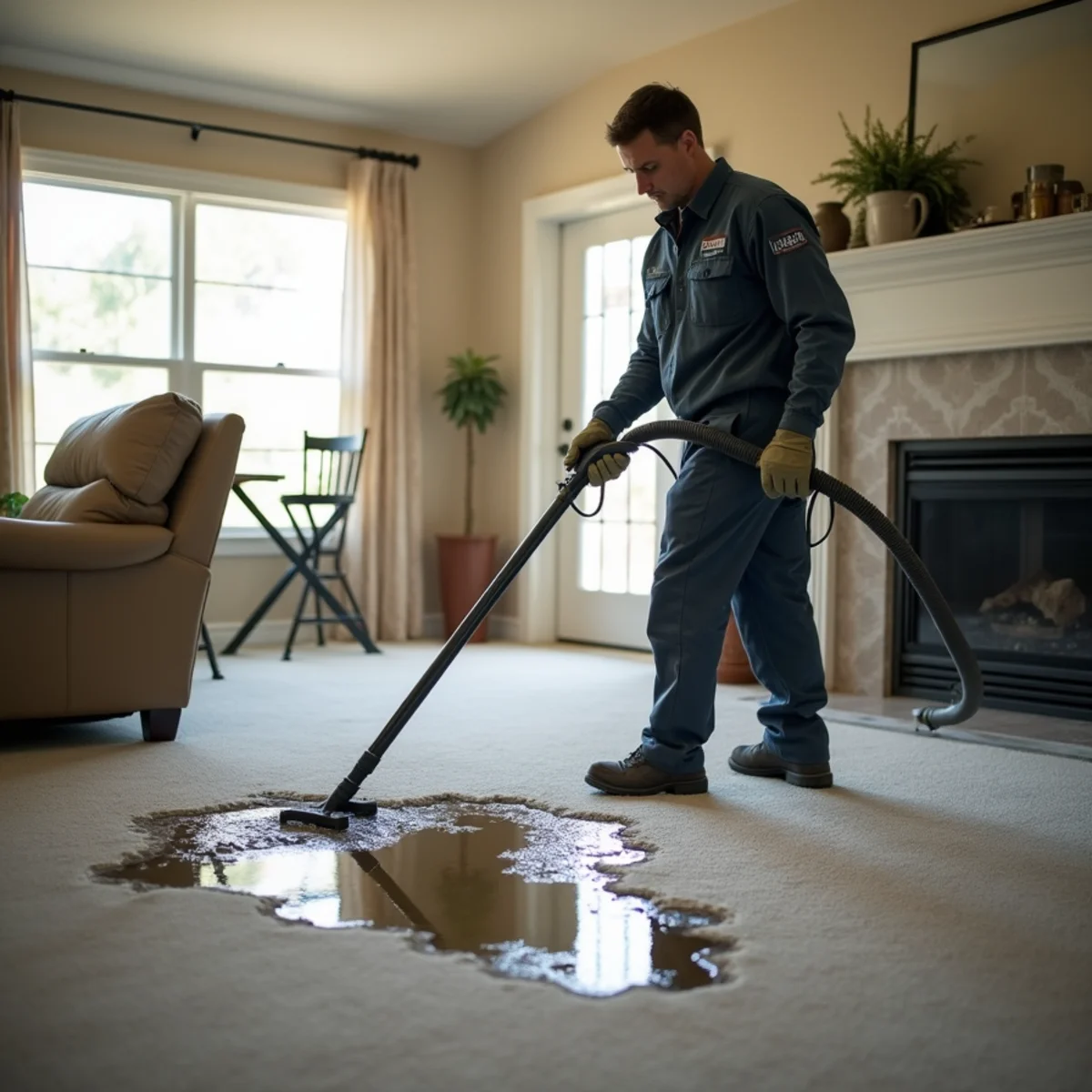
Professional extraction uses a truck-mounted or portable extraction unit that generates far higher vacuum and higher water lift than any consumer machine. A weighted extraction wand is worked in overlapping passes across the carpet, pressing down to force water up out of the pile and backing with each stroke.
On that job, we ran the wand in slow, overlapping passes across roughly 300 square feet of carpet. The waste tank filled twice before the carpet stopped releasing visible water. That is water the shop-vac never touched, because it was sitting in the pad, not on the surface.
- Water trapped in carpet backing and fiber below the visible pile
- Saturation held in the foam or rebond pad underneath the carpet
- Moisture wicking into tack strip, baseboard, and the first few inches of drywall
- Standing water pooled in low spots of the subfloor the carpet is hiding
Moisture mapping tells us what to do next
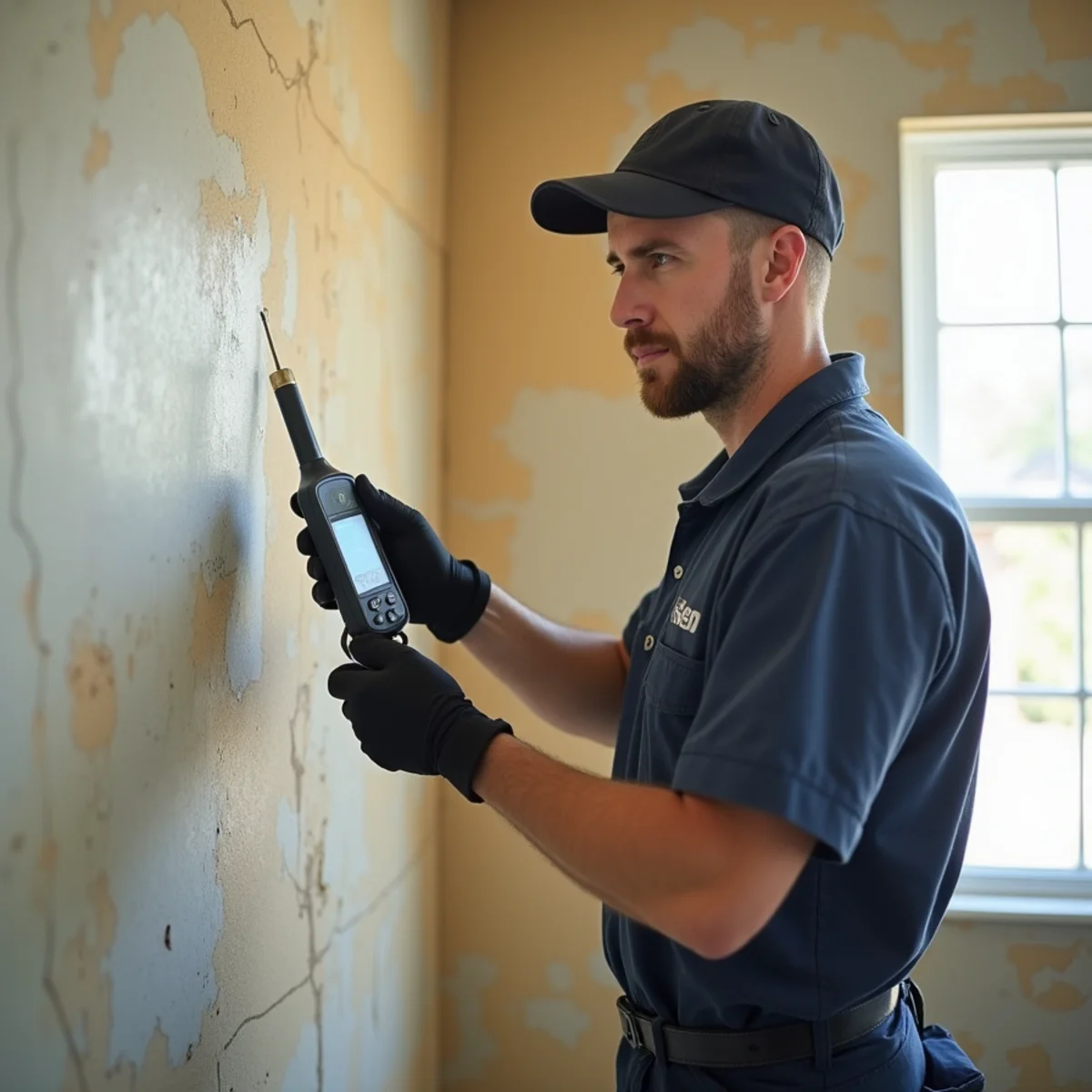
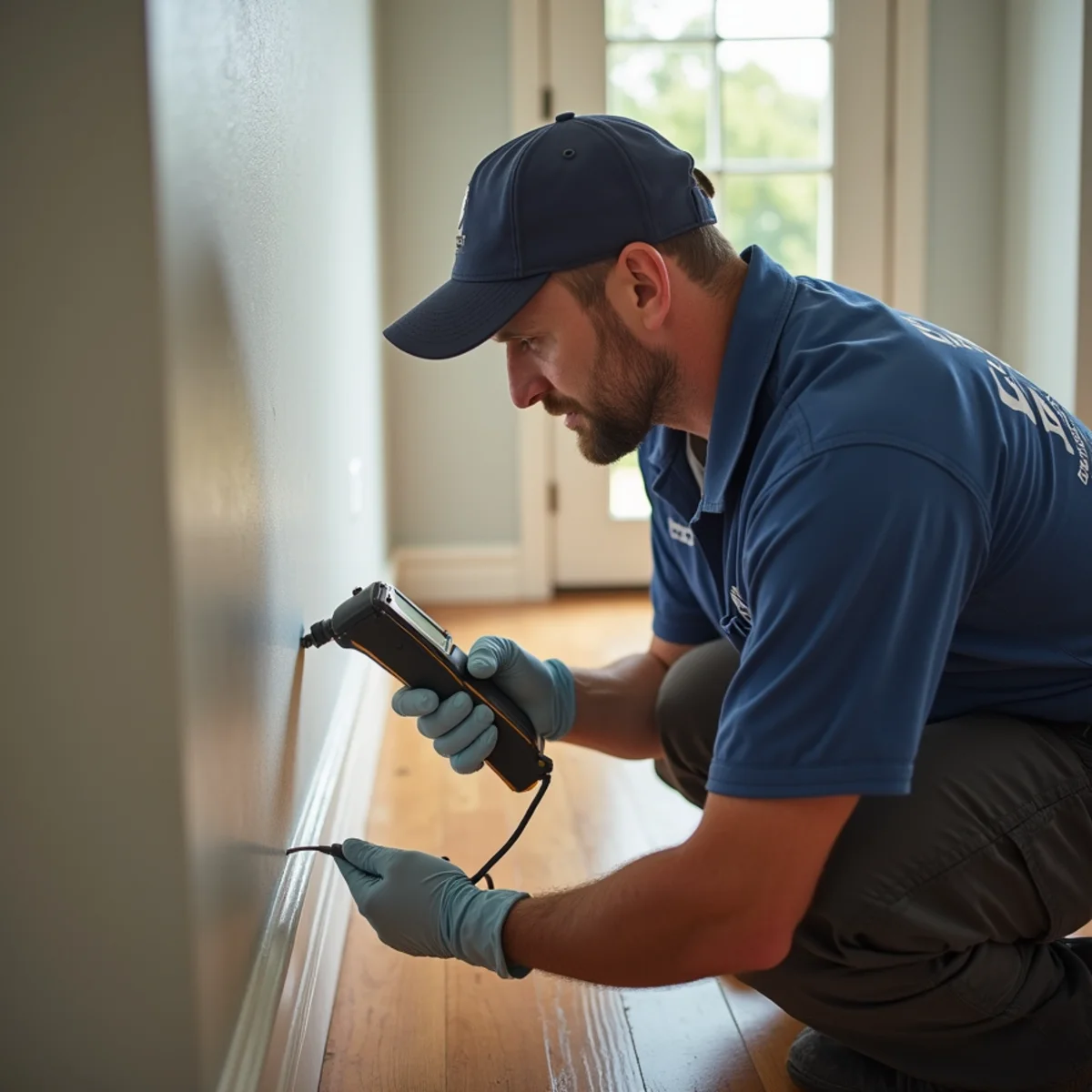
Before we decide whether carpet and pad can be saved, we map the moisture. That means a penetrating moisture meter on the subfloor at multiple points across the room, readings on the base of the walls, and often a thermal imaging pass to spot wet zones under flooring that are not visible yet.
Those readings get logged and become part of the file we hand your insurance adjuster. A room with clean supply-line water caught within a few hours often maps as save-able. A room where water sat overnight, or where the pad tested saturated at every point, usually does not.
When carpet and pad survive, and when they do not
Padding almost never survives a real flood. It is cheap, it compresses permanently once soaked, and drying it in place traps moisture against the subfloor. On most Category 1 (clean water) jobs we pull the pad, extract the carpet itself, and dry the carpet, tack strip, and subfloor as separate surfaces.
Carpet is a different question. If the water was clean, caught within a few hours, and the carpet has a synthetic backing rather than jute, it usually dries clean and stays in service. We detach it from the tack strip, extract both sides, and float it on air movers so air moves underneath while the subfloor dries too.
- Save-able: clean water, quick response, synthetic backing, no odor after extraction
- Usually removed: soaked more than 24 to 48 hours, gray or black water, jute backing, visible mold or persistent odor
Why the subfloor matters more than the carpet
The Highland Reserve home had a plywood subfloor over the family room, and it had absorbed water at every seam we tested. Wood subfloor swells and can delaminate if it is left wet, so drying it correctly matters more than the carpet sitting on top of it.
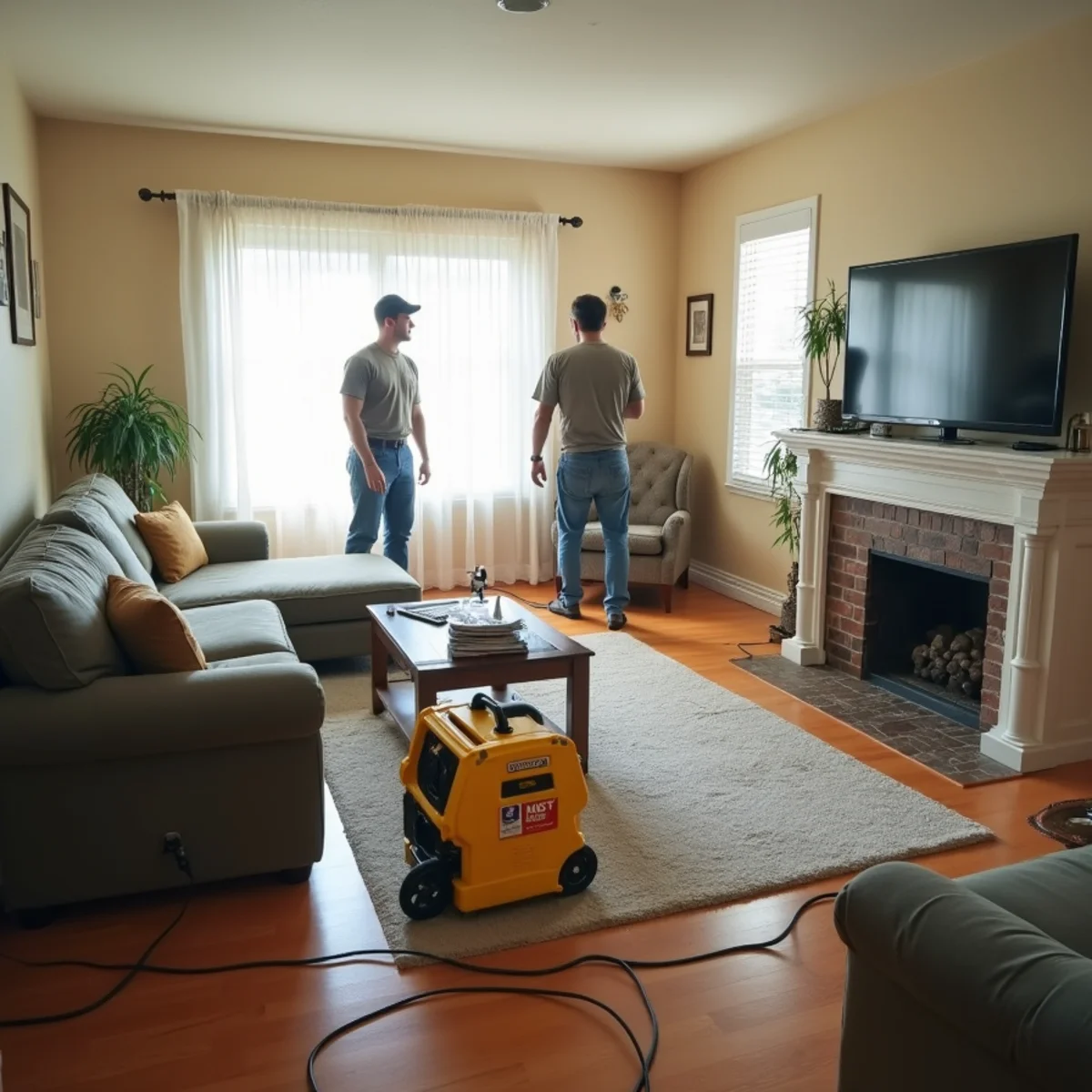
We set air movers to push air across the subfloor and a dehumidifier to pull the moisture out of the room air, following IICRC S500 drying guidelines for placement and equipment count. Daily moisture readings on the subfloor told us when it was actually dry, not just when it looked dry.
What we did on this job
We extracted the visible water, pulled and disposed of the soaked pad, extracted the carpet itself on both sides, and set up a drying chamber with air movers and a dehumidifier sized to the room. Moisture readings came down to dry standard on day four. The carpet went back down over new pad, and the homeowner's insurer covered the pad replacement and drying under his water damage claim.
If your carpet still feels damp after you have run a shop-vac, that is not a sign you did it wrong. It is a sign the water is somewhere your equipment cannot reach.
What our Roseville crews watch for during extraction
Before we run the wand, we check how the carpet is behaving at the edges. Carpet that has already started separating from its secondary backing, or that pulls apart in your hand when you tug a corner, is not coming back regardless of how thoroughly it gets dried. That check takes thirty seconds and saves a homeowner from paying to dry carpet that was never going to be reinstalled.
There is also a real tradeoff in how fast we work the wand. Moving quickly across a room finishes the visible job sooner, but shallow, rushed passes leave water sitting in the pad that resurfaces into the carpet a few hours later, sometimes after the crew has already left. We would rather spend the extra time on slow, overlapping passes than have a homeowner call back the next morning to say the carpet feels wet again.
- Signs extraction did not fully work: carpet still cool or damp 12 to 24 hours later
- A faint sour smell developing where there was none right after the job
- Seams starting to curl or lift at the edges
- Pad squishing underfoot even though the carpet surface itself feels dry
What not to do while you are waiting for extraction
The few hours between a leak and a crew arriving matter, and what happens during that window can undo work later or create new damage on its own. We see the same handful of mistakes on almost every call, usually made with good intentions by someone trying to help before we get there.
If the first extraction pass does not fully solve it, that is not a sign of a bad job. Pad that keeps wicking moisture back into the carpet over the following day usually means we come back for a second pass once the pad itself has had time to release what it is holding, rather than us having missed something the first time. We saw the same pattern on a tract home in East Roseville with similar synthetic-backed carpet, where a short second extraction visit the next morning cleared up moisture the pad kept feeding back into the pile overnight.
- Do not put furniture legs back on wet carpet — the pressure combined with dye or wood finish can leave a permanent stain or rust ring within hours
- Do not aim a space heater directly at wet carpet — it warms the damp pad into ideal mold conditions faster than it dries anything
- Do not walk from the wet area into other rooms in the same shoes or socks — it tracks moisture, and on any Category 2 or 3 loss, contamination, into unaffected flooring
- Do not shut off the HVAC system to "let it dry naturally" — indoor humidity climbs faster than a closed room can vent it
Frequently asked questions
You can pull more surface water that way, but a shop-vac cannot reach water trapped in the pad or wicking into the subfloor. Carpet can feel dry on top while the pad underneath stays saturated for days, which is exactly the setup for mold. If the water covered more than a small area, call for extraction rather than relying on a wet-dry vac alone.
We base it on the water category, how long it sat, and what our moisture readings show. Clean water caught quickly on synthetic-backed carpet usually stays. Water that sat overnight, came from a sewage backup, or shows up gray or black on inspection gets pulled, along with the pad, every time.
Extraction comes first. Fans and dehumidifiers manage the drying phase, but they cannot remove standing or trapped water on their own. We always extract with a truck-mount or portable unit before setting drying equipment, because trying to dry standing water with air movers just extends the timeline and raises the risk of mold.
Most homeowner policies cover extraction and drying for a sudden, accidental water loss like a burst supply line or appliance failure, subject to your deductible. We document moisture readings, photos, and equipment logs and bill your insurer directly so your adjuster has a clear record.