Dealing with this right now? See our structural drying & dehumidification service, and we respond fast across Lincoln. Or call +1 (201) 277-9344 any time — we answer 24/7.
A Lincoln family whose water heater failed in the garage asked us the same question almost every homeowner asks by day two: when can we turn this stuff off? The air movers are loud, the dehumidifier hums all night, and living around drying equipment gets old fast.
There is no single answer, because drying time depends on the room, the materials, and how much water was involved. This guide breaks down a realistic timeline by room type, based on jobs we run across Placer County, and explains what actually determines when we pull equipment.
Why we cannot give you a day count over the phone
Drying time depends on more variables than most people expect: the water category, how long it sat before we arrived, what materials got wet, the size of the affected area, and the humidity and temperature we are working against. A slab leak under tile dries on a different clock than a burst supply line that soaked carpet, drywall, and baseboard in the same room.
What we can give you is a range based on the type of loss, and daily moisture readings that show real progress rather than a guess. IICRC S500, the industry drying standard, calls for monitoring until materials reach a dry standard comparable to unaffected areas of the same structure, not a fixed number of days.
Typical range: 3 to 5 days for most residential jobs
Most residential structural drying jobs we run land in the 3 to 5 day range once extraction and equipment placement are complete. That covers a lot of the calls we get: a burst supply line, a failed washer hose, a water heater that let go, contained to one or two rooms and caught within a few hours.
Here is roughly how that breaks down by area, assuming clean Category 1 water and a same-day response.
- Carpet and pad in a single room, no subfloor saturation: 2 to 3 days
- Drywall and baseboard drying in place, moderate saturation: 3 to 4 days
- Hardwood or laminate flooring with subfloor moisture: 4 to 6 days
- Garage or slab area with concrete and wall base wet: 3 to 4 days
- Multi-room loss with wall cavities and insulation involved: 5 to 7 days
Why we round the timeline to a range, not a single number
Two rooms with the same square footage of wet carpet can dry at different speeds depending on the home's ambient humidity, how much airflow the layout allows, and whether the HVAC system is running to help stabilize temperature. A closed-off bedroom with the door shut dries slower than an open family room with the same amount of water, simply because air has fewer paths to move.
That is part of why we ask homeowners to leave interior doors open and the HVAC system running during a drying job whenever possible. It sounds minor, but it measurably shortens the timeline in rooms that would otherwise sit as dead air pockets.
What was different about the Lincoln garage job
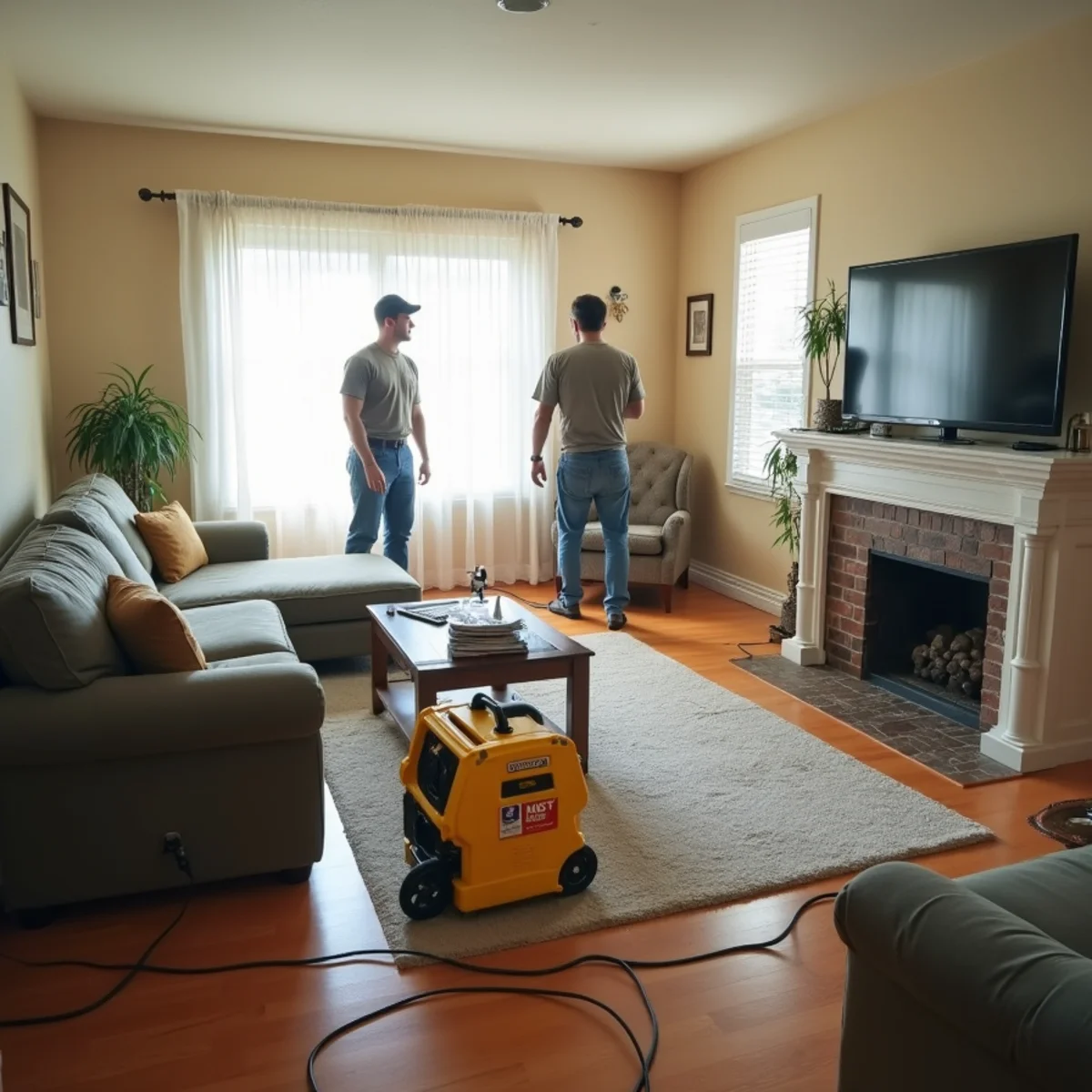
This water heater failure sat for several hours before anyone noticed, since it happened overnight, and the water spread from the garage into a laundry room and the edge of an adjoining bedroom closet. We extracted standing water first, then set air movers positioned to create airflow across wet wall base and flooring, plus a dehumidifier sized to the combined square footage of the affected rooms.
The garage concrete and drywall base dried in three days. The laundry room, where water had wicked further into carpet at the closet threshold, took an extra day and a half to reach dry standard. We did not pull equipment room by room as it 'looked' dry; we pulled it when moisture meter readings confirmed it.
Why hardwood and subfloor take longer than carpet
Carpet and pad give up moisture relatively fast once extracted, because air movers can reach the fiber directly. Hardwood and the subfloor beneath it are denser and dry more slowly, and solid hardwood can cup or buckle if it dries too aggressively, so we sometimes have to pace the drying rather than push maximum airflow.
On engineered or solid wood floors, we often use specialty mats or a drying system designed for flooring in addition to air movers, and we monitor both the surface and subfloor moisture separately, since they do not dry at the same rate.
What actually decides when equipment comes out
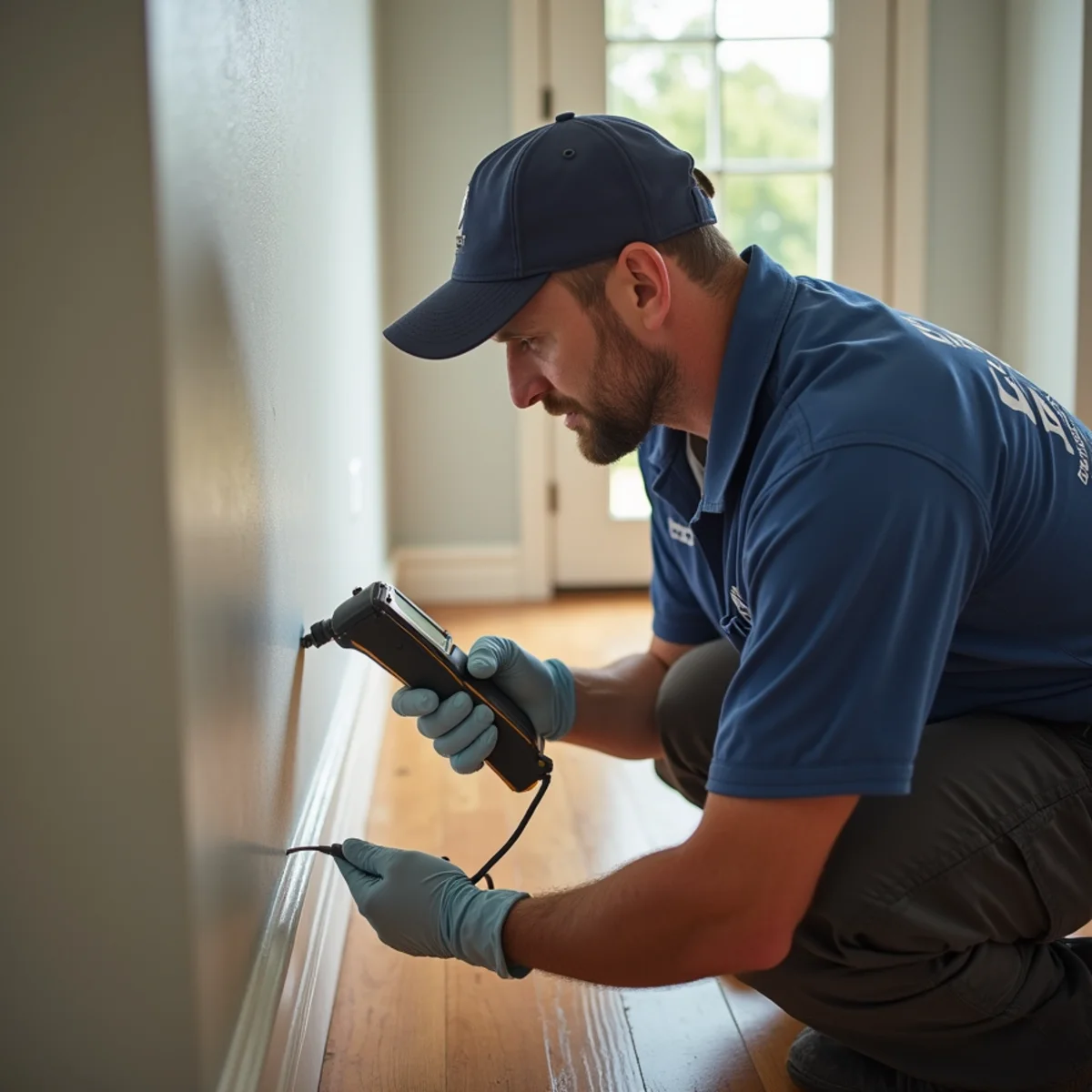
We do not pull air movers and dehumidifiers based on a calendar guess. We take moisture readings daily with a meter, comparing affected materials to a dry, unaffected reference point in the same home, and we track the trend, not just a single number.
Equipment comes out when readings across the affected area are consistent with that dry reference point for at least one check, and when there is no lingering odor or visible sign of moisture. Pulling equipment early because the noise is annoying is how jobs turn into mold calls three weeks later.
- Daily moisture meter readings compared to a dry reference area
- Ambient humidity inside the drying chamber trending down and stabilizing
- No musty odor and no remaining cool or damp spots to the touch
- Consistent readings across at least one full day before equipment is pulled
What slows a timeline down
A few things reliably add days: a delayed start, since water that sits for a day before extraction pushes moisture deeper into materials; Category 2 or 3 water, which sometimes requires antimicrobial treatment and more careful drying of porous materials; and closed wall cavities or cabinetry, which trap humidity and dry more slowly than open rooms.
Roseville's climate helps in summer, when low outdoor humidity lets a dehumidifier work efficiently. Winter storm calls, with high ambient humidity outside, sometimes take a day or so longer for the same amount of water.
What our crews watch for that can change the timeline mid-job
We recheck every drying job at roughly the 24-hour mark, not just at the end, because that is usually when we can tell whether a room is on the typical curve or running slow. A baseboard that is trapping moisture behind it, a closet that is not getting enough airflow, or a dehumidifier that is undersized for the space all show up in that first full day of readings, and catching it early means adjusting equipment placement instead of losing two extra days later.
There is a tradeoff between pulling equipment as soon as possible to save a homeowner rental days and being certain the job is actually dry. We lean toward one extra day of monitoring over an early pull, because a callback for mold under a baseboard weeks later costs far more, in money and in trust, than one more day of a dehumidifier running.
What we do when moisture readings stop improving
Occasionally a room's readings plateau partway through drying instead of trending steadily down. That does not mean the equipment failed. It usually means something is still feeding moisture into the space, or the airflow is not reaching where the water actually is, and we treat a plateau as a signal to change the approach rather than just letting the fans run longer.
Construction era matters here too. The plywood subfloor common in older Lincoln tracts behaves differently than the OSB subfloor in newer construction we see on jobs in areas like Rocklin Stanford Ranch — OSB tends to swell and hold moisture at the seams longer than plywood, which can add a day to an otherwise similar-sized loss even when everything else about the job looks the same.
- 1Recheck the original water source to confirm nothing is still slowly leaking
- 2Reposition air movers to target the specific wet material, not just the open floor area
- 3Confirm the dehumidifier's capacity actually matches the square footage and humidity load of the space
- 4Open a wall cavity or use a cavity drying system if the moisture is sealed behind a closed surface
- 5Move to material removal if readings still have not improved after two more days
Frequently asked questions
Continuous airflow and dehumidification keep moisture moving out of materials and out of the air consistently. Turning equipment off overnight lets humidity rebuild in the space, which slows the overall drying process and can add days to the timeline.
Usually not, especially in Roseville's humid winter storm season. Outdoor air often carries more moisture than the controlled environment our equipment creates, and opening windows can work against the dehumidifier rather than help it.
We tell you as soon as readings show it, along with why, whether that is deeper subfloor saturation, a wall cavity holding moisture, or a wood floor that needs a slower pace. We document the extended readings for your insurer so the additional equipment days are supported in the claim.
Yes, in that equipment rental days are billed and covered based on how long drying actually takes, backed by our daily moisture logs. We do not pad the timeline, and we do not cut it short either, since either one can cause problems with the claim or the property.