
Dealing with this right now? See our slab leak water damage restoration service, and we respond fast across Crocker Ranch. Or call +1 (201) 277-9344 any time — we answer 24/7.
Drive through Crocker Ranch or any of the tract neighborhoods that went up around Roseville in the 1980s and 90s, and you're looking at a lot of houses built the same way: slab-on-grade foundations with copper supply lines poured directly into the concrete. That was standard practice for decades, and for the first twenty or thirty years it works fine. Then the copper starts to go.
We've been called to more of these jobs every year, and the pattern is consistent enough that we can usually guess a home's age before we ask. This article walks through why these homes are entering what we call the slab-leak danger zone, what the early signs look like, and what actually happens once you call us.
What makes a slab-on-grade home different
In a slab-on-grade house, there's no crawl space and no basement — the concrete foundation sits directly on the ground, and the copper water lines run either through the slab itself or just beneath it in the soil. When those homes were framed in the 1980s and 90s, builders ran soft copper tubing in long, mostly unbroken runs, because it was cheap, flexible, and easy to install fast during a building boom.
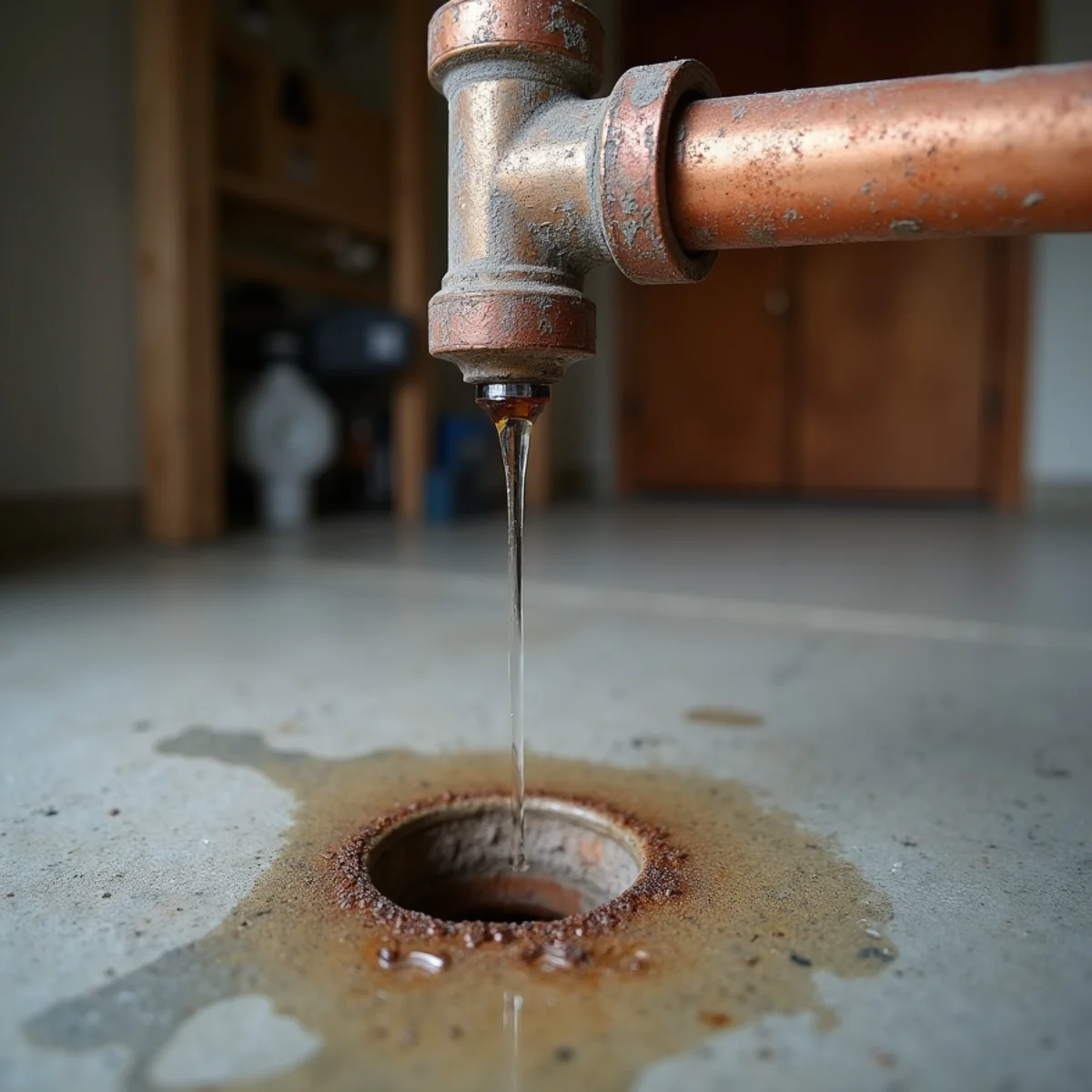
The tradeoff shows up decades later. Once a slab pipe develops a pinhole, you can't just open a wall and see it. The leak is under a few inches of concrete and whatever flooring sits on top — tile, hardwood, carpet pad. Water finds the path of least resistance, which is usually sideways along the underside of the slab before it ever pushes up through a grout line or baseboard.
Why the 1980s and 90s specifically
Copper pipe doesn't have an expiration date printed on it, but real-world experience puts the first wave of slab leaks somewhere around the 25-to-45-year mark, depending on water chemistry and installation quality. Do the math on a house framed in 1985 or 1992, and you land right in that window today, in 2026. That's not a coincidence — it's the reason we're seeing a steady uptick of these calls specifically from Roseville's older tract subdivisions rather than newer construction out toward West Roseville.
Sacramento Valley's hard water is part of the story too. Mineral content and municipal chloramine treatment both accelerate pitting corrosion on the inside of copper pipe over time, so two identical houses built the same year in different water districts can age very differently. Roseville homes on the older side of that curve are simply catching up to their pipe's natural lifespan now.
- 1980s-90s slab-on-grade construction with copper run through or under the concrete
- Original copper now 30-45+ years old, entering typical pinhole-failure range
- Hard Sacramento Valley water accelerating internal pitting corrosion
- Leak location hidden under flooring, often traveling sideways before surfacing
The early warning signs homeowners miss
A slab leak rarely announces itself with a puddle on day one. What we hear most often from Crocker Ranch homeowners is something quieter: a warm spot on the floor tile that wasn't there before, a section of carpet that stays slightly damp no matter how many times it's vacuumed, or a water bill that jumped by $40-$80 with no obvious explanation. Some people notice the sound first — a faint hiss under the floor in a quiet room, or the water meter still spinning after every fixture in the house is shut off.
By the time flooring visibly buckles or a baseboard stains, the leak has usually been running for weeks or months. That's a lot of Category 1 clean water that's had time to wick into subfloor, drywall, and cabinetry, and clean water left standing that long starts creating the conditions mold needs within 24 to 48 hours.
What we find when we get called out
A typical call in this part of Roseville starts with a homeowner describing exactly what's above: a warm patch of tile near the kitchen island, or a hallway carpet that never quite dries. We bring electronic leak-detection equipment and thermal imaging to pinpoint the leak's location under the slab without tearing up the whole floor to find it.
On one recent job in Crocker Ranch, a homeowner had noticed a musty smell in a back bedroom closet for about two weeks. The slab leak turned out to be nearly eight feet away from where the smell was strongest — the water had traveled under a load-bearing interior wall before finding a low spot to rise through the carpet pad. We extracted the standing water, pulled the wet carpet and pad, set air movers and a dehumidifier, and took daily moisture readings until the subfloor and framing were back to normal. Structural drying on a job like that typically runs three to five days.
What repair and restoration actually involves
Restoration and plumbing repair are two separate jobs that have to happen in the right order. We handle the water damage side: extraction, drying, moisture mapping, and mold prevention. A licensed plumber locates and repairs or re-routes the actual leak, sometimes by cutting into the slab, sometimes by re-piping overhead through the attic to avoid the slab entirely — a common fix in homes that have already had one slab leak, since it's often cheaper than repeating slab repairs down the road.
We coordinate directly with your insurance adjuster on the water damage portion. Most homeowner policies cover the sudden and accidental water damage even when they exclude the cost of the plumbing repair itself, so understanding that distinction early saves confusion later in the claim.
If you suspect a slab leak
Shut off the main water valve if you can access it, avoid running dishwashers or washing machines until the leak is confirmed, and call us. We arrive fast, locate the source, and start extraction before more flooring and subfloor take on water.
What our Roseville crews watch for
The mistake we see most in Crocker Ranch and the surrounding tract streets isn't ignoring a warm spot entirely — it's noticing it, deciding to "keep an eye on it," and spending two or three weeks comparing quotes before anyone actually opens the floor. Every day a slab leak keeps running is a day water keeps traveling further under the concrete, and the honest tradeoff is this: acting on a warm spot that turns out to be nothing costs you a small patch of flooring and a service call. Waiting on a warm spot that turns out to be something costs you a subfloor, a section of drywall, and a much longer drying job.
The other mistake is covering the spot instead of calling about it. We've pulled up area rugs and furniture that homeowners moved over a warm patch of tile months earlier, assuming it was cosmetic or related to sun through a window. Rugs and furniture trap heat and moisture against flooring instead of letting it show itself, which buys the leak more time to spread sideways under the slab before anyone investigates.
One leak or the start of a pattern? What decides it
A slab leak's location doesn't tell you whether it's an isolated failure or the first of several. Every foot of copper under a 1985 or 1992 Crocker Ranch home came from the same original installation, exposed to the same hard Sacramento Valley water for the same number of years, which means a pinhole in one spot is often a sign that the pipe elsewhere is at a similar stage of pitting even if it hasn't failed yet. We see homes come back for a second slab leak call within a couple of years of the first, almost always in houses where the original repair was a single spot patch rather than a broader look at the rest of the system. Diamond Oaks homes from the same construction era show the identical pattern.
That's a plumbing decision more than a restoration one, but it's worth knowing the tradeoff going in: a saw-cut spot repair is faster and cheaper today, while rerouting the affected line overhead through the attic costs more upfront but takes that stretch of pipe out of the slab entirely. Neither choice is automatically right — it depends on the age of the rest of the system and how much of the house's copper has already been touched.
- Original copper never repiped, even after a prior leak was spot-patched
- No water softener installed despite the area's hard water
- Water heater temperature set high, accelerating hot-line corrosion
- Past remodels or additions that reused old branch lines rather than replacing them
- A prior leak repair that didn't inspect the surrounding run for similar wall thinning
Frequently asked questions
Condensation tends to be localized and disappears once humidity drops. A slab leak keeps a spot consistently warm or damp, your water meter keeps moving with everything off, and the water bill trends upward over a few cycles. We use leak-detection equipment to confirm the source before any demolition starts.
No. We pinpoint the leak's location first, so only the affected section of flooring and subfloor needs to come up for drying and repair access. Whole-floor replacement is rare unless the flooring material itself can't be matched or salvaged.
Most policies cover the sudden water damage from a slab leak — extraction, drying, and repair of affected materials — even though many exclude the cost of repairing the pipe itself. We document everything and work directly with your adjuster so the covered portion moves quickly.
Not every original-copper home develops a slab leak, but the risk window is real for houses built in that era. Watching your water bill for unexplained jumps and calling at the first warm spot or damp patch on the floor catches most leaks before they cause major damage.