Dealing with this right now? See our mold remediation service, and we respond fast across Whitney Ranch. Or call +1 (201) 277-9344 any time — we answer 24/7.
"Is this black mold?" is one of the most common questions we get on a walkthrough, usually pointed at a dark patch on a bathroom ceiling or a musty closet wall. The honest answer is that most dark growth people find is not the toxic mold headlines warn about — it is ordinary mold or mildew that still needs attention, just not panic.
This guide covers how mildew and mold actually differ, what a few common household mold types look like, and where the line is between something you can handle with a spray bottle and something that needs professional containment and remediation.
Mildew: surface growth, usually manageable
Mildew is a general term for certain fungi that grow flat on surfaces rather than penetrating into the material. It typically shows up as a white, gray, or light powdery coating on damp surfaces — shower grout, window sills, the inside of a closet with poor airflow. It stays on top of the surface rather than growing roots into it.
Because it is surface-level, mildew usually responds to cleaning with a household mold-and-mildew cleaner and, more importantly, fixing whatever is keeping that surface damp. If it keeps coming back in the same spot after cleaning, that is a sign of a persistent moisture source, not a mildew problem you have failed to clean well enough.
Mold: grows into the material, not just on it
Mold is a broader category of fungi that, unlike mildew, can send structures into the material it is growing on, not just sit on the surface. It ranges widely in color and texture — black, green, dark brown, sometimes with a fuzzy or slimy texture depending on species and how wet the material is.
Because mold can grow into porous material like drywall paper, wood, and carpet backing, surface cleaning often cannot fully remove it. Wiping the visible portion away can leave the structure still colonized underneath, which is why it tends to reappear even after a thorough-looking cleaning.
So-called "black mold" — what the color actually tells you
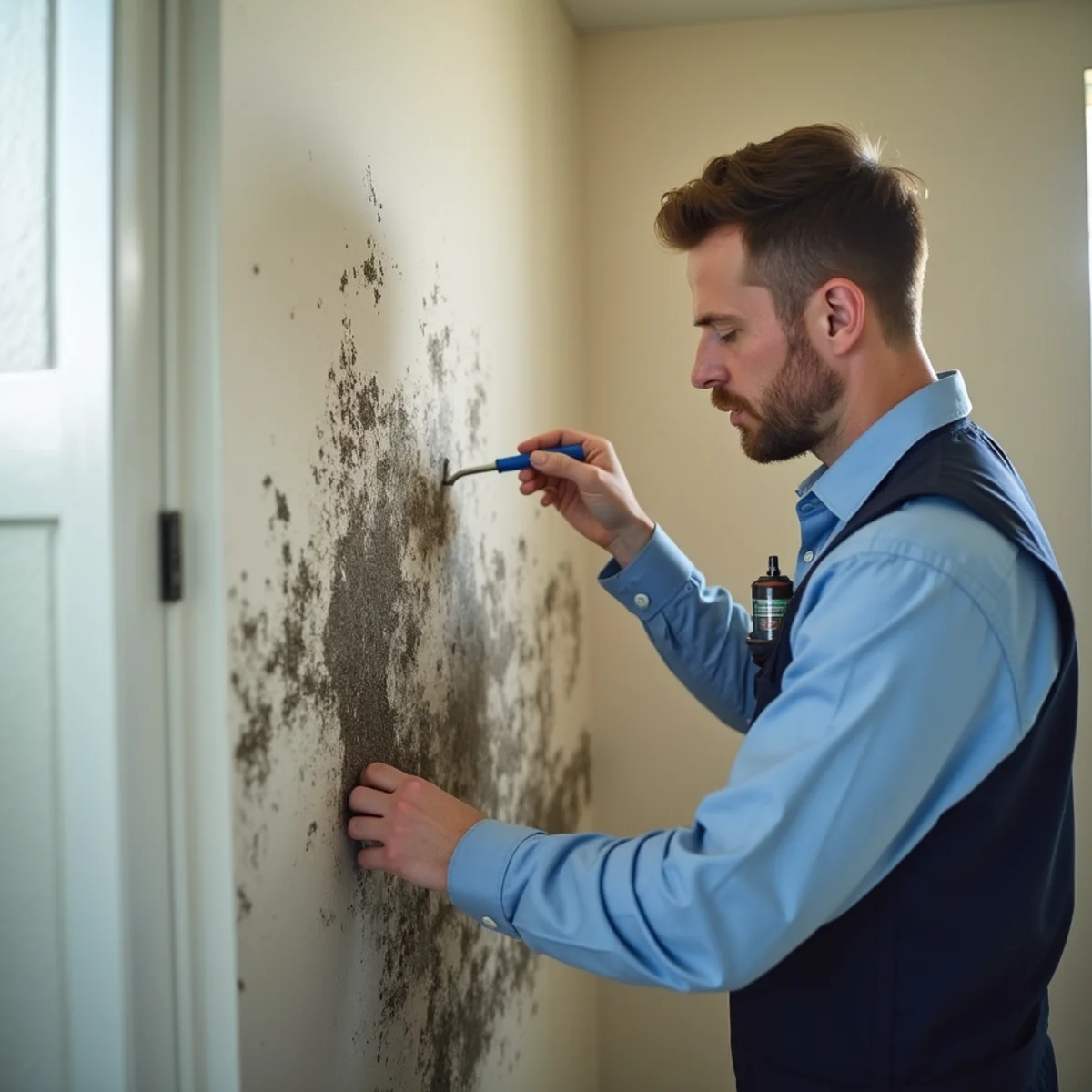
Color alone does not identify a mold species. Several common household molds appear dark or black, and the specific species often called "toxic black mold" in media coverage requires lab testing to confirm — you cannot identify it by looking at it. What color and texture do tell you is how established the growth is and roughly how urgent the response should be.
A small, flat, grayish patch is a very different situation from a dark, slimy, spreading patch with a strong musty odor. The second describes active, well-fed growth regardless of exact species, and it is the kind of finding that calls for professional assessment rather than a spray bottle.
Signs it has moved past a DIY cleanup
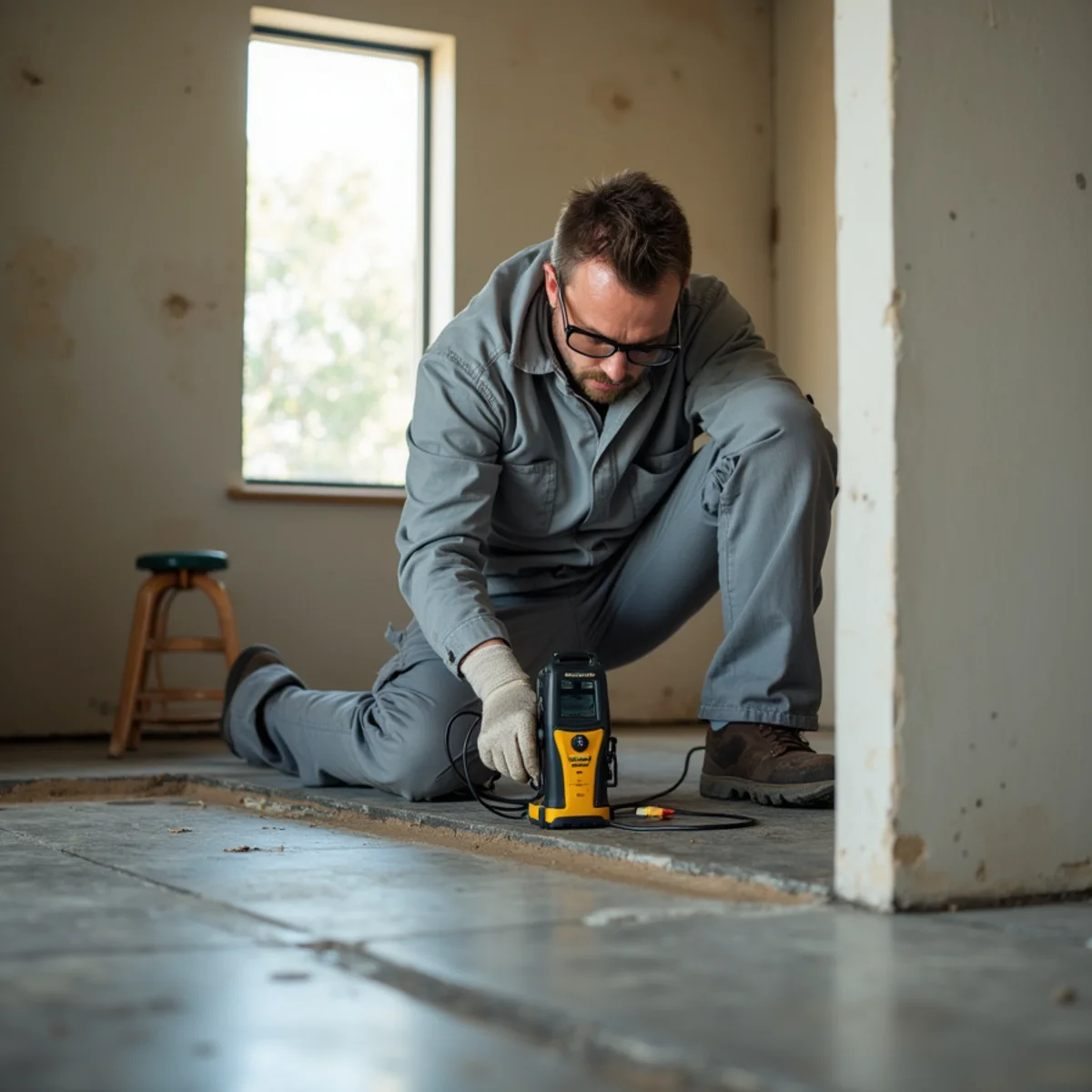
A few signs point toward calling a professional rather than tackling it yourself. Growth larger than roughly 10 square feet, per common guidance from agencies like the EPA, is generally considered beyond a simple DIY cleanup. Growth that keeps returning after cleaning points to a moisture source inside a wall or under a floor that needs to be found, not just the visible mold addressed.
A strong, persistent musty smell without visible growth often means mold is present somewhere you cannot see — behind a wall, under flooring, inside an HVAC system. And any growth connected to a known water event, like a slow leak that ran for weeks before discovery, is worth a professional look even if the visible patch looks small.
- Growth larger than about 10 square feet
- Growth that returns repeatedly after cleaning
- A musty smell with no visible source
- Any growth tied to a leak that ran undetected for a while
- Growth in HVAC ducting or behind walls
How we handle a remediation job
When mold has moved beyond surface cleaning, we contain the affected area with plastic sheeting and negative air pressure to keep spores from spreading to the rest of the house during the work. We remove and dispose of unsalvageable material, HEPA-vacuum and clean remaining surfaces, and apply antimicrobial treatment.
Because mold almost always traces back to a moisture problem — a slow roof leak, a bathroom fan that never got installed, a slab leak wicking into a wall — we also address the moisture source itself as part of the job, and can coordinate leak detection if the source is not obvious.
Fixing the mold without fixing the moisture does not last
Remediation removes what is there. It grows back if the underlying moisture source, whether a leak, poor ventilation, or high humidity, is not corrected at the same time.
Why we don't chase a species name on most jobs
A walkthrough focuses on scope — how many square feet, what material, how contained the growth is — and on finding the moisture source, not on identifying the exact species growing there. That is because standard remediation protocol for visible growth is largely the same regardless of which mold it is: contain the area, remove unsalvageable porous material, HEPA-clean what remains, and apply an antimicrobial treatment. Species identification matters more for a specific medical concern a doctor has raised, or for documentation in a real estate transaction, than it does for scoping the removal work itself.
The mistake we see is a homeowner delaying the call while waiting on a mailed-in test kit result, while the growth keeps spreading and the moisture source keeps feeding it during that wait. If the growth pattern, spread, and smell already point past a DIY wipe-down, a lab result rarely changes what needs to happen next — fix the moisture, remove what cannot be saved, clean what is left. Testing does have a real place in certain situations, though — a pre-listing inspection, a tenant dispute, or a case where a doctor has asked for documentation of exposure. In those cases we can coordinate a third-party air quality or surface sample as part of the job, but it is a targeted decision based on why you need the paperwork, not a default first step before we will touch anything.
- Testing gives what's already visible a name — it does not change whether removal is needed
- Scope and material type drive the remediation plan more than the species does
- A test result takes days to come back; an active leak keeps feeding growth the entire time you wait
- A visual and moisture assessment tells us more about urgency than a lab report on its own would
The molds people usually mean when they say "black mold"
A handful of common household molds account for most of the dark growth people find, and knowing the general look of each helps set expectations before a professional assessment confirms anything. This is general orientation, not a substitute for an actual inspection — appearance alone still cannot confirm a species.
The one people are usually most worried about, Stachybotrys, is also the least common of the group because it needs specific conditions: a cellulose-rich material like paper-faced drywall or wallpaper that has stayed continuously wet for an extended stretch, not just damp for a day or two. That is one reason a quick leak that gets dried fast is much less likely to produce it than a slow, hidden leak that has been feeding a wall cavity for weeks.
Texture is often a more useful field clue than color. A slimy, wet-looking texture generally means the material underneath is still actively wet and feeding the growth, while a dry, powdery texture can mean the material dried out at some point and the mold, whatever species it turns out to be, is now inactive. Inactive growth still is not something to leave in place — it still needs to be removed, and it is still a sign the material was wet long enough for colonization to take hold.
- Cladosporium — olive-green to black, often found on AC vents, window sills, and fabric
- Penicillium — blue-green and often powdery, common on water-damaged wallpaper and insulation
- Aspergillus — white, yellow-green, or black depending on species, common in dusty, humid areas
- Stachybotrys — dark green to black with a slimy texture, needs cellulose material that has stayed wet for an extended stretch, not just damp
Frequently asked questions
Home test kits can detect that mold spores are present, which is true in nearly every home, but they are not reliable for identifying species or determining whether remediation is needed. A visual and moisture assessment tells us more than a species name would.
Small surface mildew on grout or a window sill that responds to regular cleaning is common and not usually a structural concern, as long as it does not keep spreading or returning aggressively after cleaning.
For contained, moderate-sized remediation jobs, most homeowners can generally stay elsewhere in the house while we work the affected area, though we will tell you specifically based on the scope and location of the job.
We serve Rocklin Whitney Ranch regularly and can typically schedule an assessment quickly; if the mold is tied to an active leak or water event, we treat it as an emergency and dispatch within our 60-minute target.
Wiping mold off a hard surface handles the visible spot but not what is growing inside porous drywall, insulation, or framing, and it does nothing about the moisture feeding it. Remediation contains the area, removes what cannot be cleaned, and fixes the water source so it does not come back.