
Dealing with this right now? See our leak detection & repair coordination service, and we respond fast across Stanford Ranch. Or call +1 (201) 277-9344 any time — we answer 24/7.
Some leaks announce themselves with a puddle. Others hide behind a wall or under a slab for weeks, doing damage the whole time while giving off only subtle clues. Learning those clues is worth it, because a hidden leak caught early is a repair, while the same leak left alone becomes warped flooring, a mold problem, or a much bigger repair bill.
This guide walks through the specific signs that point to a hidden leak — a warm spot on the floor, a water bill that jumped for no obvious reason, sounds you can hear if you stop and listen — and what each one is actually telling you about where the water is going.
A warm spot on the floor
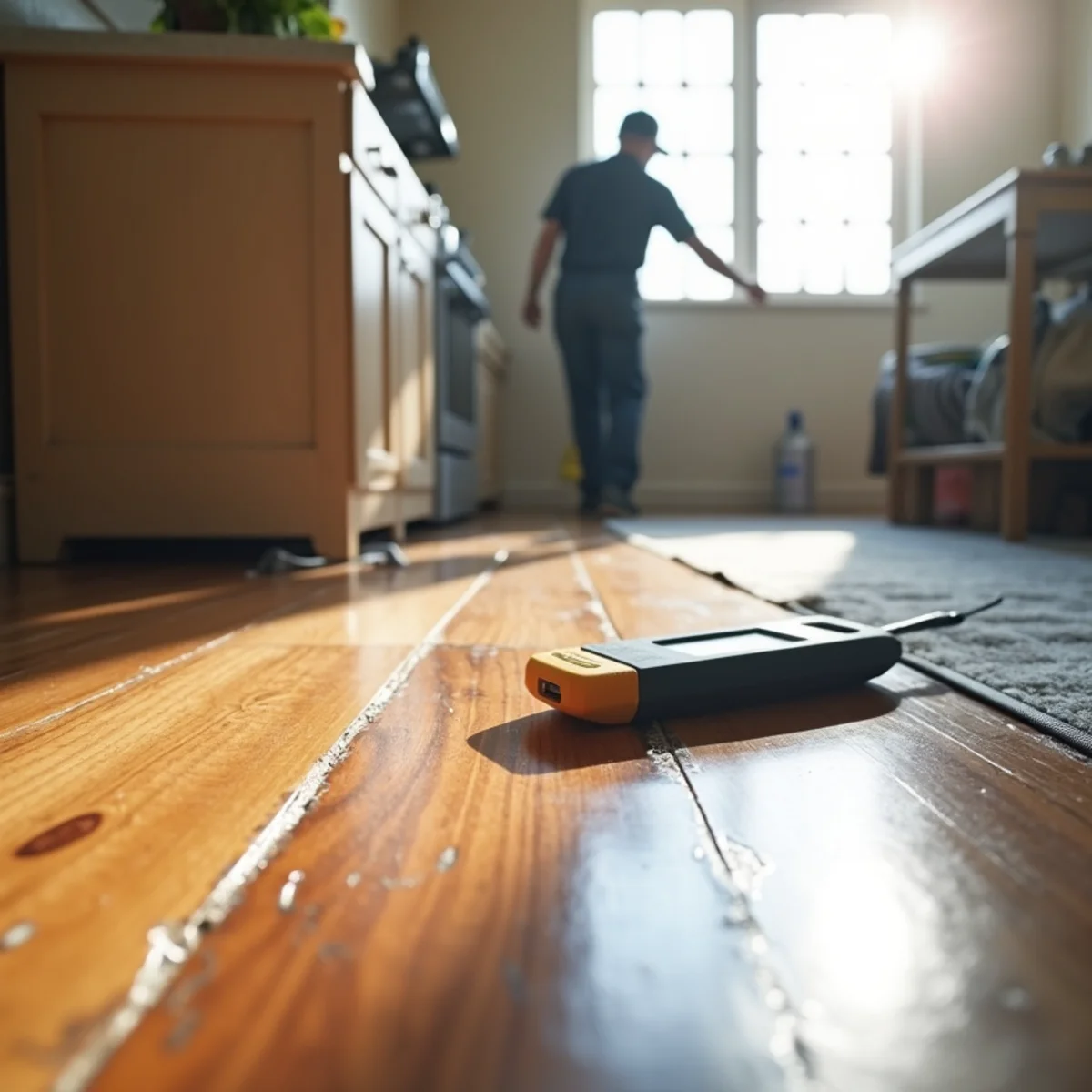
If you notice one section of tile or flooring that feels noticeably warmer than the rest, especially with no obvious reason like sun exposure or nearby heating, that is one of the more specific signs of a slab leak on the hot water line. Hot water escaping under the slab warms the concrete and the flooring above it.
This sign is easy to miss because it is subtle and easy to explain away. Walk your floors barefoot occasionally, especially in homes built in the 1980s and 90s where original copper supply lines under the slab are now old enough to be reaching pinhole-leak age from Sacramento Valley's hard water.
A water bill that does not match your usage
Your water bill is one of the most reliable early-warning tools you already have. If your usage jumps significantly month over month without a clear reason — no new pool fill, no extra irrigation, no house guests — a running toilet or a leak somewhere in the system is a strong possibility.
A simple check: turn off every fixture in the house, make sure nothing is running, and watch your water meter for 15 to 20 minutes. If it is still moving, water is going somewhere. This works whether the leak is a slab leak, a leak inside a wall, or something as simple as a toilet flapper that will not seat.
Sounds you can hear if you stop and listen
A hissing or trickling sound coming from inside a wall, floor, or ceiling when all fixtures are off is a fairly direct sign of an active leak under pressure. It is easiest to notice at night when the house is quiet — try standing near suspect walls, especially those that back up to bathrooms or the kitchen, with everything else off.
The sound of running water when nothing should be running is different from normal pipe noise like expansion ticking or a water heater cycling. If it is a steady hiss or trickle rather than an occasional tick or clunk, it is worth investigating further rather than dismissing as "old house noises."
Visual and physical signs to walk through your house looking for
Beyond warm spots and sounds, a handful of visual clues are worth a regular check. Peeling paint or bubbling on walls or ceilings, warped or cupping wood flooring, a musty smell in one specific area, unexplained mold or mildew on a wall, and cracks in flooring or foundation near where a leak could be present are all signals.
Low water pressure at one or more fixtures, without a citywide notice of pressure issues, can also point to a supply line leaking before it reaches the fixture, since water escaping along the way reduces what actually makes it to the tap.
- Peeling paint or bubbling drywall/ceiling texture
- Warped, cupping, or buckling wood or laminate flooring
- A persistent musty smell in one area
- Mold or mildew appearing with no obvious water source
- Cracks in flooring or foundation
- Unexplained drop in water pressure
What to do once you suspect a hidden leak
Do not start tearing out drywall or flooring to chase the leak yourself. Non-invasive leak detection equipment — acoustic listening devices, thermal imaging, moisture meters — can usually pinpoint the source without opening up walls you do not need to open, saving both time and unnecessary repair cost.
Once the leak is located, we coordinate with a plumber for the actual repair and handle extraction and drying for any water damage that has already occurred, so the whole process moves as one coordinated job instead of separate, disconnected calls.
Waiting rarely saves money
A leak under a slab or inside a wall does not pause while you decide whether it is worth investigating. The materials it is reaching keep absorbing water, and the mold clock keeps running.
The mistake that turns a small leak into a big repair
The mistake we see most with hidden leaks is repainting over a ceiling or wall stain instead of finding what caused it. A fresh coat of paint hides the symptom for a while, but the source is still active behind it, and the same spot comes back bigger the next time, usually with more framing damage underneath than the first round would have caused. We would rather cut one small, targeted access point based on a moisture reading than have a homeowner repaint the same corner three times over two years.
That targeted approach depends on data, not a guess. We scan a grid across the suspect area with a moisture meter to find where the reading actually peaks before recommending any opening, rather than opening wherever looks worst to the eye. A reading that keeps climbing over several days of monitoring points to an active leak still feeding the area, not a one-time event that already dried out on its own. It also tells us whether we are chasing an active supply-line leak under pressure or a slow-draining, already-stalled event — and those two situations call for a different level of urgency.
The honest tradeoff here is time versus certainty. Non-invasive detection narrows the search well, but on some jobs the equipment still leaves two or three plausible spots rather than one exact point, and the only way to close that gap is a small confirming opening in the most likely location. We would rather tell you that upfront than promise a single pinpoint every single time and come up short.
- Repainting over a stain without finding the source almost always means a bigger repair later
- A moisture reading that keeps climbing over several days points to an active leak, not one that already dried
- One small, targeted access point beats an exploratory cut in the wrong spot
A quick self-check before you call for detection
Before you call, a ten-minute walkthrough of a few common trouble spots can help narrow things down and save time once a technician arrives. Check under every sink and around the base of the water heater for swelling, staining, or a musty smell, and check exterior hose bibs and irrigation valve boxes for a wet spot that has no obvious explanation.
One spot that is easy to overlook in Roseville's summer heat is the attic AC condensate line and drain pan. A clogged condensate line is a common source of what looks like a mystery ceiling stain during the months the system runs hardest, and it gets missed because people assume any ceiling stain has to be a roof or plumbing issue. Walking the crawlspace or checking foundation vents for standing water or a musty smell rounds out the check, and noting which room, which wall, and what time of day the symptom shows up gives a technician a real head start. None of this replaces professional detection equipment, but it can rule a few things in or out before anyone gets scheduled, and it gives you a clearer sense of whether the problem needs an emergency call or can wait for a normal appointment.
- 1Check under every sink and around the water heater base for swelling or staining
- 2Check the AC condensate line and pan in the attic — a clogged line is a common source of a summer ceiling stain
- 3Check exterior hose bibs and irrigation valve boxes for an unexplained wet spot
- 4Check crawlspace or foundation vents for standing water or a musty smell
- 5Note which room, which wall, and what time of day the symptom shows up
Frequently asked questions
Any increase you cannot explain with a clear change in usage is worth checking. A 15 to 20 minute meter test with everything off is a quick way to confirm whether water is moving when it should not be.
Yes. A leak inside a wall or under a floor can keep a hidden area consistently damp for weeks without any water ever reaching a visible surface, which is exactly the condition mold needs.
Usually not. Acoustic and thermal equipment locates most leaks without opening drywall or flooring. If confirmation requires a small access point, we keep it as limited as possible and coordinate the repair in the same visit when we can.
Yes, we run leak detection and water damage calls throughout Rocklin Stanford Ranch regularly, including the area's slab-on-grade homes now reaching the age where copper supply lines commonly develop pinhole leaks.
Yes. A warm patch on a slab floor is a classic sign of a hot-water slab leak, common in Roseville's slab-on-grade homes. Paired with a jump in the water bill or the sound of running water when everything is off, it is worth a leak-detection visit before the damage spreads.