Dealing with this right now? See our water damage restoration service, and we respond fast across Whitney Ranch. Or call +1 (201) 277-9344 any time — we answer 24/7.
An upstairs bathroom leaks, and by the time anyone notices, water has stained a downstairs ceiling, run behind a shared wall, and possibly touched a neighbor's flooring too. In a single-family home, that's one owner's problem. In a condo or HOA community like the Whitney Ranch area of Rocklin or similar developments around Granite Bay, it immediately raises a harder question: whose responsibility is this, the unit owner where it started, the unit owner where it landed, or the association?
The honest answer is: it depends on where exactly the failure occurred and what your association's governing documents say. This guide walks through how that determination usually gets made, the coverage gap most owners don't realize they have, and what to document the moment water starts moving.
The upstairs-downstairs problem
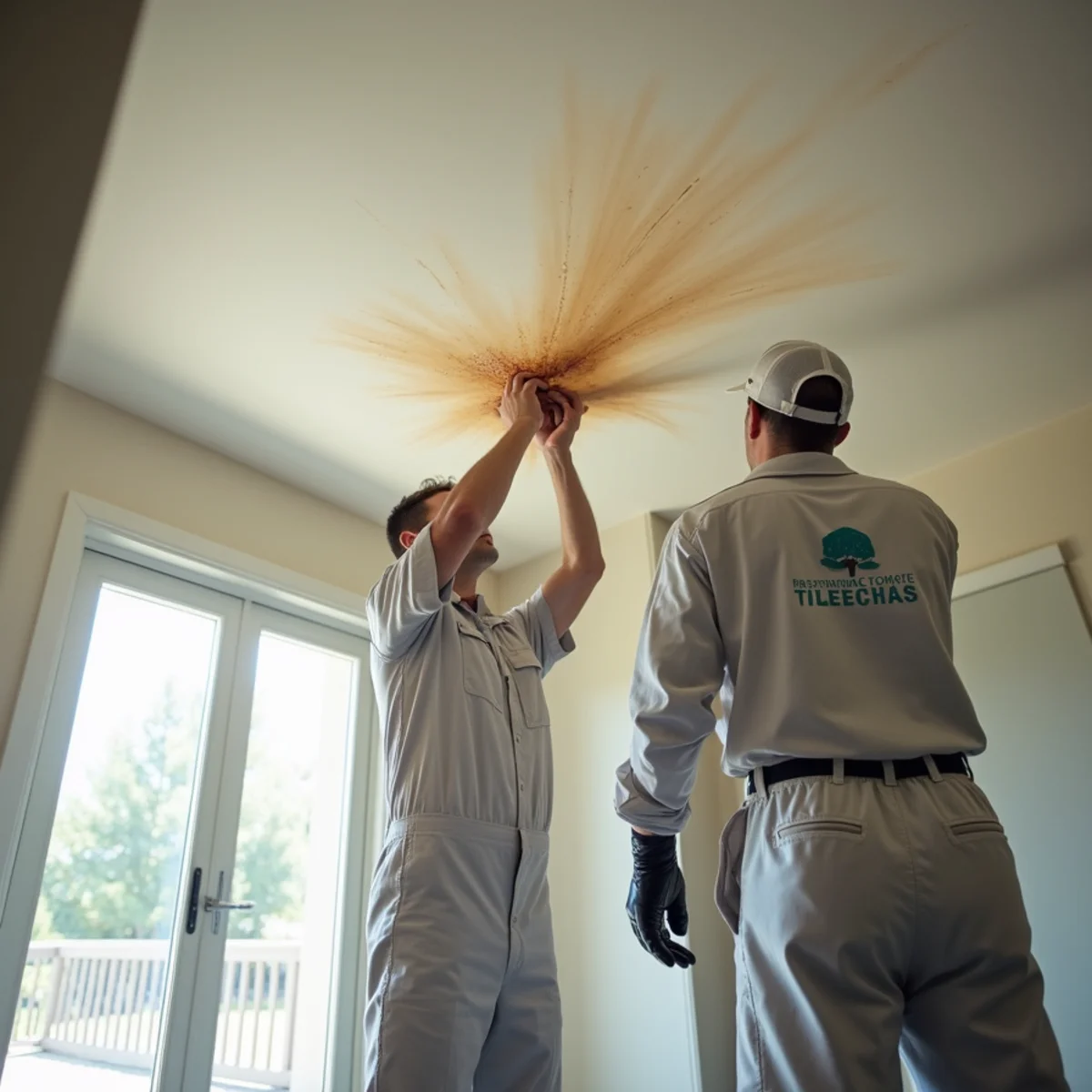
This is the single most common water loss scenario in multi-story condo buildings: a supply line, toilet, or shower pan fails in an upper unit, and gravity does the rest. The unit where the water originated, the unit below that received the damage, and any shared structural elements in between can all be governed by different responsibility rules under the same incident.
Speed matters here as much as it does anywhere else. Water traveling between units can affect drywall, flooring, and shared framing in several places within hours, and the longer it sits, the harder it becomes to reconstruct exactly where the damage boundary should be drawn for insurance purposes.
What counts as common area vs. exclusive-use or unit property
Most California common interest developments operate under the framework of the Davis-Stirling Act, but the actual line between what the association maintains and what an individual owner maintains is set by that specific community's CC&Rs, and it varies more than most owners expect. Some associations treat plumbing within wall cavities serving only one unit as that owner's responsibility; others draw the line at the exterior wall studs and treat interior systems as common area.
Shared risers, the vertical plumbing lines serving multiple units stacked on top of each other, are almost always common area, since no single owner can access or maintain them independently. A fixture or supply line entirely within one unit's walls, serving only that unit, is more often the owner's responsibility. Because this varies by association, the CC&Rs are the actual answer, not a general rule of thumb.
Balconies and patios add another wrinkle: many associations classify them as exclusive-use common area, meaning the HOA technically owns the structure but the individual owner is responsible for day-to-day maintenance, including keeping drains clear. A clogged balcony drain that backs up during a storm and finds its way into the unit below can trigger a real dispute over whether it was a maintenance failure, the owner's problem, or a structural one, the HOA's problem.
The master policy and the HO-6 gap
An HOA's master insurance policy typically covers the building's structure as originally built, common areas, and shared systems. It generally does not cover an individual owner's interior improvements, upgraded flooring, cabinetry, fixtures beyond the builder-grade original, or personal belongings.
That's the gap an HO-6 condo owner's policy is built to fill. Owners without one can end up personally exposed for the cost of upgraded flooring or interior finishes even when the master policy fully covers the underlying structural repair. If you own a unit and don't already carry an HO-6 policy, this is the scenario where its absence becomes expensive fast, and it's worth confirming coverage limits with your agent well before any loss occurs.
Loss assessment coverage explained
When a covered loss exceeds the master policy's limits or involves a deductible the association passes down to owners, HOAs can issue a special assessment to cover the shortfall. Loss assessment coverage, a common add-on to an HO-6 policy, reimburses an owner for their share of that assessment. It's inexpensive relative to what it protects against and is worth confirming you have, particularly in older buildings where original plumbing failures are becoming more common as the building stock ages.
A practical response when water crosses unit lines
Responsibility questions can take time to resolve. Damage does not wait for that answer.
- 1Stop the source, in whichever unit it originated, immediately if it's safely reachable
- 2Notify the HOA management company and any affected neighboring units right away
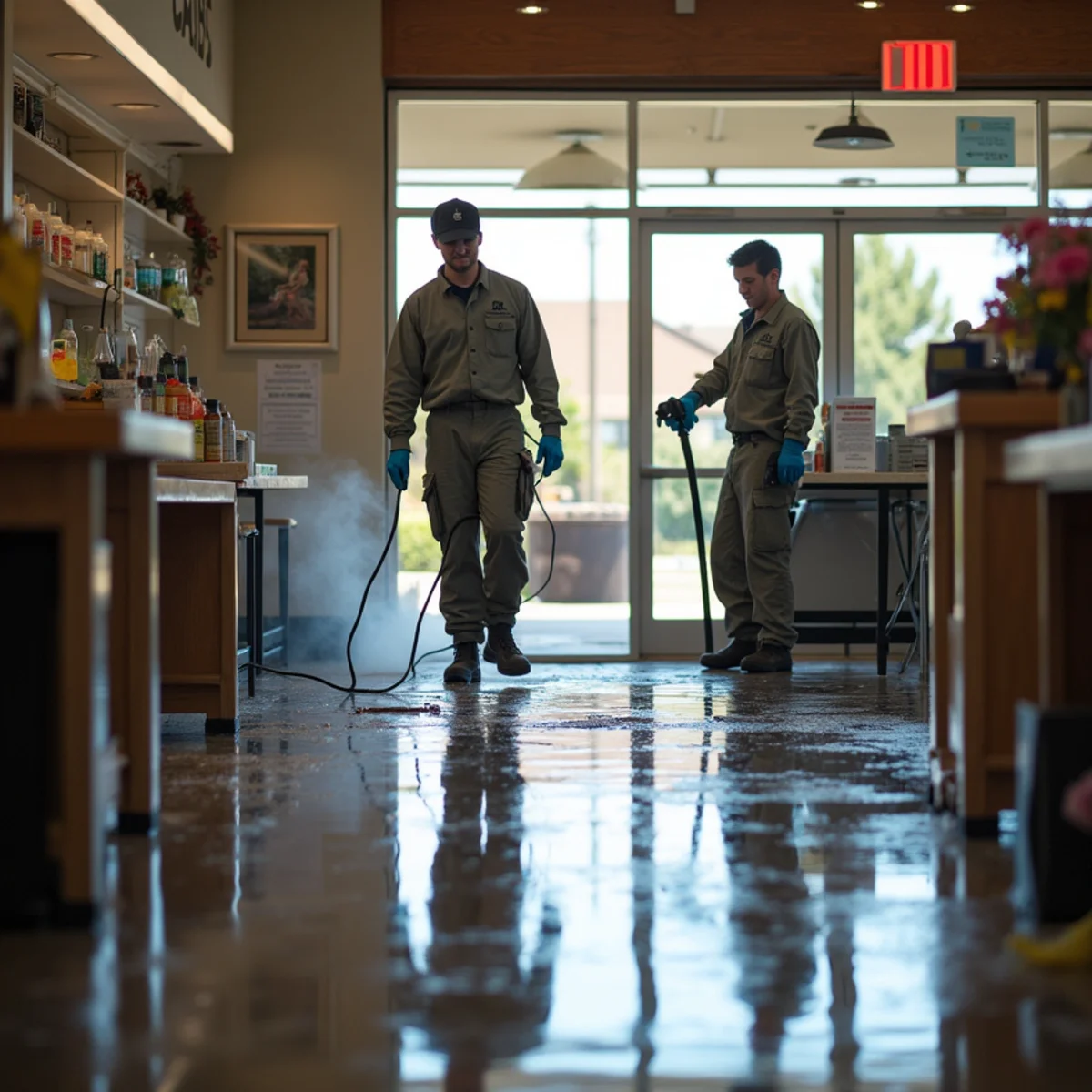
- 3Call a restoration crew that can assess and begin extraction across all affected units, not just the unit of origin
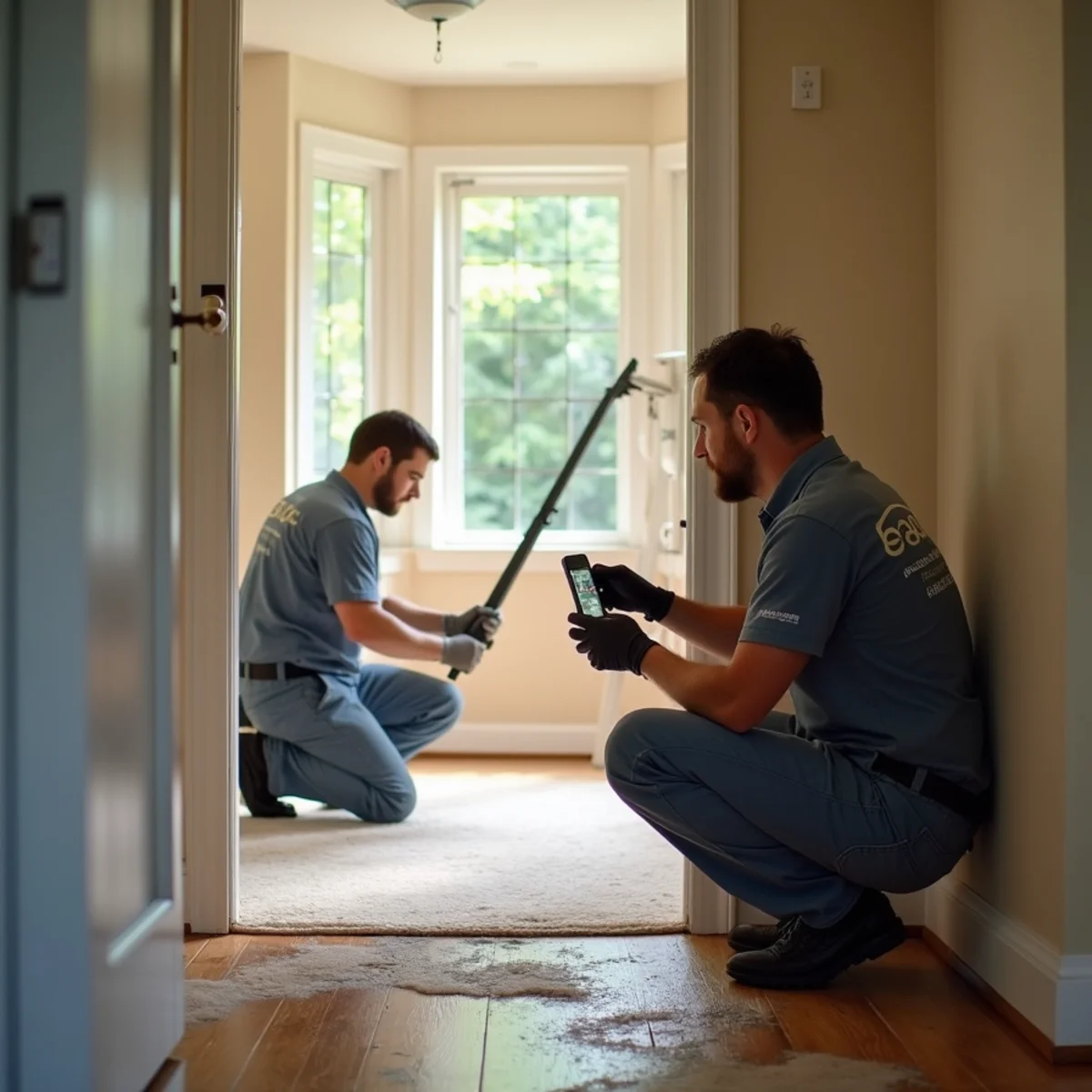
- 4Photograph every affected unit and shared area before cleanup begins
- 5Let the HOA and each owner's individual carrier sort out the responsibility split once the immediate damage is contained
What we document for HOA boards and unit owners
Because responsibility in these situations often gets determined after the fact, sometimes weeks later, thorough documentation from the start matters more than in a typical single-owner loss. We provide a written scope broken out by unit and by common area versus unit-specific damage, moisture logs, and photos, formatted so an HOA board, a property manager, and multiple individual insurance carriers can all work from the same record instead of competing accounts of what happened.
A Whitney Ranch case: two units, one failure
A townhome complex near Whitney Ranch called us after an upper-unit shower pan failed and sent water through a shared wall cavity into the unit below and partially into a common hallway closet. Under that association's CC&Rs, the shower pan itself was the upper unit owner's responsibility, but the shared wall framing and hallway closet were common area maintained by the HOA.
We documented the failure location and moisture path in detail: which materials belonged to which unit, which belonged to the shared structure, and which belonged to the common hallway. That breakdown let the HOA's master policy and each unit owner's HO-6 policy handle their own portion without a drawn-out dispute over where one responsibility ended and another began.
What our crews see boards and owners get wrong
The mistake that costs everyone more, the HOA, the unit of origin, and the unit that received the damage, is waiting to start mitigation until responsibility is sorted out. We've been called into buildings where a board and two owners spent days going back and forth over whose insurance should be contacted first while water sat in a wall cavity the entire time. Nobody wins that delay; the eventual repair scope just gets bigger for everyone involved, regardless of how the responsibility question is ultimately resolved. The dispute over who calls first almost never changes who ultimately pays; it just adds days of additional saturation to the final repair bill.
The honest tradeoff is that starting extraction immediately, before the responsibility question is settled, means someone has to authorize the work without a guaranteed answer yet on who's paying. In practice this is rarely as complicated as it sounds: the HOA or an involved unit owner authorizes us to begin, and it gets sorted out on the back end between the master policy and individual HO-6 policies, exactly the kind of allocation your CC&Rs and insurers are built to handle after the fact, not before. We document the authorization itself, who approved the work and when, so that step never becomes the source of a later disagreement.
- Authorize immediate mitigation and settle the responsibility split afterward; don't let the dispute delay the drying
- Whoever authorizes the work first isn't necessarily who ends up paying for it once policies are sorted out
What a board can put in place before the next upstairs leak
Most HOA water losses aren't surprising in hindsight, the same handful of failure points, aging shower pans, original supply lines in units that have never been updated, balcony drains that get checked rarely, repeat across a community over the years. A board that treats each incident as isolated keeps paying for the same category of loss on a rotating basis instead of getting ahead of it.
A written response protocol, distributed to owners and property management before the next incident rather than assembled during it, is one of the more effective low-cost steps a board can take. It doesn't prevent the plumbing failure itself, but it removes the delay and confusion that usually turns a contained leak into a larger, more disputed loss.
- 1Require proof of HO-6 coverage, including loss assessment coverage, at move-in and renewal, not just recommend it
- 2Publish a standing restoration contact in the community's emergency procedures, the same way fire and utility contacts are posted
- 3Encourage or require periodic supply line and shower pan inspections in older units, particularly ones original to the building
- 4Clarify balcony and patio drain maintenance responsibility in writing so it isn't reinterpreted after every incident
- 5Ask your restoration company for a sample scope-of-work format in advance, so the board knows what documentation to expect before an incident, not during one
Frequently asked questions
Often you'll file with your own HO-6 policy first for the fastest response, since your insurer can then pursue subrogation against the responsible party if appropriate. Check your specific policy and your HOA's CC&Rs, since practice varies by association and by carrier.
Usually not beyond the original builder-grade specification. Upgrades and personal improvements are typically the individual owner's responsibility to insure through an HO-6 policy, which is why confirming what your policy actually covers matters before a loss happens, not after.
This usually requires an on-site assessment of exactly where the failure occurred relative to the building's structure, cross-referenced against your association's CC&Rs. We document the failure location precisely during our assessment, which the HOA and insurers then use to make that determination.
We aim for a 60-minute arrival across the Roseville area, 24/7, including HOA communities near Whitney Ranch and Granite Bay. For multi-unit water losses, we can typically assess and begin extraction in more than one affected unit during the same visit.