Dealing with this right now? See our commercial water damage restoration service, and we respond fast across Citrus Heights. Or call +1 (201) 277-9344 any time — we answer 24/7.
The call almost always comes at a bad time: 11 p.m., a Friday, the start of a holiday weekend. A tenant reports water coming through a ceiling or pooling out from under a bathroom door, and a property manager has to make several decisions fast, who to send, what's covered, and how quickly a restoration crew can actually get there, often with limited information about what's actually happening inside the unit.
This guide breaks down how responsibility typically splits between landlords and tenants in California rental situations, where multi-unit exposure changes the math, and what a property manager can put in place before the next call comes in, not during it.
The general split: structure and systems vs. tenant conduct
As a general rule, landlords are responsible for maintaining the building's structure and systems in habitable condition, this includes plumbing, water heaters, roofing, and appliances provided with the unit. Tenants are generally responsible for damage caused by their own negligence, failing to report a known leak, overflowing a bathtub and leaving, or damage to their own personal belongings.
In practice, most losses sit somewhere in between: a supply line fails on its own (landlord's system, not tenant fault) but the tenant didn't report the resulting puddle for two days (tenant's delay compounds the damage). We're not attorneys and this isn't legal advice, property managers should confirm specifics with their own counsel or insurer, but documenting cause and timeline clearly is what actually protects everyone regardless of how responsibility ultimately gets assigned.
Habitability and the clock
Standing water, exposed subfloor, and the mold risk that follows an undried loss all move a maintenance issue into habitability territory quickly. Mold can begin developing within 24 to 48 hours on wet, porous material, which means a slow landlord response to a reported leak doesn't just risk more property damage, it risks a habitability complaint that's a separate, harder problem to manage.
A fast, documented response protects the property owner as much as the tenant. Responding within hours rather than days, and having that response time-stamped, is often the single strongest piece of evidence a property manager has if a habitability dispute ever comes up later.
Multi-unit exposure: one failure, several units
A single plumbing failure in a duplex, fourplex, or larger multi-unit property rarely stays contained to the unit where it started. A supply line failure on a second floor can affect a ceiling below, shared walls, and sometimes an adjacent unit's flooring, all from one source.
This is where fast, coordinated response matters most. We can typically assess and begin extraction across multiple affected units in a single mobilization, rather than treating each unit as a separate call, which keeps the timeline and the paperwork more manageable for a property manager juggling several tenants at once.
Insurance layers: landlord policy, tenant's renters insurance, and the gap between them
A landlord's policy typically covers the building structure and the owner's own fixtures and appliances. It generally does not cover a tenant's personal belongings, furniture, electronics, clothing, which is exactly what renters insurance is meant to cover. Many tenants don't carry it, which becomes a real problem when their belongings are damaged by a source they weren't at fault for.
Property managers should require renters insurance in the lease where possible, and keep a copy of proof of coverage on file. It doesn't change the landlord's own responsibility for the structure, but it closes the gap that otherwise leaves tenants without coverage for their own losses and landlords fielding frustrated calls about belongings their own policy was never going to cover.
The landlord's own deductible is worth planning for separately. A commercial or landlord policy deductible on a multi-thousand-dollar water loss is a real cost that needs to be budgeted the same way a roof replacement would be, not treated as a surprise the first time a claim actually gets filed.
Documentation property managers should keep as standard
Consistent documentation is what actually resolves disputes, not memory of who said what.
- Date and time the leak was first reported, and by whom
- Photos of the affected area taken as soon as possible after the report
- Written maintenance history for the unit's plumbing and appliances
- Copy of the tenant's renters insurance if required by lease
- The restoration company's written scope, moisture logs, and drying completion report
Building a response protocol before you need one
The properties that handle water losses smoothly are the ones that already know who to call before the emergency happens. That means a standing relationship with a restoration company that can dispatch 24/7, not a search for one at midnight, a clear internal chain for who authorizes emergency work, and a tenant-facing policy on what to do first, shut off the water, don't wait for a callback, before damage spreads further.
We work with Citrus Heights and North Sacramento County property managers on exactly this kind of standing arrangement: direct dispatch line, direct insurance billing on covered claims, and documentation formatted for both landlord and tenant-side insurance needs.
A multi-unit case: what fast documentation looked like
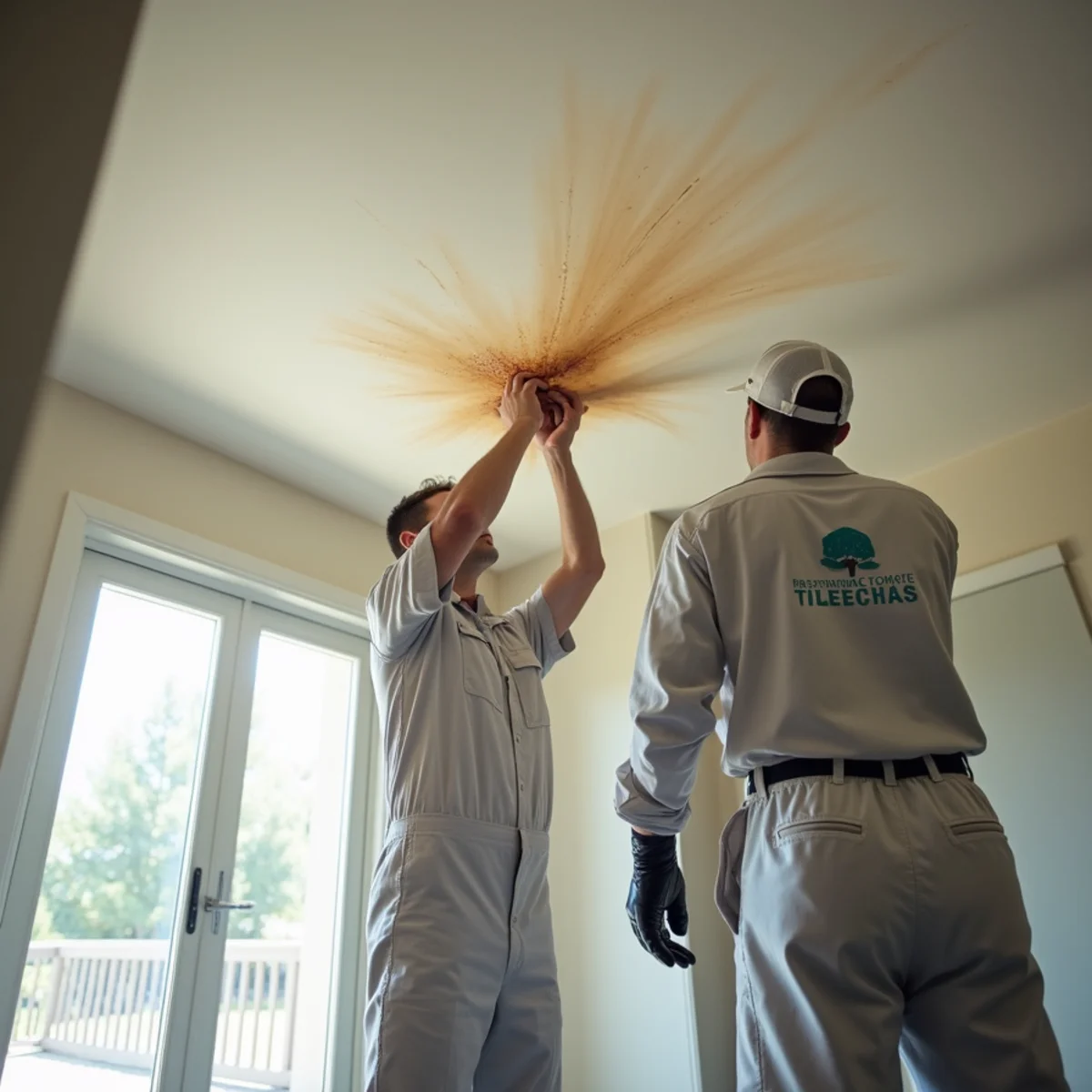
A fourplex we service in the Citrus Heights area had a second-floor supply line fail on a Sunday afternoon, sending water into the unit below and along a shared wall into the adjacent ground-floor unit. The property manager had already logged the tenant's report time, photographed the ceiling stain within twenty minutes, and had our number on file from a prior standing agreement.
We assessed and began extraction in both affected units that same afternoon, working from one written scope that separated damage by unit and by shared structural elements. That single document became the basis for two separate insurance conversations, the landlord's claim for the structure and one tenant's renters insurance claim for damaged furniture, without either side disputing what actually happened.
What we see property managers get wrong before we arrive
The mistake we see most often isn't a slow initial response, it's maintenance staff cleaning up standing water with towels and a shop vac before anyone photographs it. We understand the instinct: a wet hallway or unit floor is a hazard, and getting water off the floor feels like the responsible first move. But once it's mopped up, you've lost the clearest evidence of how much water was actually involved, which matters a great deal if responsibility or claim value is ever disputed later. That instinct is understandable, but it's the two minutes people skip that end up mattering most if the timeline is ever questioned afterward.
The honest tradeoff is that stopping to photograph before cleaning costs you two or three minutes you feel like you don't have. Build that pause into your maintenance team's standing instructions: stop the source, photograph the affected area from a few angles, then clean up or call us. Two minutes of photos taken before anything moves is worth more than a detailed description written from memory the next day. A one-page instruction posted inside the maintenance closet works as well as anything more formal.
- Photograph before cleaning, even when the instinct is to mop up a hazard immediately
- Build a stop-source-then-photograph sequence into maintenance staff's standing instructions, not something they have to remember to improvise
Managing tenant relations and unit turnover during the repair
A water loss doesn't just create a repair timeline, it creates a tenant relations problem that runs alongside it. A tenant displaced from part or all of a unit during drying wants a clear answer about where they're supposed to sleep, what happens to their rent, and how long this actually takes, questions a property manager needs to be ready to answer within the same day the loss is reported, not after checking with ownership. Property managers who wait to be asked these questions tend to field them anyway, just later and under more pressure.
How you handle the days a unit is uninhabitable also affects whether the eventual re-lease or renewal goes smoothly. Tenants remember whether they were kept informed or left guessing, and that memory shapes both a possible habitability complaint and whether they renew at all once repairs are done. That's true whether the tenant ultimately stays or the unit turns over to someone new.
- 1Confirm within hours, not days, whether the unit is safely habitable during drying or the tenant needs temporary relocation
- 2Communicate an honest drying timeline early, typically three to five days, rather than a vague promise that it's being handled
- 3If the unit is between tenants when the loss occurs, factor drying and repair time into the next move-in date before advertising it
- 4Keep the tenant looped in with brief daily updates during an active drying job; silence is what generates complaints, not the repair timeline itself
- 5Put the drying and repair timeline in writing once it's known, so there's a shared reference if the schedule shifts
Frequently asked questions
The landlord is generally responsible for maintaining the water heater itself and the resulting damage to the unit's structure. Damage to the tenant's personal belongings typically falls to the tenant's renters insurance, which is why requiring proof of coverage in the lease matters.
We dispatch across the Roseville area, including Citrus Heights and Antelope, aiming for about 60 minutes on emergency calls, 24/7. For multi-unit properties we can typically assess several affected units in one visit rather than scheduling separate trips.
Yes. The seismic strapping requirement applies to water heaters generally, including those in rental units, and it's a maintenance item landlords are responsible for. It's worth including on a standard unit-turn or annual inspection checklist.
We can bill the property owner's or management company's insurance directly for covered structural work, and coordinate separately with a tenant's renters insurance if their belongings were also affected. Let us know the property's billing structure when you call.