Dealing with this right now? See our sewage cleanup & backup removal service, and we respond fast across Orangevale. Or call +1 (201) 277-9344 any time — we answer 24/7.
A sewage backup is the water damage call nobody wants to make. It is also, category for category, the most expensive kind of cleanup we do, because the water itself is the hazard, not just what it soaks. In Orangevale and nearby neighborhoods with older sewer lines and mature street trees, tree-root intrusion is a common trigger, alongside simple clogs and, during heavy storms, a municipal system that backs up under load.
This article covers what drives sewage cleanup cost, why it differs from a clean-water job, and what to know about whether your policy actually covers it, because for many homeowners, it does not without a specific add-on.
Why sewage is treated differently from every other water loss
IICRC standards classify sewage as Category 3 water, grossly contaminated, carrying bacteria, viruses, and other pathogens. That classification changes the entire job. Porous materials that touch category 3 water, including carpet, pad, and often drywall up to the flood line, generally cannot be cleaned and dried in place. They have to be removed and disposed of as contaminated waste, not just dried.
That is the single biggest reason sewage cleanup sits at the higher end of our typical local range, roughly $1,400 to $6,400: the required material removal, disposal, and antimicrobial treatment add labor and cost a clean-water loss never needs.
What actually happens during a sewage cleanup
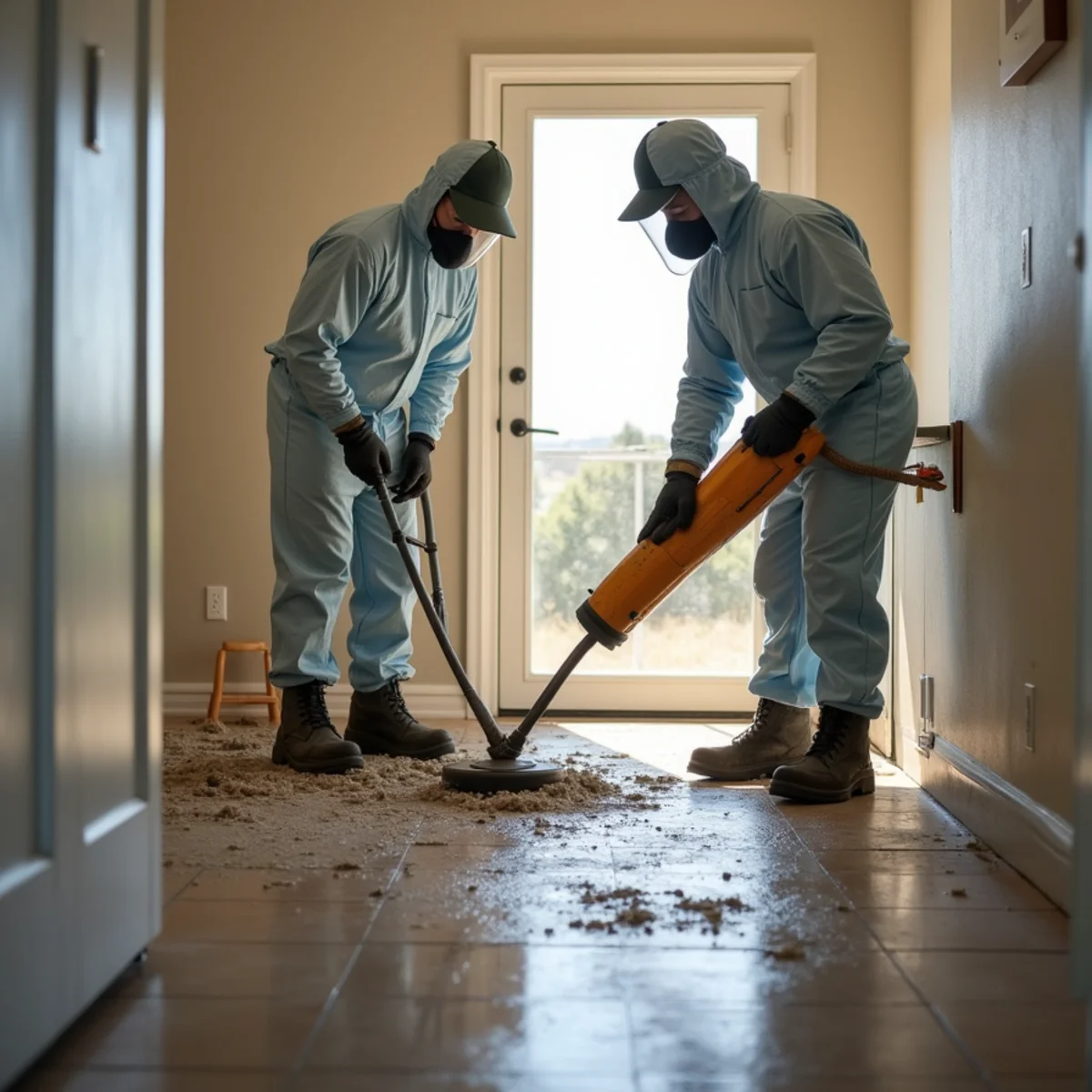
We extract standing contaminated water first, using equipment dedicated to category 3 work. Affected porous materials come out, flooring, baseboard, drywall to the appropriate height, and get bagged and disposed of properly. Hard surfaces get cleaned and disinfected with EPA-registered antimicrobials. Then drying proceeds the same way any other structural drying job does, with air movers, dehumidifiers, and daily moisture readings until the space reads dry.
Our technicians work in PPE for this category of loss, which is standard IICRC S500 protocol, not an upcharge, it is what correct sewage cleanup requires.
We also inspect and often clean the HVAC and duct paths near the affected area if the backup occurred on a lower level, since airborne contamination can travel further than the visible waterline suggests. That step is not always necessary, but we check it on every category 3 job rather than assume it away.
Common causes we see locally
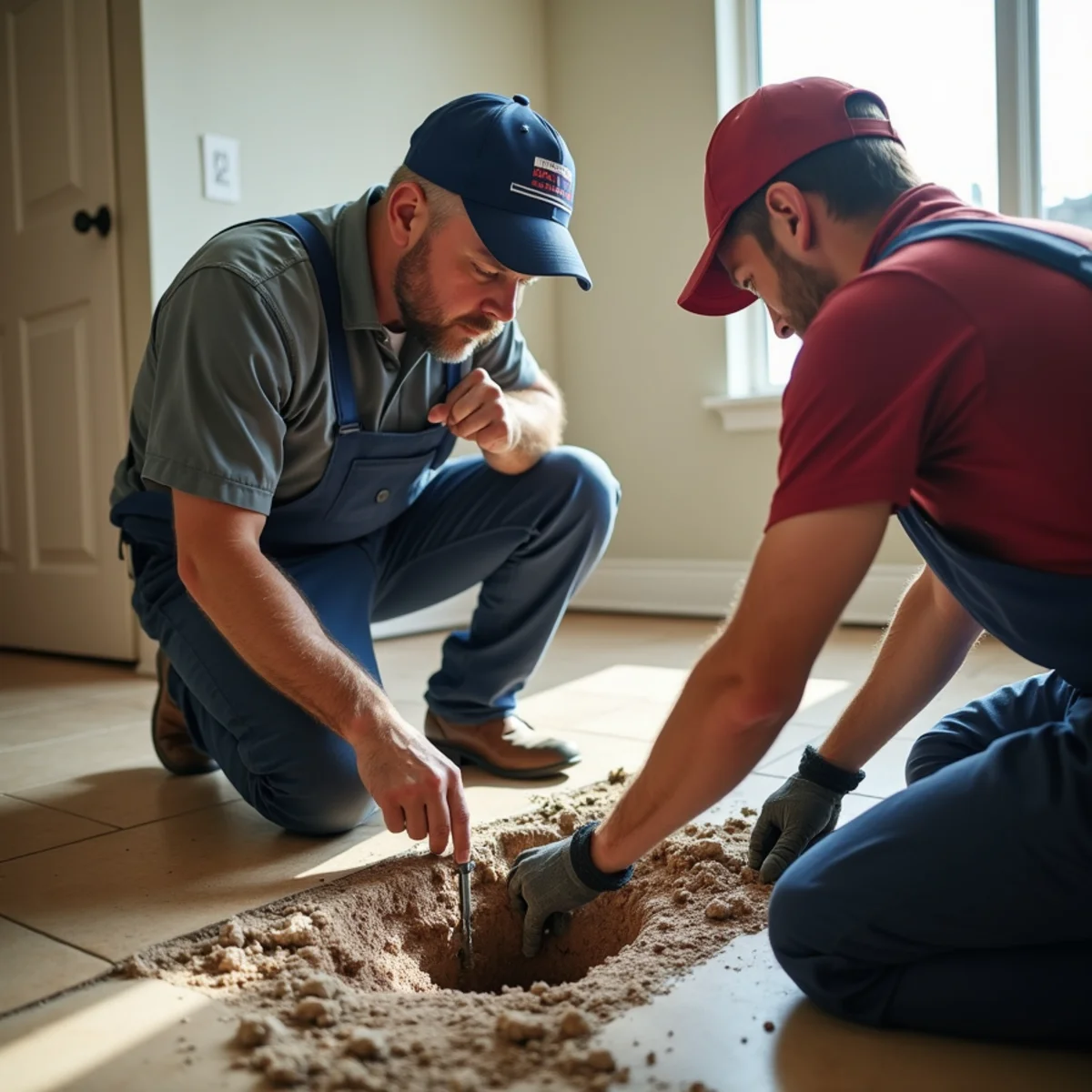
Tree-root intrusion into older clay or cast iron sewer laterals is one of the most frequent causes we find, especially in established neighborhoods with mature trees near the sewer line's path. A simple clog from grease, wipes, or other debris can back up a line just as easily. During heavy atmospheric river storms, municipal sewer systems can occasionally surcharge under load, pushing backups into homes at the lowest fixture in the house, often a basement floor drain or a downstairs bathroom.
Knowing the likely cause matters for more than curiosity. A one-time clog is a different conversation with your insurer than a recurring tree-root problem you knew about and never addressed.
A single mature tree near a sewer lateral is often enough to cause recurring problems over the years, since roots seek out the moisture and nutrients inside an aging clay pipe joint. If a plumber's camera inspection shows root intrusion, a video record of that inspection is worth keeping alongside your own documentation.
Where insurance gets complicated
Here is the part that catches homeowners off guard: many standard homeowners policies exclude sewer and drain backup damage entirely unless you have added a specific water backup or sewer backup endorsement. Without it, a sewage loss that would otherwise be covered like any other sudden water event may not be covered at all.
If you do have that endorsement, coverage generally follows the same sudden-and-accidental logic as other water claims, a backup from a tree root suddenly blocking a line is more likely to be treated as covered than damage from a backup you knew was recurring and did not address.
What to check on your policy today
Pull your declarations page and look specifically for water backup or sewer backup coverage, sometimes listed as a separate endorsement with its own, often lower, coverage limit than your main dwelling coverage. If it is missing, ask your agent what it costs to add, it is typically modest relative to what an uncovered sewage loss costs out of pocket.
If you have had a prior backup, even a minor one, mention it when reviewing coverage. A pattern of backups from the same root intrusion can affect both your coverage decision and how a future claim gets evaluated.
Why fast response matters even more with sewage
Category 3 water degrades everything it sits on the longer it stays, and the health risk compounds with time. We treat sewage calls as true emergencies, targeting the same 60-minute dispatch we run for any water emergency, because contamination spreading into subfloor and wall cavities the longer it sits is a bigger problem than with clean water.
We also test the air quality in the affected space before we consider a category 3 job complete, since particulate and odor can linger even after visible contamination is gone. That final check is part of why a sewage job typically runs a little longer than a comparable clean-water loss.
If you have a backup right now, stay out of the affected area, avoid running any water in the house until the line is clear, and call us. We will assess the source alongside a plumber if needed and start extraction immediately.
What our crews watch for on a backup call
The mistake that makes a sewage loss worse is running any water in the house while waiting for us or a plumber, another flush, a load of laundry, even washing hands can push more contaminated water back through the lowest fixture instead of relieving pressure on a blocked line. It feels productive, but it usually adds square footage to the affected area before extraction even starts.
There is a tradeoff worth knowing about between camera-inspecting the line right away versus waiting to see if a simple clog clears on its own. A camera inspection costs money upfront, but on a home with mature trees near the sewer lateral, it is often the only way to catch root intrusion before it causes a second backup, and a second category 3 loss almost always costs more than the inspection would have.
What specifically pushes a sewage job to the high end
Not every sewage backup costs the same, even within category 3. A backup contained to a single low fixture, a basement floor drain or a downstairs bathroom, affects a smaller footprint than a main line blockage that backs up into multiple bathrooms at once. How far up the line the blockage sits changes how many fixtures and how much square footage end up contaminated.
A few specific factors we account for on every sewage estimate:
- Number of fixtures affected: a single bathroom backup versus a whole-house main line event
- Disposal fees: contaminated material requires hazmat-appropriate disposal, a cost line a clean-water job never has
- Antimicrobial treatment scope: covering every affected hard surface, not just the visibly soiled ones, which some lowball bids quietly skip
- Odor treatment: persistent sewage odor sometimes calls for thermal fogging or sealing exposed framing after material removal, a step beyond standard drying
Frequently asked questions
Because contaminated porous materials like carpet, pad, and often drywall cannot be cleaned and dried in place, they have to be removed and disposed of, and surfaces need antimicrobial treatment. That extra labor and disposal is what pushes category 3 jobs toward the higher end of the typical cost range.
Only if you have added a water backup or sewer backup endorsement to your policy. Many standard policies exclude this type of loss by default, so it is worth checking your declarations page before you need it.
Tree-root intrusion into aging sewer laterals is a frequent cause where mature trees grow near the line, along with simple clogs from grease or debris. Heavy storms can occasionally cause municipal system surcharge as well.
We do not recommend it. Category 3 water carries bacteria and pathogens that require PPE and proper disposal procedures to handle safely, and materials that look salvageable often are not once contaminated.