Dealing with this right now? See our water extraction & removal service, and we respond fast across Westpark. Or call +1 (201) 277-9344 any time — we answer 24/7.
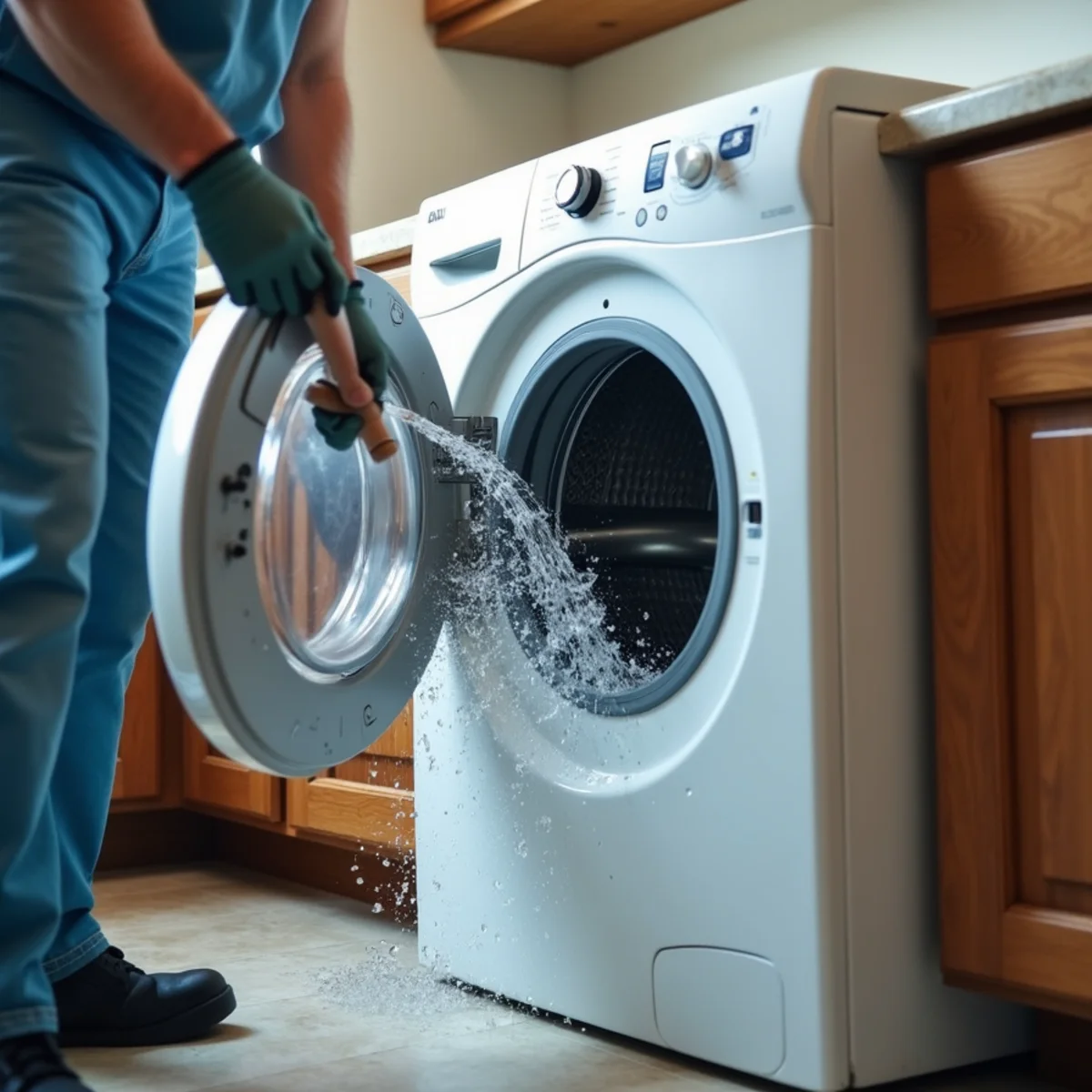
Washing machine supply lines run at full household water pressure around the clock, whether the machine is running or not. When a rubber hose splits or a fitting lets go, it does not trickle - it sprays, and it can put out several gallons a minute until someone shuts it down. Laundry rooms are often tucked in a corner near bedrooms or a kitchen, so water can travel into carpet and under cabinets before anyone notices.
Here are five steps to take right now, in order, followed by what we do once we arrive to keep this from becoming a bigger job than it needs to be.
1. Shut off both valves behind the machine
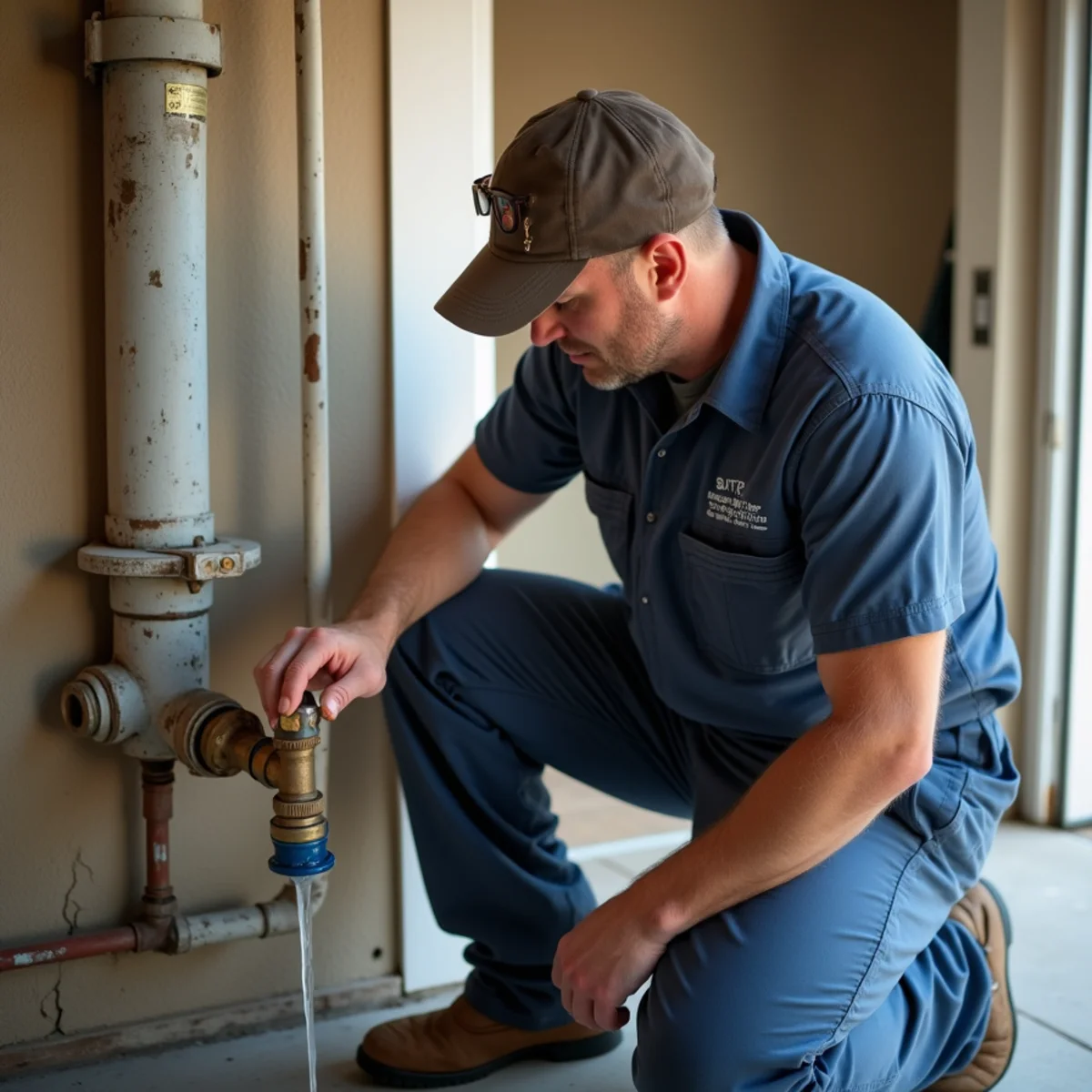
Most washers have two valves - hot and cold - mounted on the wall directly behind or beside the unit. Turn both clockwise until they stop. This is faster than pulling the machine away from the wall to check for a fitting, and it stops the spray immediately. If either valve is painted over, corroded, or will not turn, go straight to your home's main shutoff valve instead.
2. Unplug the machine if it is safe to reach
If the outlet and cord are dry and easy to reach without stepping into standing water, unplug the washer. If the area around the outlet is wet, leave it alone and cut power at the breaker panel instead. Do not reach into standing water to unplug anything.
Front-load and top-load machines both have exposed cords near the back, and many laundry rooms cluster the outlet, the drain standpipe, and the supply valves in the same tight space behind the unit. That means a hose failure often puts water right next to the cord. If you have any hesitation about reaching it safely, skip the unplugging step and go straight to the breaker panel instead.
3. Corral the water before it spreads further
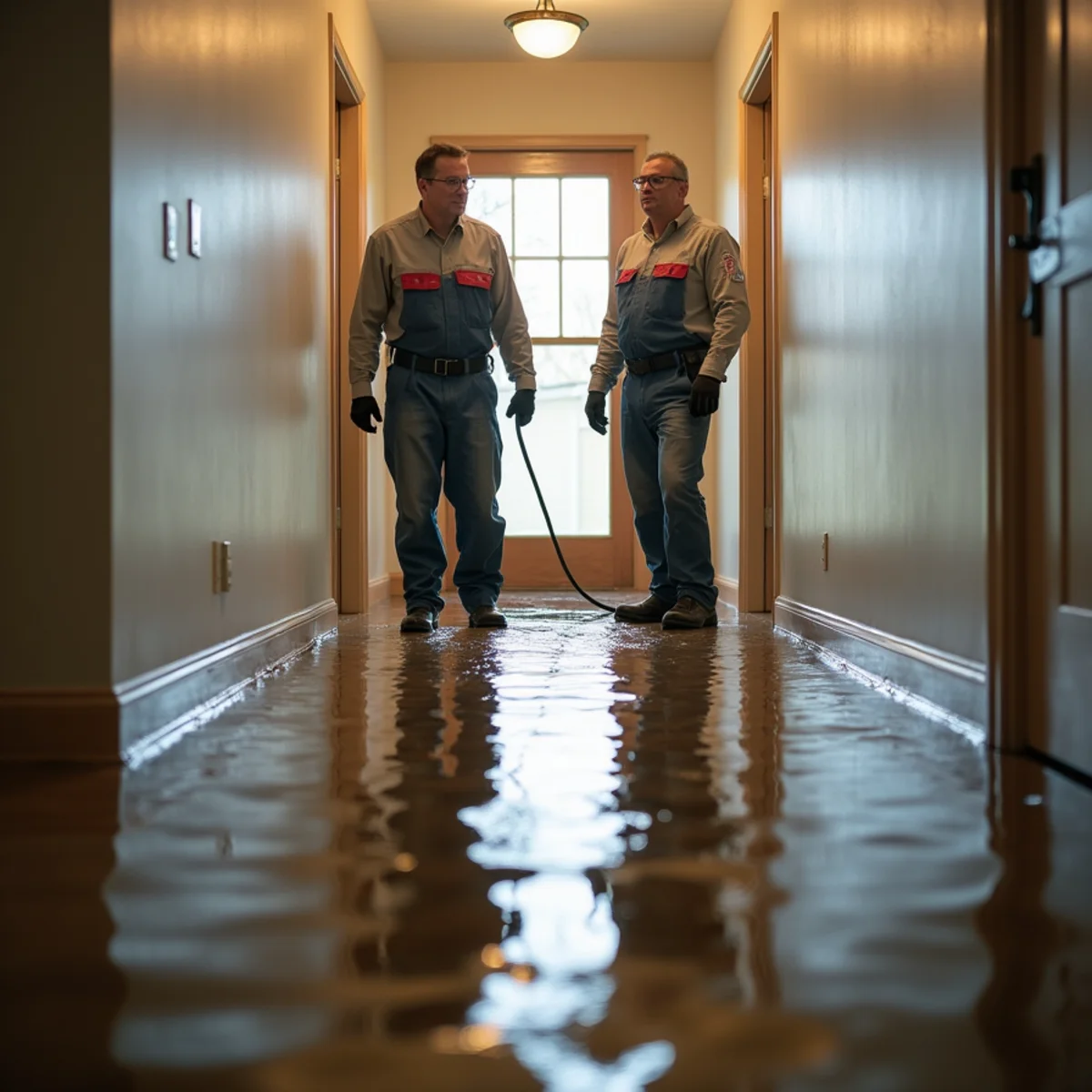
Laundry rooms often sit near a hallway, kitchen, or bedroom, with nothing but a threshold to slow water down. Lay towels across doorways to create a dam, and if you have a wet-dry shop vac rated for water pickup, run it over the standing water on hard flooring. Skip this step entirely if the laundry room is carpeted - a shop vac will not pull water out of soaked carpet and padding effectively, and that is a job for our extraction equipment.
- Towels across doorways to block water from spreading to other rooms
- Shop vac on hard flooring only, if you have one rated for water
- Move stored items off the floor - laundry rooms often double as storage
- Leave carpet and padding extraction to us
4. Check underneath and behind cabinets
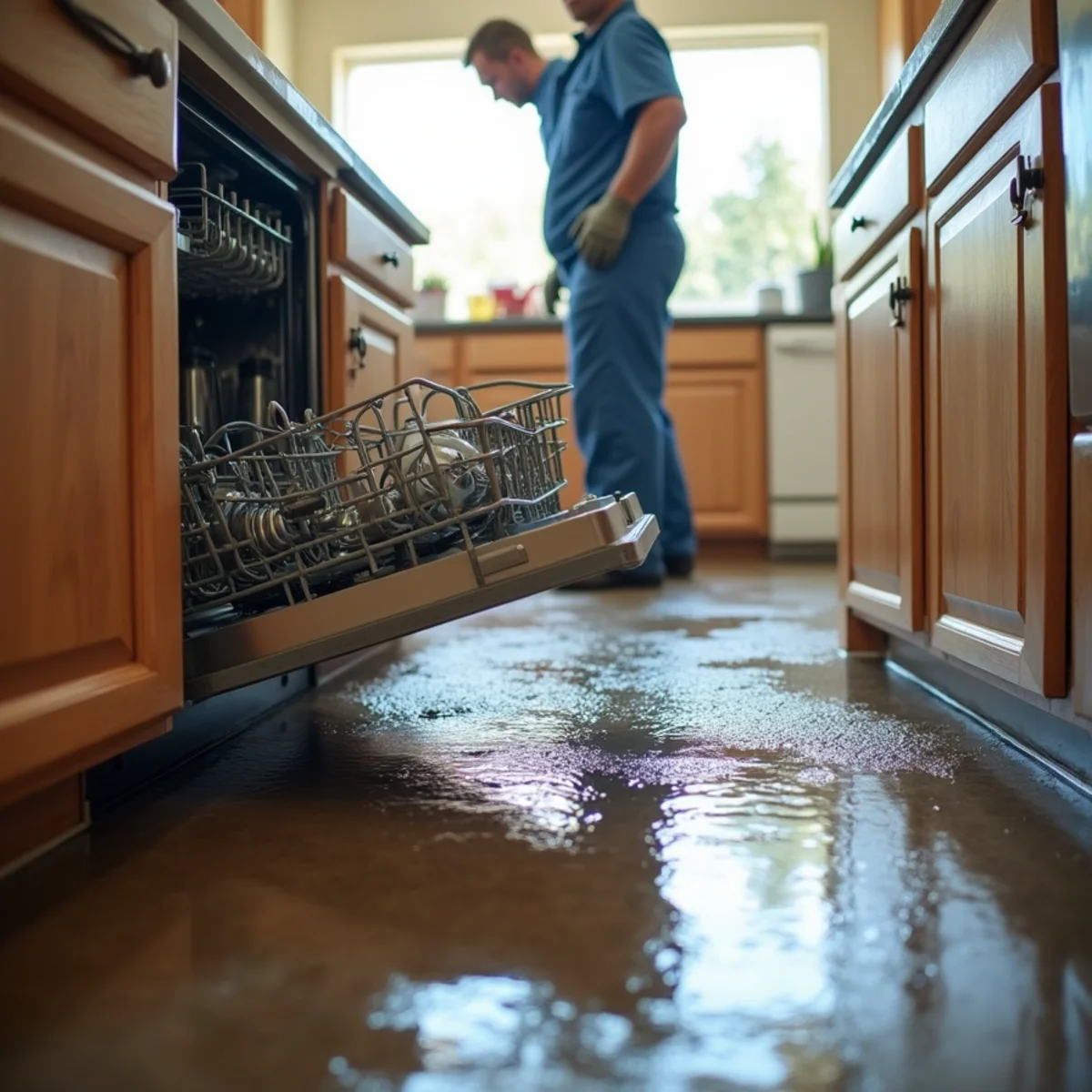
Laundry rooms frequently share a wall with a kitchen or bathroom, and cabinet toe-kicks are a common spot for water to wick in unnoticed. If you have base cabinets nearby, open the doors and feel along the bottom interior panel. If it is damp, note it for us - cabinet interiors can hold moisture against particleboard and swell it within a day if it is not caught.
Also check the flooring transition where the laundry room meets an adjoining hallway or kitchen. Many Roseville homes run the same flooring material through both spaces with only a thin seam between rooms, and that seam does very little to stop water from traveling under a baseboard into the next room while you are focused on the machine itself.
5. Call us before you start moving the washer
Call +1 (201) 277-9344 rather than trying to pull the washing machine away from the wall yourself. Machines are heavy, often still connected to a drain line, and moving one on a wet floor is a slip risk. We move appliances safely as part of the extraction process and check behind and underneath for water you cannot see without pulling the unit.
Why these hoses fail
Rubber supply hoses degrade with age, heat cycling, and constant pressure, and manufacturers generally recommend replacing them every five years regardless of appearance. Braided stainless hoses last longer but are not immune to fitting failures, especially in homes with Sacramento Valley's hard water, which accelerates corrosion at metal connections over time.
If your washer connections are original to the house and more than five years old, replacing both hoses preventively after we finish drying is one of the cheapest insurance moves available to a homeowner. It costs far less than a single day of standing water reaching flooring and cabinets.
What our crew checks that a quick mop-up misses
A laundry room flood rarely stays contained to the visible puddle. We check the subfloor under the washer's drip pan if one is present, the wall cavity behind the machine where the supply lines penetrate, and any adjoining room the water could have reached through a shared wall or flooring seam. We use moisture meters rather than guessing from how the surface looks.
If water reached carpet or padding in a nearby room, we extract from the padding directly rather than just running air movers over the surface, since padding holds far more water than carpet fiber alone and dries slowly if it is not addressed directly.
Cat 1 water, but the clock is still running
Washer supply line water starts as clean Cat 1 water, but it degrades quickly if left sitting in carpet, padding, or behind cabinets. The faster we extract and dry, the less material needs to be replaced.
What our crews watch for on washer hose calls
A lot of Roseville homes with a second-floor laundry closet do not realize how much risk that location adds. A supply line failure on the ground floor spreads across a slab; the same failure on a second floor sends water straight down through the subfloor into whatever ceiling sits below it - often a garage, hallway, or bedroom. We check the ceiling directly beneath a second-floor laundry area on every call, even when the laundry room floor itself looks only lightly wet, because gravity has usually already moved most of the volume downward before we arrive.
There is a tradeoff in how we handle a bulging ceiling below a laundry closet. The water above is usually contained to a small footprint, so a small controlled release through the ceiling right under the washer, done carefully with the area below already cleared, often relieves the pressure without opening up a much larger section. We make that call in person - it depends on how much water is actually trapped and how the ceiling material is holding up.
It's also worth knowing that not every washer flood is a supply line problem. Sometimes the culprit is the drain standpipe overflowing during the spin cycle, if the standpipe or the trap below it is partially clogged. That water looks and behaves differently - it can carry lint and detergent residue from whatever backed up the line - and it changes how we treat the water once we are on site. If you are not sure which happened, tell us both what you saw and when in the cycle it occurred; that detail helps us treat the water correctly from the start.
When nobody's home when it happens
Some of the worst washing machine floods we clean up did not happen while anyone was standing there. They happened during a workday or over a weekend trip, and the hose kept spraying for hours before someone walked in and found it. Unlike a fixture you can watch while it drains, a hose failure with nobody home can put out hundreds of gallons before anyone knows there is a problem.
A few inexpensive steps close that gap without much effort, and none of them require a major purchase or a plumber visit to set up.
- Install a washing machine drip pan with a drain line, especially if your laundry area sits above finished space below
- Place a simple water sensor on the floor behind the machine - inexpensive, and it can alert your phone the moment it gets wet
- Note the manufacture date stamped on the hose fitting so you know exactly when it needs replacing instead of guessing
- Keep the shutoff valves behind the machine easy to reach - boxes and shelving stacked in front of them make a valve worthless in an actual emergency
- If you travel often, ask a plumber about a shutoff valve that closes automatically when it detects unusual flow
Frequently asked questions
A fully burst supply hose under normal household pressure can release several gallons per minute. Left unnoticed overnight, that adds up to hundreds of gallons, which is why shutting off the valves immediately matters more than any cleanup step.
Only after the floor, cabinets, and any affected drywall are confirmed dry. Running a washer on a still-wet floor traps moisture underneath the machine and can lead to warped flooring or mold growth you cannot see.
Yes, carpet and padding hold water and are harder to fully dry in place than hard flooring. We often need to extract water from the padding directly or, if the carpet has been wet for more than a day or two, remove and replace the padding.
Yes. If one hose failed from age, the other is under the same pressure and stress and is likely close behind. Most plumbers recommend replacing both at the same time.