Dealing with this right now? See our water extraction & removal service, and we respond fast across Stoneridge. Or call +1 (201) 277-9344 any time — we answer 24/7.
A Stoneridge homeowner texted us a photo of a yellow-brown stain spreading across her hallway ceiling and asked one question: does this all have to be cut out? It is the most common question we get on a drywall call, and the honest answer is that it depends on things you cannot see just by looking at a stain.
This guide walks through how we actually decide, room by room, whether wet drywall dries in place or comes down, and why guessing wrong in either direction costs you money.
Why a stain does not tell the whole story
A water stain is old news by the time you see it. It tells you water passed through that spot at some point, not whether the drywall behind it is currently wet, how far the moisture traveled, or whether the insulation and framing behind it are still saturated.
At the Stoneridge house, the visible stain was about a foot across. Our moisture meter readings on the ceiling and the top of the adjoining wall showed wet material extending almost three feet past the stain in every direction, well beyond what the eye could see. Drywall paper also holds a stain long after the gypsum core itself has dried, which is why relying on color alone leads homeowners to either panic over dry material or ignore drywall that is still actively wet.
How we map drywall moisture before touching anything
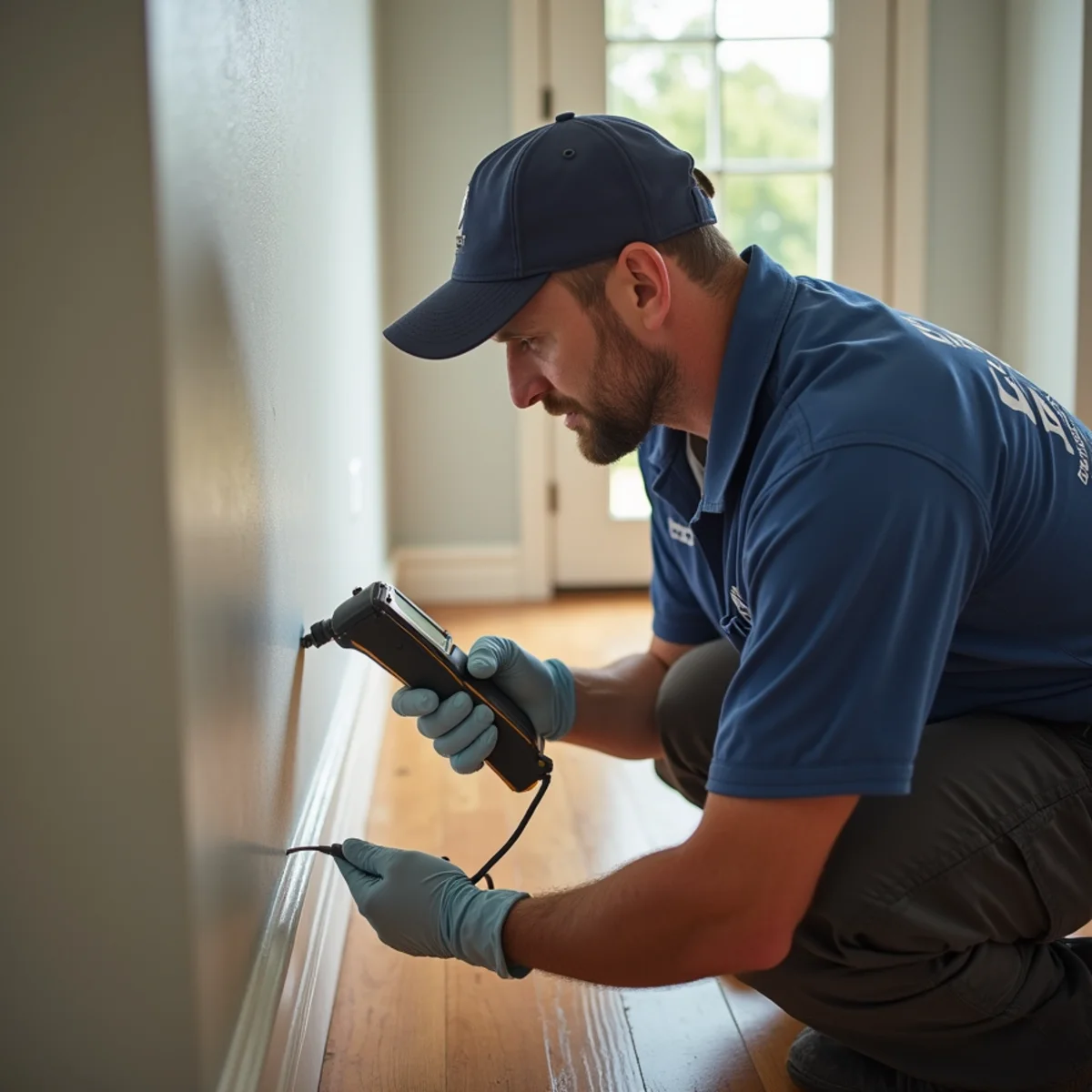
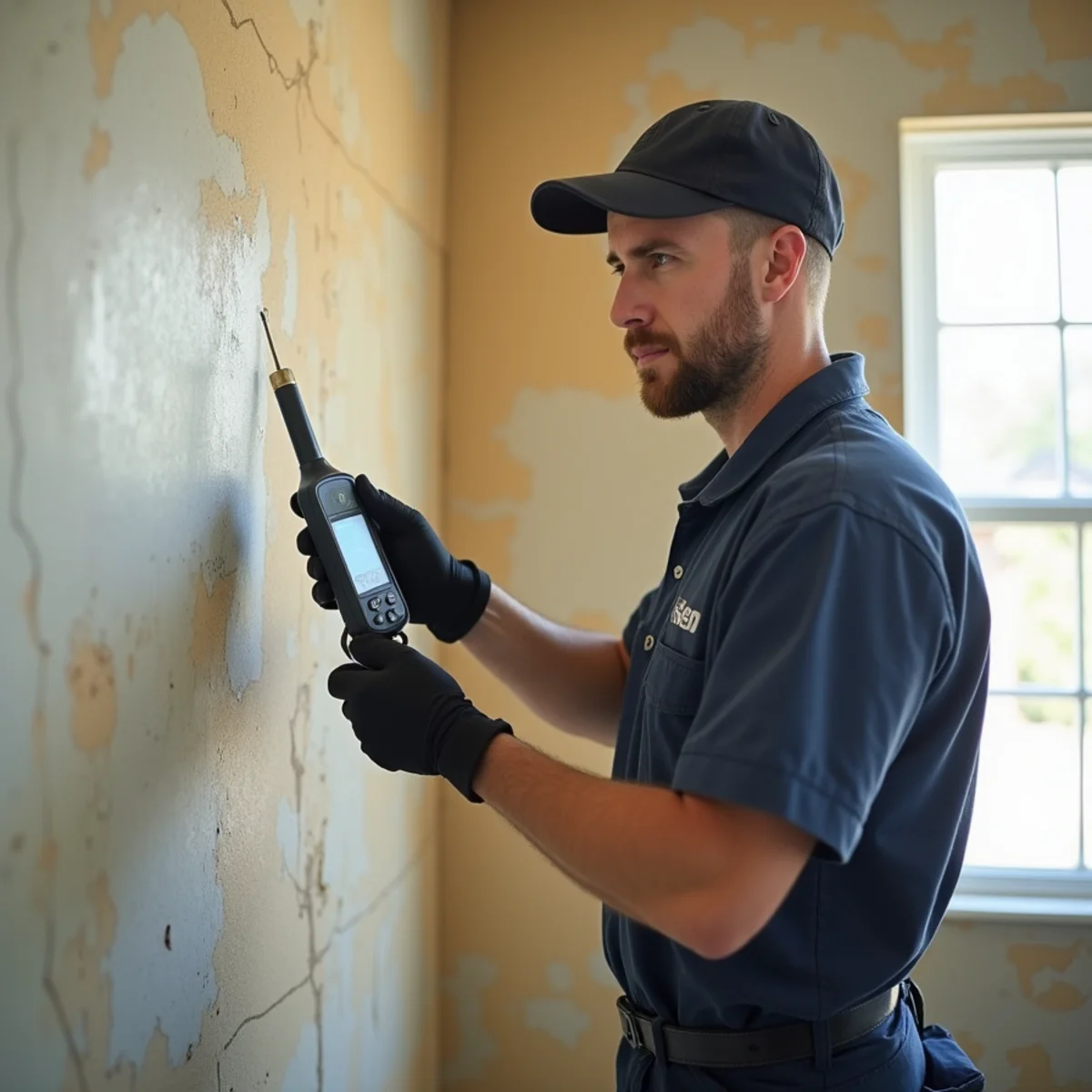
We use a non-invasive moisture meter first, moving in a grid across the ceiling and walls near the source, to find the boundary between wet and dry material without cutting into anything. Where readings are borderline, we follow up with a pin-type meter for a more precise reading, and sometimes thermal imaging to trace how far moisture has traveled inside the wall cavity.
That grid becomes a map of the affected area. It tells us exactly how much drywall is wet, not just where the stain shows, and it is the same documentation we hand to your adjuster to support the scope of work.
- Non-invasive meter grid to find the wet-dry boundary
- Pin meter readings for precise moisture percentage
- Thermal imaging where water may have traveled inside the cavity
- Written moisture log for the insurance file
When drywall can dry in place
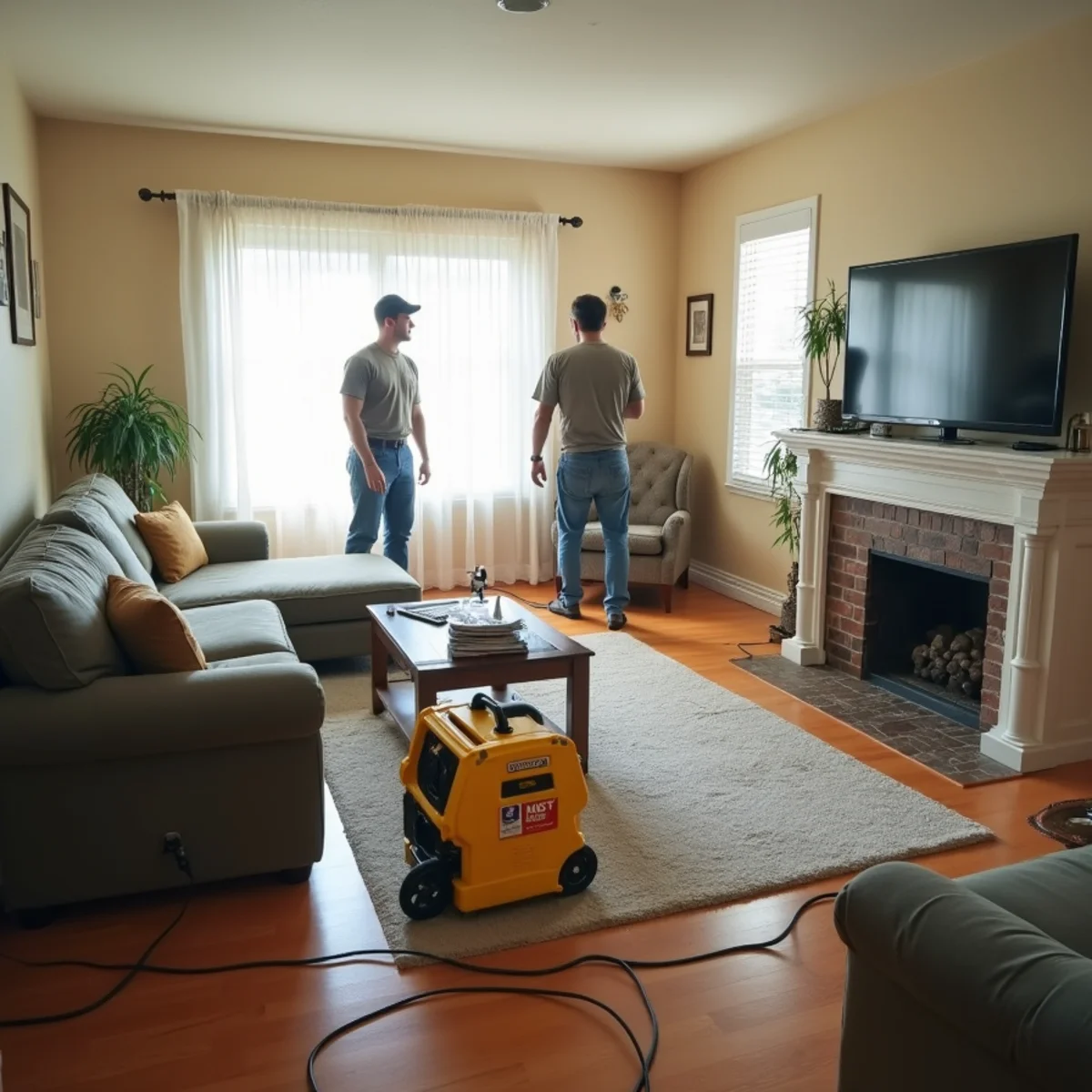
Painted drywall exposed to clean water, caught within a reasonable window and not sitting saturated for days, often dries in place. We set air movers to move air directly across the wet surface and a dehumidifier to pull moisture out of the room, and we take daily readings until the material reaches a dry standard comparable to unaffected drywall nearby.
That approach saved most of the ceiling on the Stoneridge job. The water source was a supply line to an upstairs bathroom, caught and shut off within a few hours of the leak starting, which meant we were dealing with Category 1 clean water rather than something that had time to sit and spread.
When drywall has to come out
Some situations are not close calls. Drywall that stayed wet more than 24 to 48 hours is a mold risk regardless of how it currently looks, because mold can begin colonizing within that window. Water that carried contamination, insulation behind the wall that is soaked, or drywall that has already begun to sag, bubble, or crumble also comes out rather than being dried in place.
Insulation is a separate call from the drywall itself. Wet fiberglass or cellulose insulation loses its effectiveness once soaked and is far more likely to be removed even when the drywall in front of it can be dried, because drying insulation in a closed wall cavity is slow and unreliable.
- Water sat more than 24 to 48 hours before drying began
- Category 2 or 3 water, including any backup or ground floodwater
- Drywall already sagging, bubbling, or delaminating at seams
- Wet insulation behind the wall, even if the drywall itself is borderline
Why cutting a flood cut is sometimes the right call
When drywall does need to come out, we typically make a flood cut a foot or more above the highest moisture reading rather than cutting exactly at the visible waterline. That extra margin accounts for capillary wicking, where water travels upward inside the paper facing and gypsum core past the point where it looks wet.
It also gives access to check and dry the wall cavity and framing behind the drywall, which matters more for preventing mold than the drywall itself does. We photograph the open cavity before closing anything back up, both to confirm the framing is dry and to document the condition for the insurance file, so there is no question later about what was found or what was done about it.
What happened at the Stoneridge house
We removed roughly two feet of ceiling drywall directly around the leak point, where readings showed saturation and early sagging, and dried the surrounding six feet of ceiling and wall in place with air movers and a dehumidifier over four days. Daily readings confirmed the remaining drywall reached dry standard before we closed anything back up.
The homeowner saved most of her hallway ceiling and only needed a patch repair rather than a full re-drywall, and her insurer covered the drying and the small section of removal under her policy.
What our crews check that a stain never shows you
A visible stain tells us where water came through, not where it stopped. We always check the inside corner where a wall meets the ceiling and the drywall tape along that seam, because moisture pools there first and the tape debonds before the face paper ever shows a mark. Missing that corner is how a repair that looked complete develops a new stain three weeks later.
There is a real tradeoff between finishing fast and finishing right. A homeowner wants the drying equipment gone and the wall patched, and we understand why. But painting or texturing over drywall before two consecutive dry readings confirm it is actually at standard, not just close, is how a bubble or a soft spot shows up under fresh paint a month later. We hold that line even when it means one more day of fans running.
When drywall stops improving even with equipment running
Most drywall that is going to dry successfully shows steady improvement day over day. Sometimes it does not. Readings plateau above dry standard even after 48 hours of steady airflow, and that plateau is information, not just bad luck. It usually means one of a few specific things is happening behind the surface rather than the drying process simply needing more time.
When we hit a plateau, we do not just leave the equipment running and hope. We recheck the source to confirm nothing is still slowly feeding the wall, inspect whether insulation behind the drywall is holding moisture in place, and consider whether the paper facing has already delaminated from the gypsum core in a way that traps a pocket of dampness air movement cannot reach. We saw a similar stall on an Olympus Pointe ceiling repair, where a plateaued reading turned out to be wet blown-in attic insulation still draining moisture down into the ceiling drywall from above, not the drywall itself failing to dry.
- Readings plateau for more than two full days despite consistent airflow
- A musty odor develops instead of fading as drying continues
- The surface feels soft or gives slightly under light pressure
- Tape lines or seams start to separate
- Discoloration keeps spreading rather than staying the same size
Frequently asked questions
No. Drywall exposed to clean water and dried promptly often dries in place and stays structurally sound. The deciding factors are the water category, how long the drywall stayed wet, and current moisture readings, not just how the stain looks.
We use a moisture meter in a grid pattern well beyond the visible stain, and thermal imaging where needed, to find where readings return to normal. Water almost always travels farther than it shows on the surface because it wicks through the paper facing and along framing.
Usually, yes. Wet fiberglass or cellulose insulation is hard to dry reliably inside a closed cavity and loses insulating value once soaked. Even when we save the drywall in front of it, we often still remove and replace the insulation behind it.
We take moisture readings daily once air movers and a dehumidifier are running. Most drywall that is going to dry successfully shows steady improvement within the first two days. If readings plateau or a musty smell develops, that is usually a sign the material needs to come out instead.
Sometimes the surface feels dry while the core of the board and the wall cavity behind it stay wet, so letting it 'air dry' on its own usually just traps moisture where mold grows. Drywall that met clean water and is dried quickly with air movers and a dehumidifier — and verified with a moisture meter, not a touch test — can dry in place and stay sound. Left to dry on its own, most wet drywall molds or sags before it finishes.
Gypsum pulls water upward and outward well past the stain you can see, and the paper facing that gives drywall its strength softens the longer it stays wet. Caught early with clean water, the board often dries in place; if it stays saturated it swells, sags, and the paper can delaminate from the core, at which point it has to come out. How long it sat and whether the water was clean or contaminated matter more than how the stain looks.
Sheetrock is just a brand name for drywall, so the answer is the same: a brief exposure to clean water that is dried quickly to a verified moisture reading can often be saved, while sheetrock that soaked for days or met contaminated water gets removed. We map the moisture before deciding, because the board near a leak is often wetter or drier than it looks.
Mold can begin on the paper facing of wet drywall within about 24 to 48 hours in the right conditions, which is why we dry to documented targets fast rather than letting a wall wait and see. Once a musty smell develops or readings stop improving, mold has usually already started, and that section typically comes out instead of being dried in place.