
Water Damage Restoration
Hardwood Floor Water Damage Repair in Roseville, CA
A hardwood floor that has taken on water rarely looks ruined at first — a few boards feel damp, maybe the edges have started to lift. The problem is what you cannot see. Water sinks into the wood and the subfloor underneath, and solid hardwood swells from the bottom up. Within a day or two the boards cup, the seams press together, and what started as a small leak becomes a floor that has to be dried fast or refinished later.
- 60-minute emergency dispatch across Roseville
- Licensed, insured & IICRC-certified
- Local to Roseville & Placer County
We treat wood floors differently from carpet or drywall, because wood can often be saved if specialized drying equipment gets on it quickly. We extract the water, set floor-drying mats or panel systems that pull moisture up through the boards and out of the subfloor, and track the wood's moisture content down to a number — not a guess — before anyone decides whether the floor needs sanding or replacement.
Signs your hardwood floor has water damage
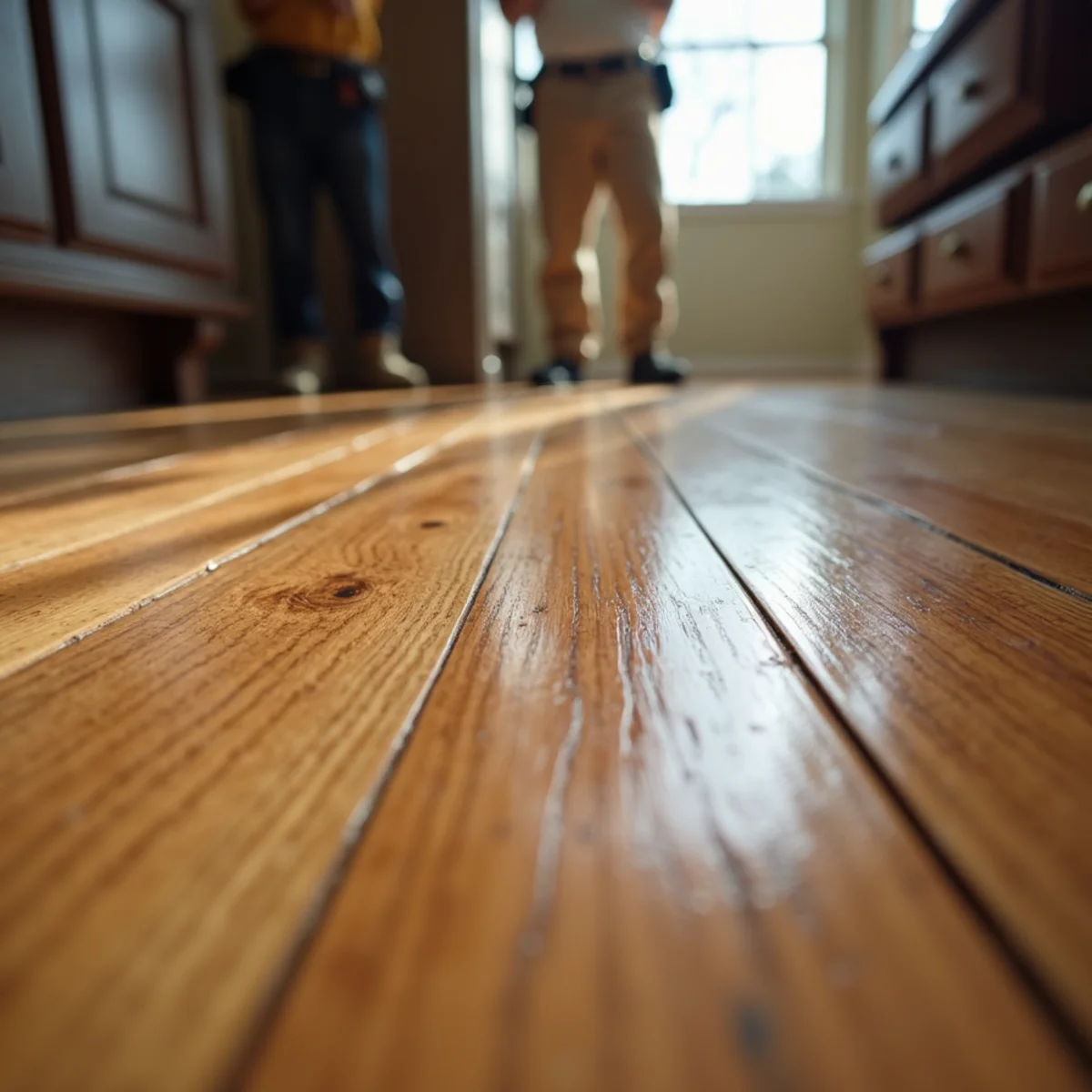
- Cupping — board edges higher than the center, giving a washboard feel underfoot
- Crowning — the center of the board higher than the edges, usually after it dried unevenly
- Boards buckling or lifting off the subfloor where seams pushed together
- Dark staining, a white haze, or a cloudy finish where water sat
- A spongy, soft, or hollow sound when you walk across a section
- A musty smell rising from the floor or from the room or crawl space below
What water actually does to a wood floor
Wood is hygroscopic — it pulls in and gives off moisture until it balances with the air around it. When water gets under or into a floor, the boards swell, and because the finish on top slows evaporation, most of that moisture has to escape slowly through the seams and the back of the board. That uneven drying is what warps a floor. The subfloor and the joists below hold water too, so a floor that feels dry on the surface can still be feeding moisture up from underneath for days.
This is why time is the whole game with hardwood. A floor dried within the first day or two often flattens back out and needs only a light sanding or a screen-and-recoat. The same floor left to air-dry on its own usually cups permanently, grows mold in the subfloor, or buckles hard enough that it has to be torn out and replaced.
Cupping, crowning, and buckling — what each one means
The shape a damaged floor takes tells us how it dried and whether it can be saved. We read it before we decide on a plan.
- Cupping: edges raised above the center, from moisture on the underside. Often reversible if the floor is dried promptly and evenly.
- Crowning: center raised above the edges, usually the result of sanding or drying a floor from the top before the bottom caught up. Preventable, and why we never sand a floor that is still wet.
- Buckling: boards lifting completely off the subfloor. This is the most severe and usually means at least the affected section is a replacement, not a repair.
Do this in the first hour — and avoid these mistakes
What you do before a crew arrives has a real effect on whether the floor is saved. The goal is to get surface water off and air moving without doing anything that locks in the damage.
- 1Stop the water at its source — the fixture shutoff or the main valve — so the floor is not still taking on water.
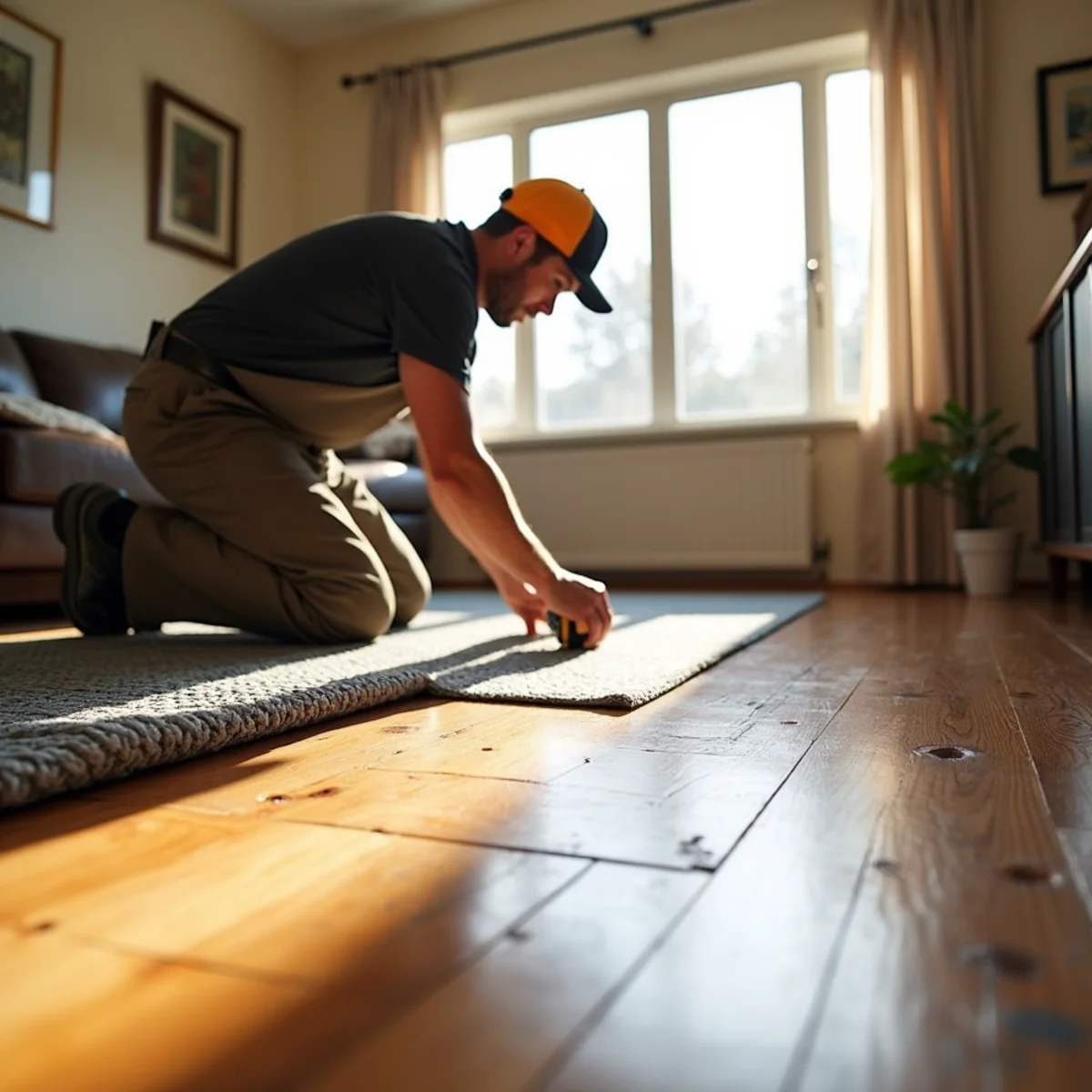
- 2Lift rugs, furniture, and anything with metal feet or colored bases off the wet wood; both can stain hardwood permanently within hours.
- 3Blot and remove standing water with towels or a wet/dry vac — getting the surface water off early slows how much soaks into the boards.
- 4Open a window and run the HVAC fan or a ceiling fan to start moving air, which helps a little while you wait.
- 5Call us so specialized mat drying can start fast — the first 24 to 48 hours decide most of whether the floor survives.
Don't do this
Don't crank up the heat (it can speed uneven drying and worsen cupping), don't put plastic or area rugs back down over damp wood, and don't sand or refinish anything yourself — a floor sanded before it's fully dry will crown and cost more to fix than the cupping you started with.
Drying hardwood in place — why speed decides whether it's saved
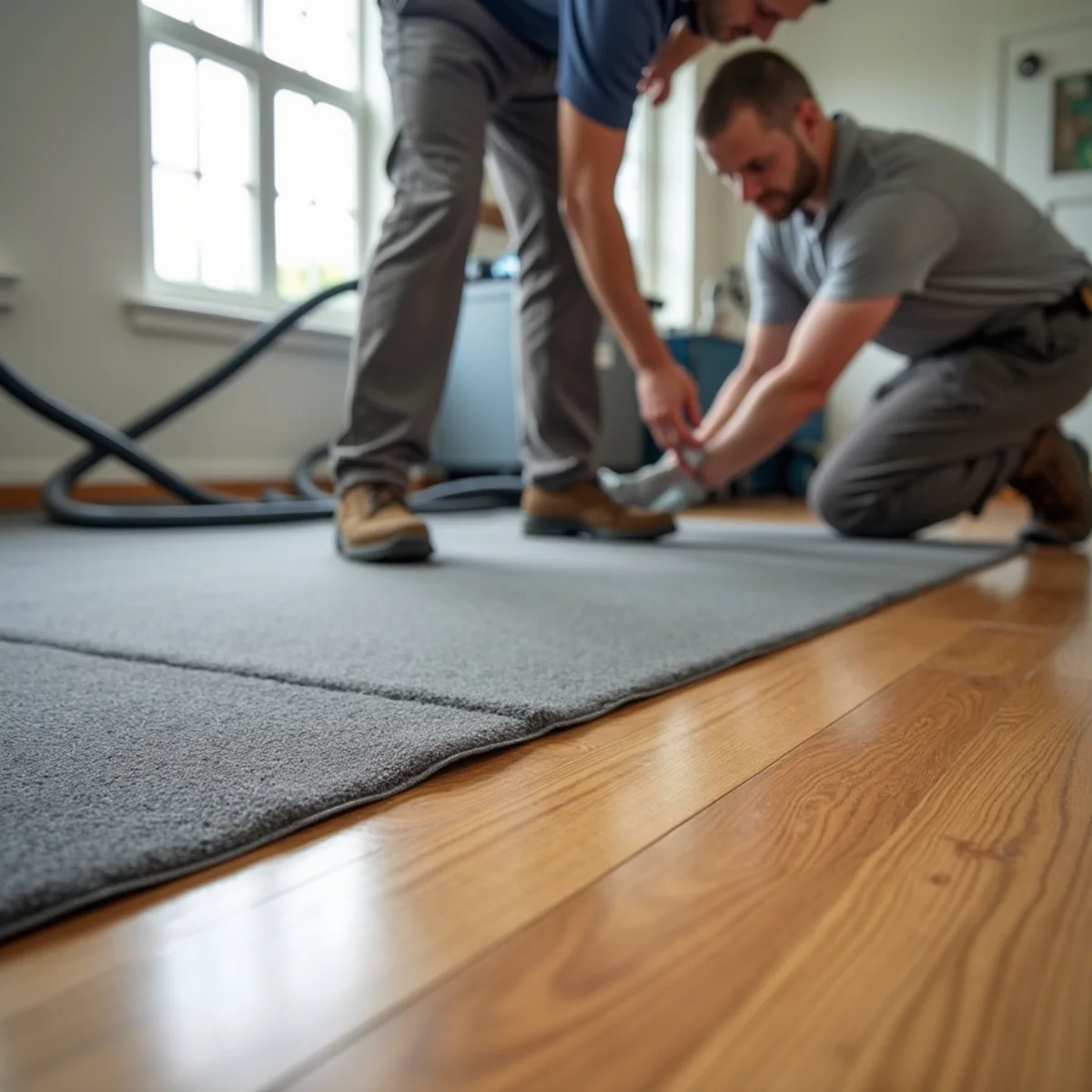
Running household fans across the top of a wood floor does almost nothing, because the finish and the board itself block evaporation from above. The water is underneath. We use floor-drying mat and panel systems that seal to the surface and pull moisture up through the boards and out of the subfloor under negative pressure, paired with dehumidifiers that hold the room's air dry enough to keep the process moving.
Throughout, we track the wood's moisture content with a pin meter and compare it to unaffected boards in the same house, drying to a documented target in the normal 6 to 9 percent range rather than stopping when the surface feels dry. A floor that reaches that target before the wood takes a permanent set is a floor we can usually save.
When a hardwood floor has to come out
Not every floor is a rescue. We are straight about which ones are not, because drying a floor that is already lost just runs up the bill.
- The water was Category 2 or 3 — gray water or sewage — which contaminates the wood and the subfloor and cannot be sanitized in place
- The floor sat wet for days and has buckled or set into a hard cup that will not relax
- It is an engineered floor whose thin wear layer has delaminated or whose core has swelled
- The subfloor itself has failed, warped, or grown mold and has to be replaced
Solid vs. engineered — they do not dry the same
Solid hardwood is one piece of wood all the way through, so it swells and dries predictably and can usually be dried and then refinished — sometimes more than once over its life. Engineered flooring is a thin veneer of real wood bonded over plywood or fiberboard. When that core gets wet it swells and the glue line can let go, and because the wear layer is often too thin to sand, a delaminated engineered floor is usually a replacement rather than a refinish. We identify which you have before we promise anything about saving it.
The subfloor is half the job
The part no one sees is where water damage hides the longest. The plywood or OSB subfloor and the joists under your hardwood soak up water and release it slowly, and if a floor is sanded and recoated over a subfloor that is still wet, the moisture gets trapped — the finish fails, the boards cup again, and mold starts underneath. We dry the whole floor assembly to target and verify the subfloor is dry before any refinishing happens, which is the difference between a repair that lasts and one that comes back in a month.
Why Roseville homeowners trust us with water-damaged wood floors
Saving a wood floor is a specialty, not an afterthought bolted onto general water cleanup. Here is what you get with us:
- Specialized floor-drying mat and panel systems, not just fans pointed at the surface
- IICRC S500 drying standards with moisture-content readings documented daily
- An honest save-or-replace call, backed by meter readings rather than a sales pitch
- Direct insurance billing and documentation for covered sudden-water losses
- One crew from extraction through drying, coordinating refinishing so your floor matches when it is done
- Familiarity with Roseville housing — from older downtown homes with original oak to engineered floors in newer Westpark and Fiddyment-area builds
Serving Roseville and the surrounding communities
We dry and restore water-damaged wood floors across Roseville, where the mix runs from site-finished solid oak in older neighborhoods to the engineered and laminate floors common in newer tract construction — each one reacting to water differently. We factor that in before we set a single drying mat.
We also respond across Rocklin, Granite Bay, Folsom, Loomis, Lincoln, and Citrus Heights. Wherever the floor is, the approach holds: pull the water, dry the wood and the subfloor to a documented number, and only then decide whether it refinishes or replaces. Communities we serve most often are linked below.
How much does hardwood floor water damage repair cost in Roseville, and how long does it take?
Wood-floor losses fall in the same $1,400 to $6,400 range as most Roseville water damage, but the drivers are specific to flooring: how large an area took on water, whether the floor is solid or engineered, how long it sat before drying started, and whether it ends in a refinish or a partial replacement. Catching a cupped floor early and drying it in place sits toward the low end; a buckled engineered floor over a wet subfloor runs higher.
Drying wood takes longer than drying carpet — usually 4 to 7 days with mat systems running, because moisture has to come up through the boards and out of the subfloor. Refinishing, when the floor is dry and flat, is scoped separately and adds a few days for sanding, staining, and coats to cure. Covered sudden-water losses are billed directly to your insurer.
- Square footage affected and how far the water traveled under the floor
- Solid hardwood (often dryable and refinishable) versus engineered (more often a replacement)
- How long the floor stayed wet before professional drying began
- Whether the job ends in a screen-and-recoat, a full sand-and-refinish, or a partial board replacement
Our hardwood floor drying process
- 1
Assess & extract
We read the floor's moisture content, remove standing water, and identify solid versus engineered construction.
- 2
Dry in place
We set floor-drying mat or panel systems to pull moisture up through the boards and subfloor, with dehumidifiers running.
- 3
Verify to target
We dry to a documented moisture-content target that matches the home's unaffected wood before anything is sanded.
- 4
Refinish or replace
Once flat and dry, we refinish the floor, or replace the sections the water took, and document it for your claim.
What affects hardwood floor repair cost
- The area affected and how far water spread beneath the floor
- Solid versus engineered flooring and whether it can be dried or must be replaced
- How long the floor sat wet before drying started
- Whether the finish ends in a recoat, a full refinish, or board replacement
Water damage spreads by the hour. Let's stop it.
60-minute emergency dispatch across Roseville, 24/7. We extract, dry, and rebuild — and bill your insurer directly.
- 60-min Roseville dispatch
- Licensed & insured
- Direct insurance billing
FAQ
Hardwood Floor Water Damage — your questions
Often, yes — if it is dried quickly and evenly before the wood takes a permanent set. We pull moisture up through the boards and out of the subfloor with mat systems and dry to a documented target. Many cupped floors relax enough to need only a screen-and-recoat or a light sanding afterward. A floor left to air-dry on its own is far more likely to cup for good.
It depends on three things: whether it is solid or engineered, how long it stayed wet, and whether the water was clean. Solid hardwood dried promptly can usually be saved and refinished; engineered floors that have delaminated, floors that sat for days, and anything touched by sewage or gray water usually get replaced. We make that call from meter readings, not guesswork.
Usually 4 to 7 days with specialized mat or panel drying systems running, which is longer than carpet or drywall because moisture has to travel up through the boards and out of the subfloor. We take daily moisture-content readings and do not stop until the wood matches the home's unaffected flooring.
Sometimes, but less often than solid hardwood. Engineered flooring is a thin real-wood layer over plywood or fiberboard, and once that core swells or the glue line delaminates, the floor usually cannot be dried flat or sanded, so it is replaced. We identify which type you have before we commit to saving it.
Household fans blowing across the top do very little, because the finish and the board block evaporation from above — the water is underneath, in the subfloor. Drying a wood floor takes mat or panel systems that pull moisture up through it under negative pressure. Surface fans mostly just dry the air while the floor keeps cupping.
Sudden, accidental water — a burst supply line, a failed water heater, an overflow — is typically covered by a standard homeowners policy, and we document the loss and bill the insurer directly. Gradual leaks that were left unaddressed are often excluded. We photograph and log moisture readings so your claim reflects what actually happened.
Often just the affected area — but it depends on the layout. Old finish has mellowed and new finish looks different, so a partial refinish on a continuous, open floor can leave a visible line. On a floor that runs unbroken from room to room, blending the refinish to a natural break like a doorway or threshold usually looks better than stopping mid-floor. We walk you through that trade-off before we start so the finished floor looks like one floor, not a patch.